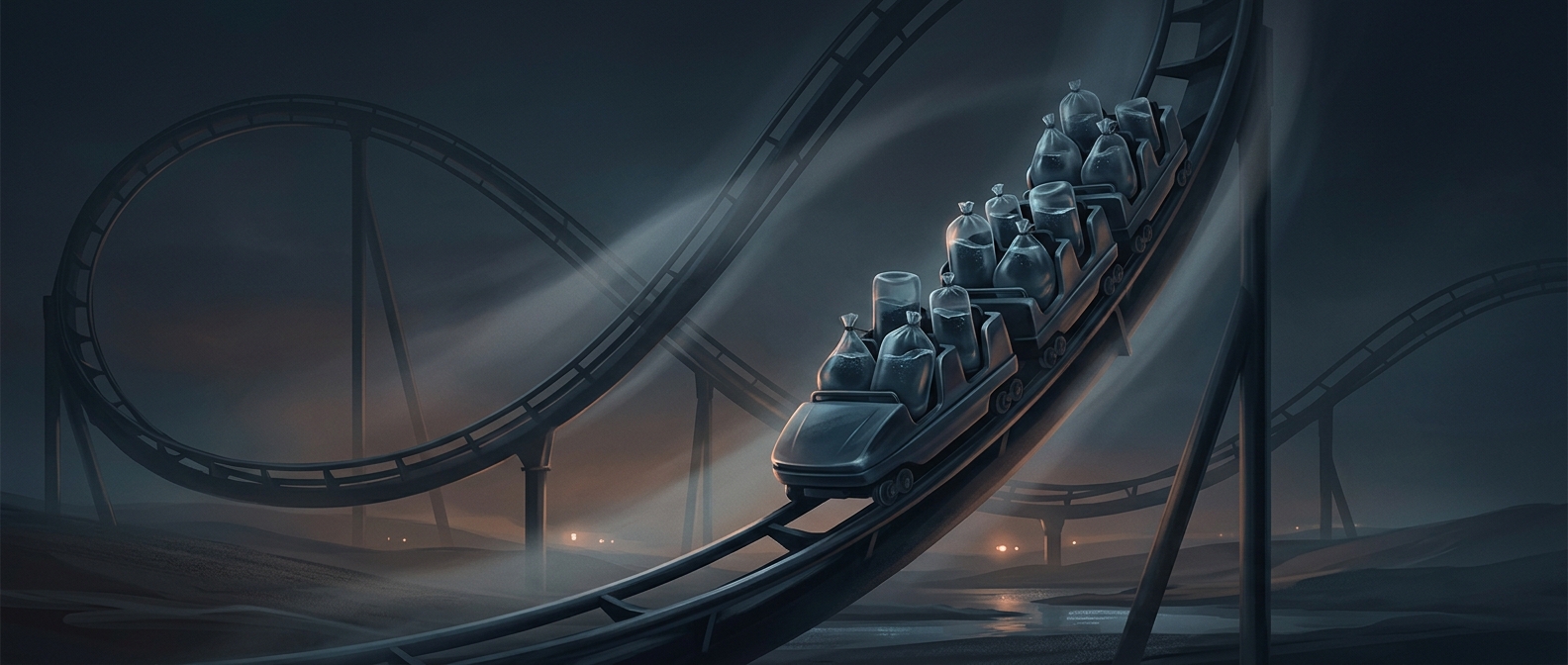
Why a coaster is divided into blocks
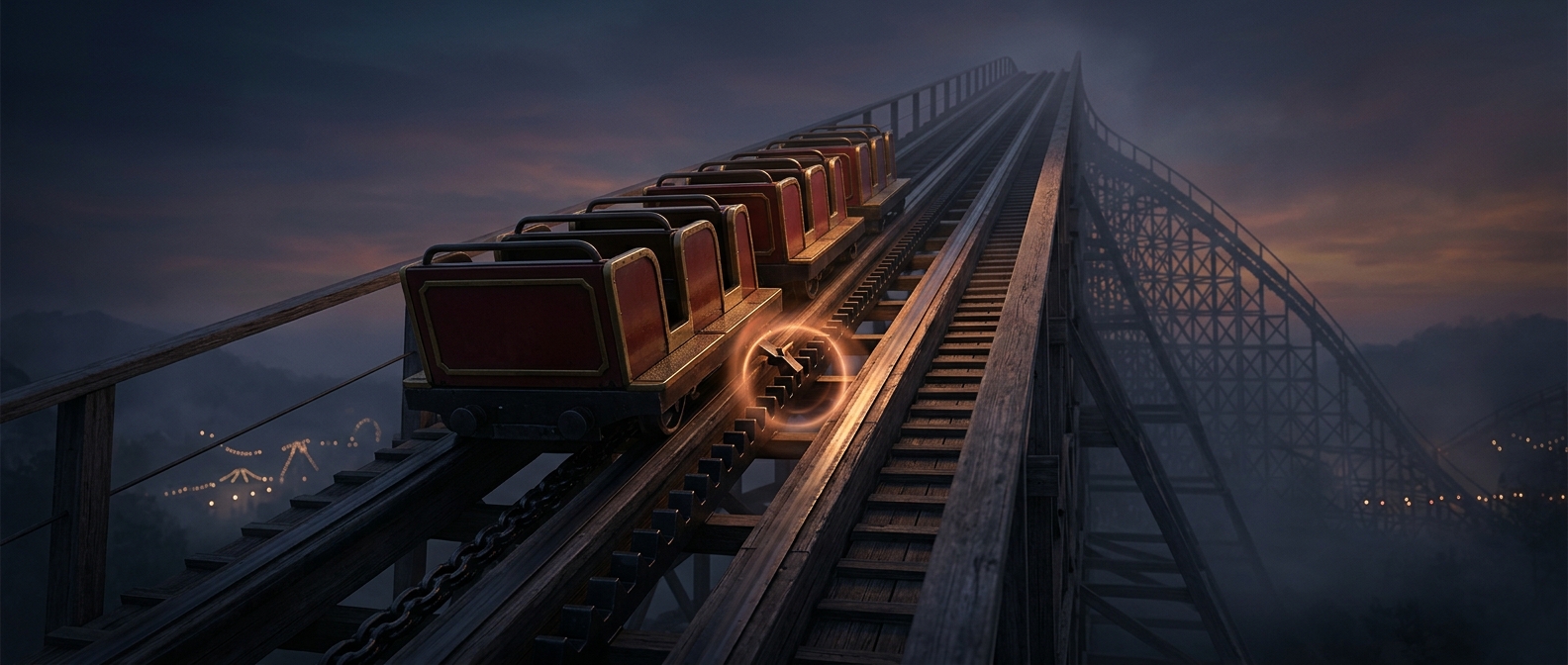
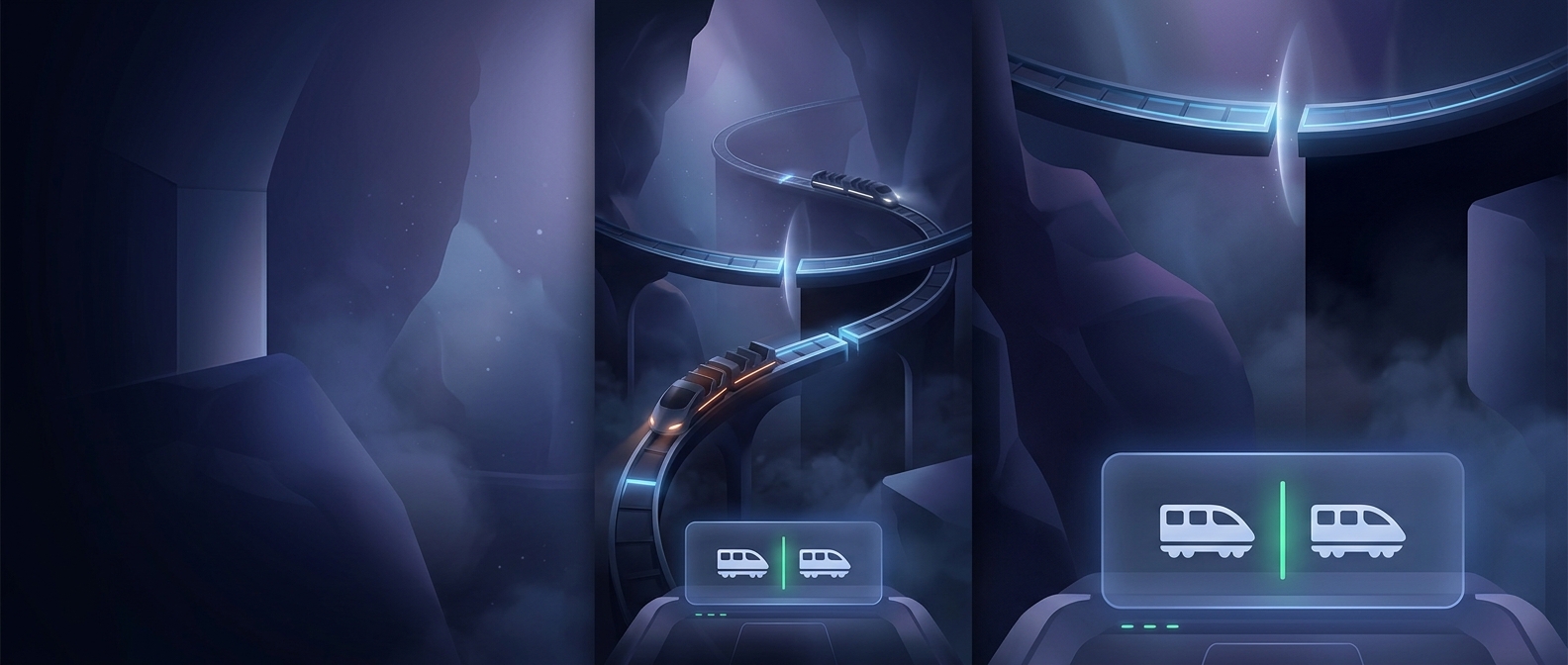
A roller coaster does not rely on drivers to keep trains apart. Its operating system treats the track as a sequence of zones, or blocks. A train occupies one zone at a time, and the system checks whether the next zone is clear before allowing it to proceed.
A block can be a station, a lift hill, a launch section, or a stretch of track equipped with brakes. The boundaries matter because they give the system specific places where it can detect a train and, if necessary, stop one. Designers must make each stopping point long and predictable enough for a train to come to a halt before entering an occupied block.
Brakes are part of the safety system
Many coaster brakes work by squeezing a fin attached to the train or track; others use magnetic forces to slow a train without contact. Some brake sections can also hold a train in place. The exact equipment varies, but the operating principle is the same: a train can be slowed or stopped at designated points, rather than only at the station.
Sensors report whether a train has entered or left a block. If the system cannot confirm that the next block is available, it can keep the following train from advancing. Depending on the coaster, that may mean stopping it on a brake section or withholding power from a lift or launch. The control system therefore manages not just where trains are, but where they can safely go next.
The consequence of a missed signal
Coaster systems are designed to treat uncertainty conservatively: if a required condition is not confirmed, the train is held rather than sent onward. That can interrupt the ride, but it preserves the separation between trains. The visible brake run is only one piece of the arrangement; behind it is a track plan built so a train has a designated place to wait before the next one can enter its block.