Why a Crossing Gate Gives Way to a Car
A railway crossing arm is a warning and a traffic-control device, not a crash barrier. Its job is to tell drivers to stop before a train arrives. It is not built to withstand the force of a moving vehicle—and making it stronger could create a more dangerous problem.
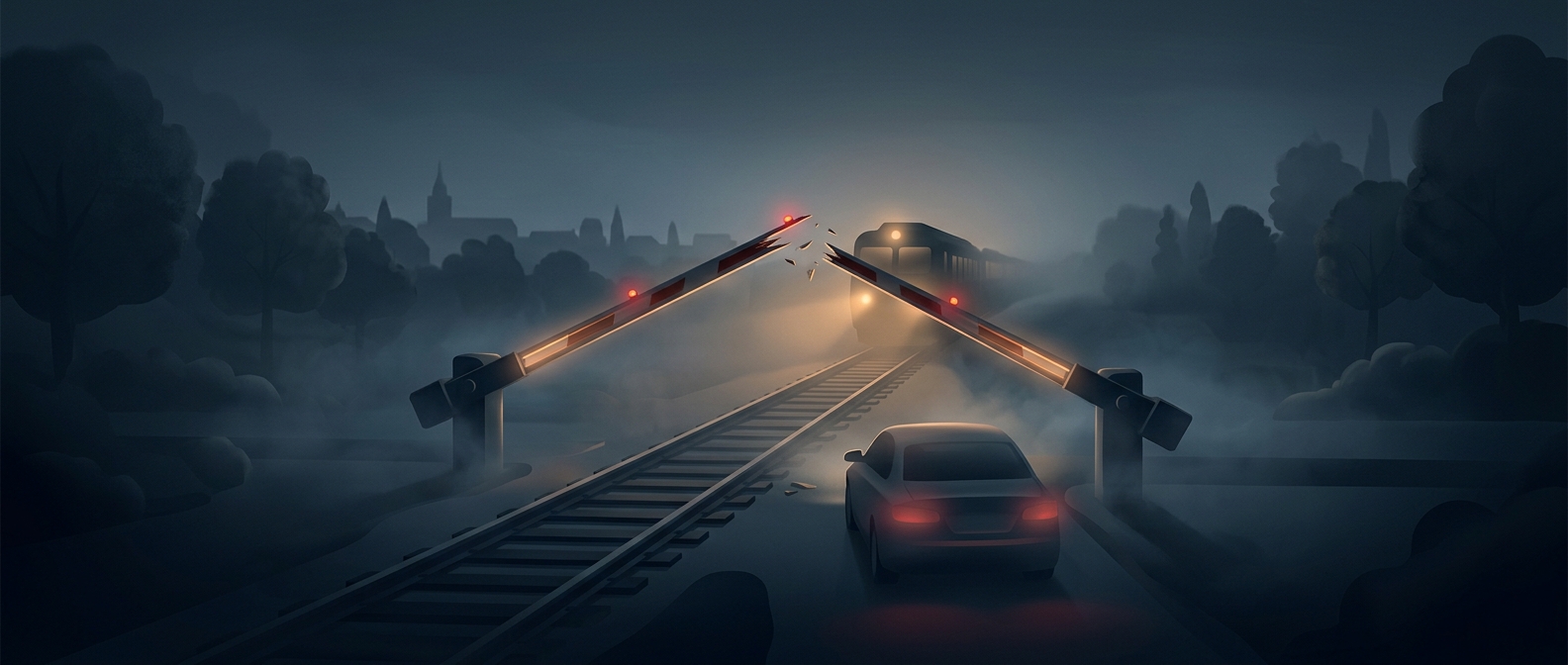
The arm is mounted so it can swing down across the road, but its attachment is comparatively light. If a vehicle is caught on the tracks and cannot wait for the arm to rise, it can usually push through the arm rather than remain penned in. The gate may snap or detach, but the vehicle has a chance to clear the tracks instead of being trapped behind a rigid obstacle.
The safety tradeoff
A barrier strong enough to stop a car would need substantial posts and hardware. That might discourage a driver from going around it, but it could also hold a vehicle in the path of a train. A train needs a long distance to stop, so once it is approaching, getting the vehicle off the rails matters more than preserving the gate.
That does not make a lowered arm safe to cross. It means the arm is designed to yield in an emergency, not to invite drivers through. The warning lights, bells, and lowered gates signal that a train may be near; the gate itself cannot protect a vehicle from one.
What to do if a vehicle is trapped
If a car is stuck on the tracks, occupants should get out and move well away from the rails, then contact emergency services or the railroad using the crossing’s posted information. Trying to save the vehicle—or waiting for the arm to lift—can cost the time needed to reach safety. The arm is allowed to break; the people should not be trapped with it.