Why a railway track needs sleepers
Rails carry train wheels, but they cannot simply rest on loose gravel. Sleepers—crosswise supports beneath the rails—hold the rails at a fixed distance apart and spread wheel loads into the layer of crushed stone below. That stone, called ballast, can shift slightly under traffic, so the track depends on both the sleeper’s footprint and its weight to resist movement.
Concrete changes the maintenance equation
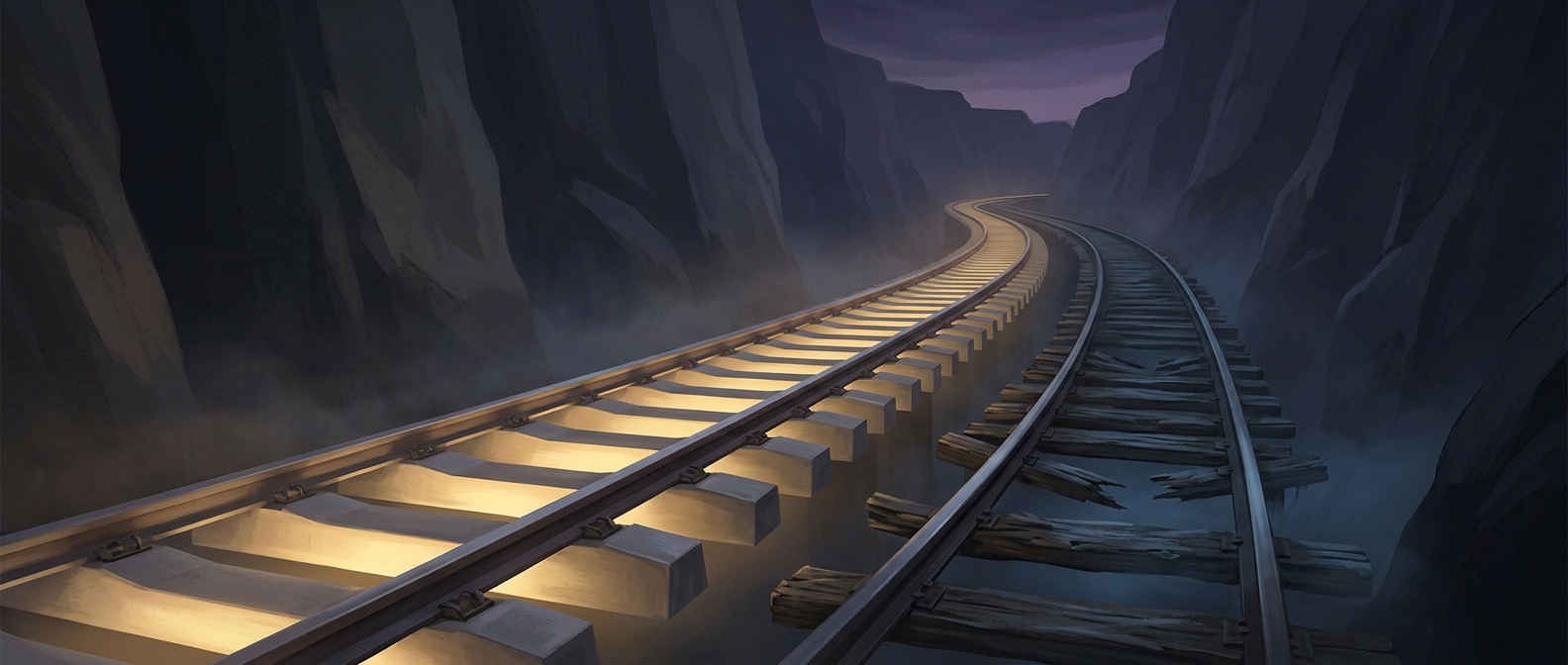
Wood can flex under passing trains, but moisture, insects, and decay gradually weaken it. Concrete avoids that kind of rot and can remain in service for a long time. Many concrete sleepers are prestressed: steel inside them is put under tension during manufacture, squeezing the concrete so it is less likely to crack when trains bend and load it.
Their mass also helps anchor the rails as repeated wheel impacts try to push the track sideways or disturb its alignment. A steadier track can mean fewer adjustments to restore the rails’ position. The benefit is not that concrete never wears or needs inspection; it is that its main material does not deteriorate in the same way timber does.
A heavier support has costs
Concrete sleepers are much heavier to move and install, so railways need equipment suited to lifting them. They can also be less forgiving than wood if damaged. The choice therefore depends on the track, the machinery available, and the cost of maintaining each kind of sleeper over time.
Replacing timber with concrete is more than swapping one support for another: it changes how the railway balances flexibility, durability, and installation effort beneath every passing train.