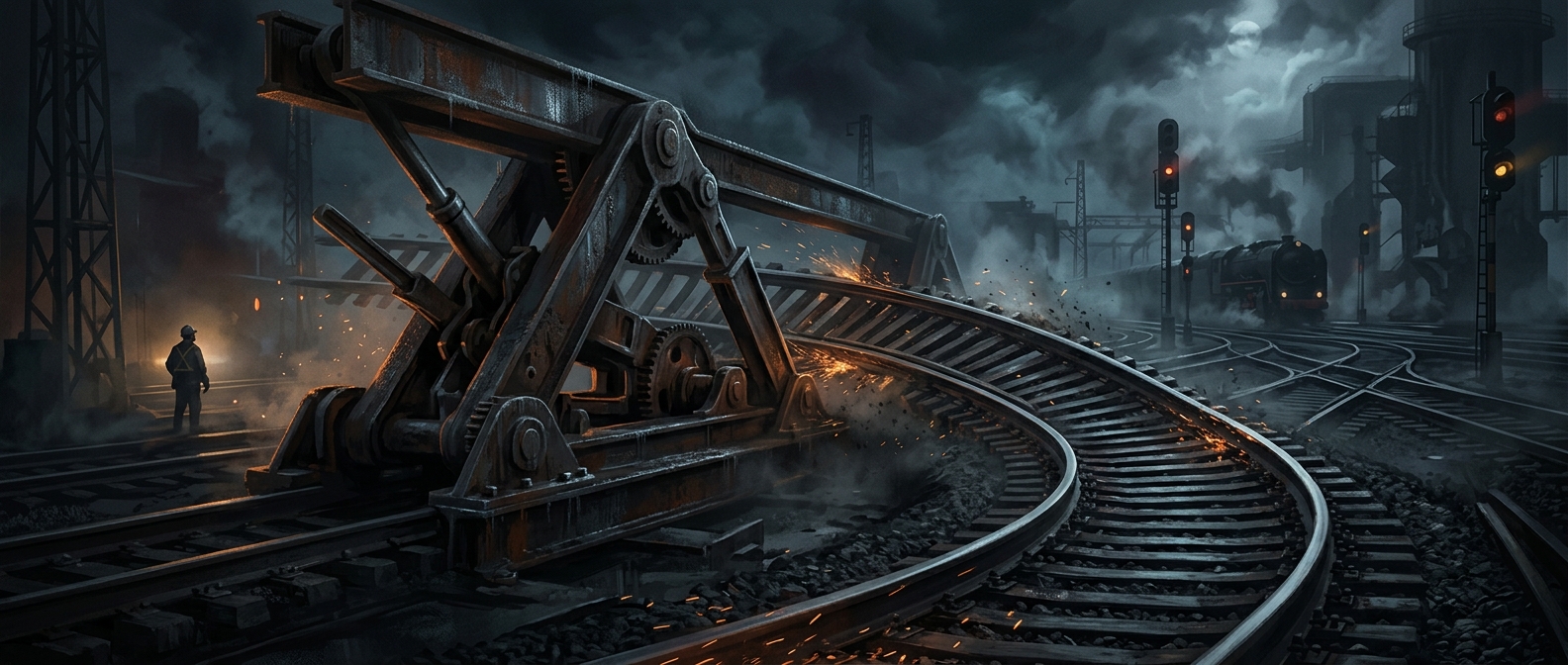
How a railway switch sends a train onto another track
A train cannot steer around a bend the way a car can. Its steel wheels are guided by the rails, so changing routes means physically changing which rails the wheels can follow. A switch does this with a pair of movable rails called switch rails or points.
The small gap that decides the route
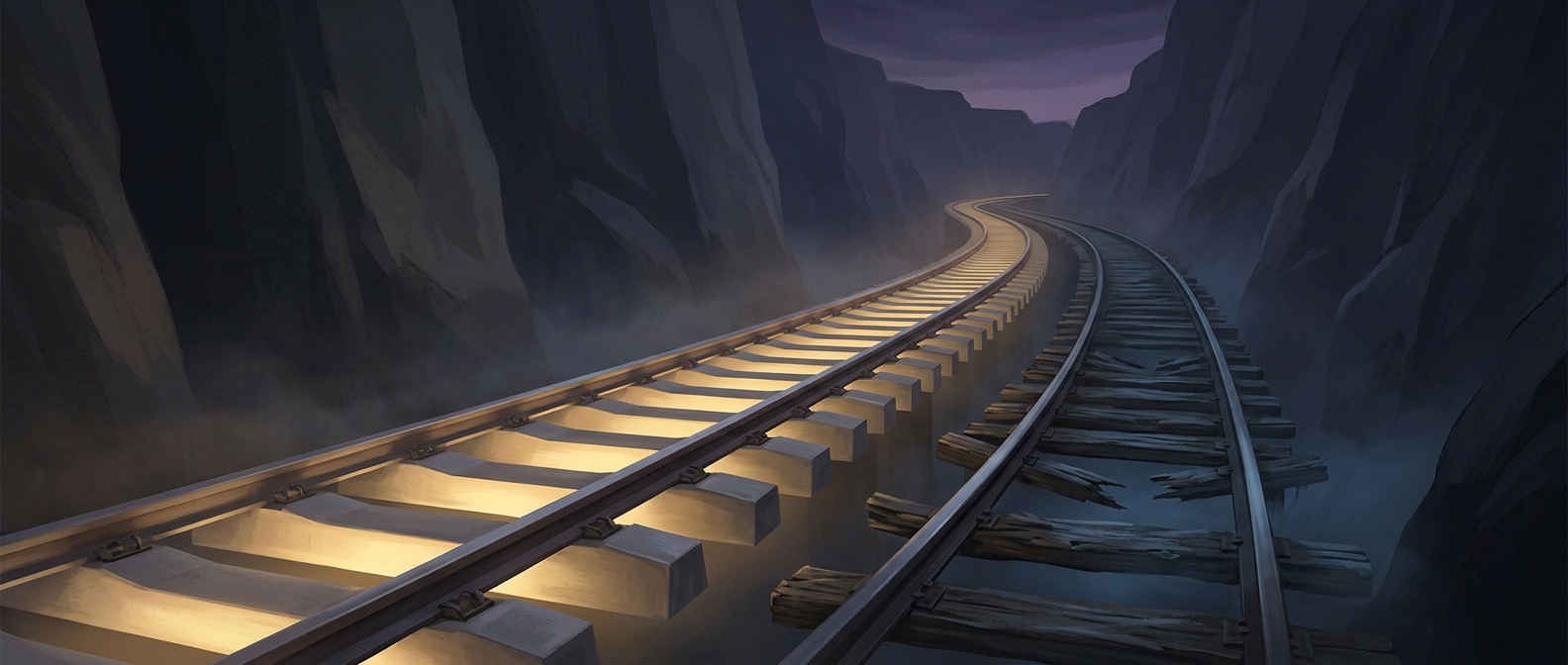
At a junction, one point rail slides toward a fixed rail while the other moves away. The wheel’s inner rim, called its flange, is kept clear of the open side and guided by the point that fits snugly against its rail. That contact channels the wheel onto one track; the opposite setting sends it along the other. The change is usually a controlled slide, not a violent shove.
The point rails are connected so they move together, and the space between the moving and fixed rails must be small enough to guide a wheel reliably. Beyond the points, a crossing lets the rails intersect. Its carefully shaped gaps allow the wheel flanges to pass through without striking the crossing rails.
Why the switch must be secured first
A switch machine—powered equipment beside the track, or a hand-operated mechanism—moves the points and holds them against the chosen rails. Signals and interlocking equipment help prevent a train from entering while the switch is moving or set for a conflicting route. This matters because the wheel flange depends on the point’s position: a point left short of its rail can leave a dangerous opening instead of a clear guide.
The train itself does not make the choice. The switch sets a continuous path before the wheels arrive, and the train’s weight keeps those wheels pressing down as they follow it. That is how a pair of narrow rails can route a vehicle weighing thousands of tons.