A platform edge has to clear a moving train
The gap is not simply a construction error. A platform must sit far enough from the track to avoid contact with a train whose position can vary slightly as it passes. Wheels and rails have small clearances, suspension lets a car sway, and track alignment is not perfectly exact. Engineers allow for that movement when setting the platform edge.
Curves change where the car body travels
A train car is long and relatively rigid, while its wheels follow the curve of the rails. On a tight bend, the car’s ends swing away from the curve’s center; its middle can swing toward it. This is called end throw and center throw. The clearance therefore depends not just on how wide the train is, but on the track’s curvature and the car’s length.
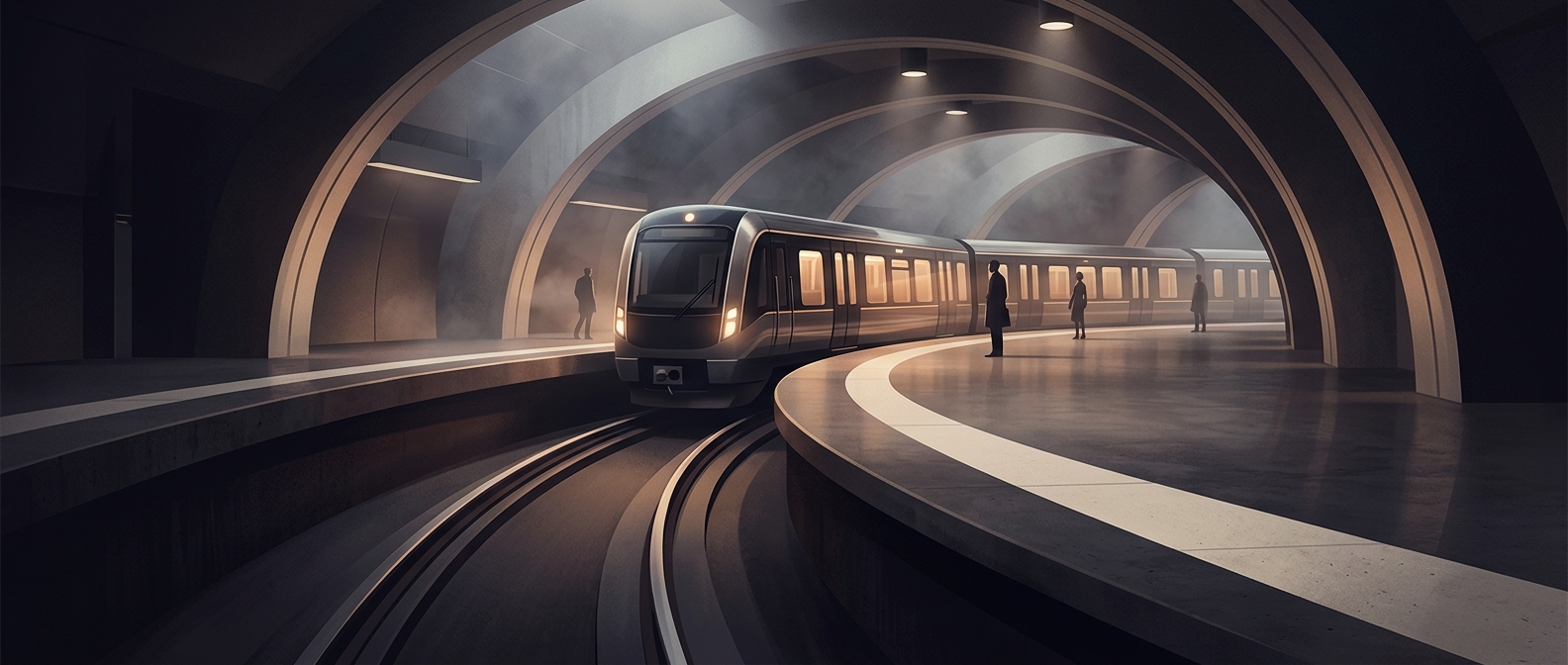
A platform built close to the rails might work on a straight section yet leave too little room beside a long car on a curve. Setting the edge back provides a safety margin, though it also leaves passengers with a gap to cross. That is why curved platforms often make the space especially noticeable.
The space is a compromise, not a target
Designers have to accommodate the largest expected movement of trains while keeping the platform usable. The result can differ from station to station because train shapes, track geometry, and operating conditions differ. For passengers, the practical consequence is simple: the visible gap marks where the platform and the train’s moving clearance envelope meet, so stepping aboard requires attention even when the train appears to be standing still.