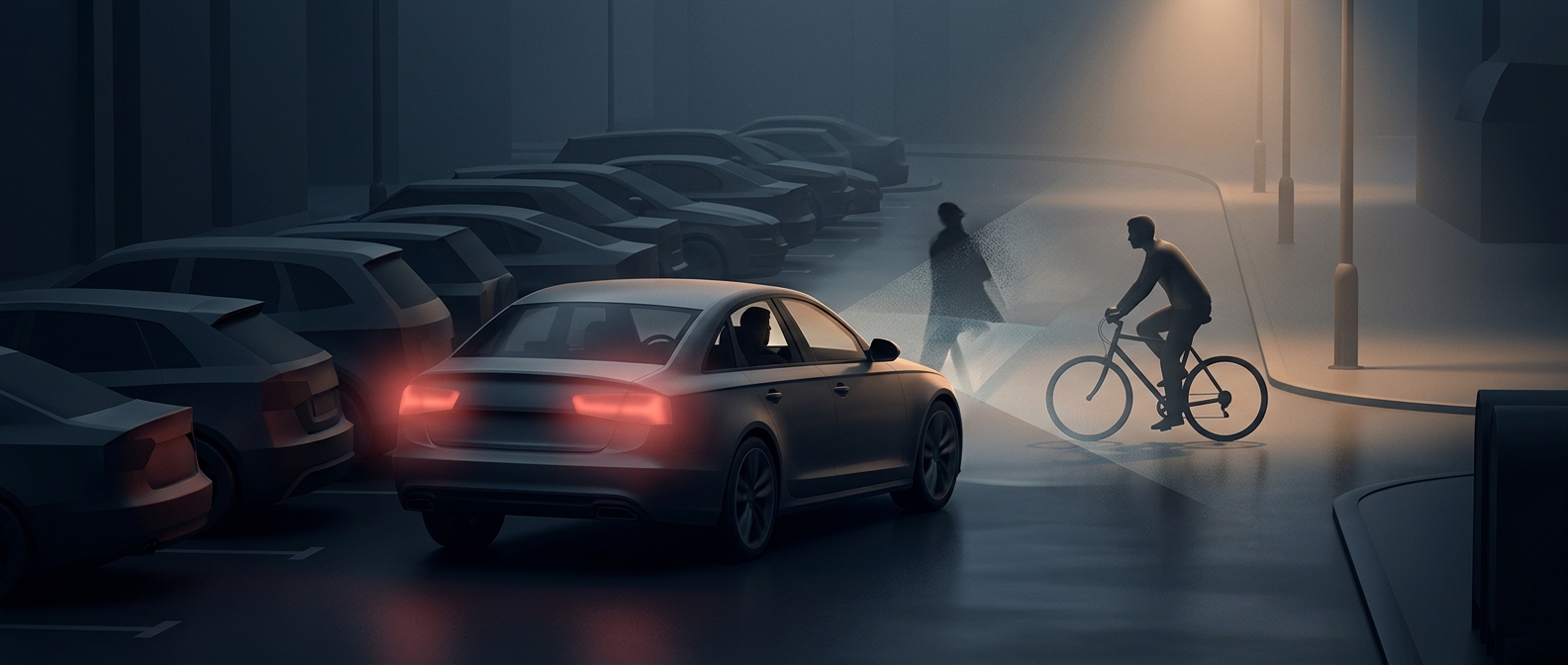
Why an angled space can hide approaching traffic
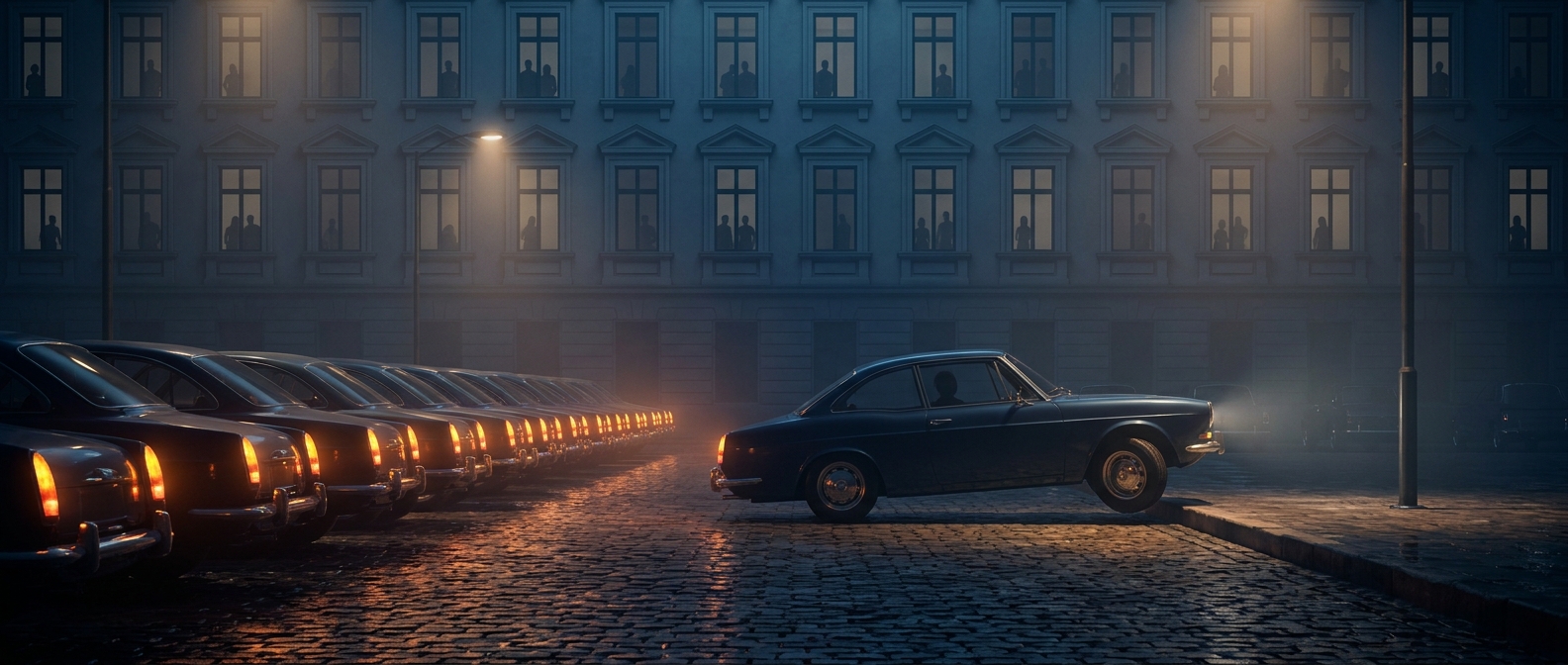
In a typical head-in angled space, the car’s front points toward the curb and its rear faces the travel lane. Leaving means reversing out. As the rear moves into the lane, neighboring parked cars can block the driver’s view of vehicles approaching from either side. The driver may have to cross the edge of the traffic lane before gaining a clear sightline.
This is a geometry problem, not simply a matter of turning your head. A car’s rear pillars, mirrors, and the vehicles beside it all limit what the driver can see. A backup camera can show what is directly behind the car, but it may not reveal fast-moving traffic approaching from the side.
The tradeoff is where the maneuver happens
Angled spaces are easy to enter because drivers turn gradually into them. But when the spaces are arranged for head-in parking, that easy entry shifts the harder maneuver to departure: the car must reverse into the street. Parallel parking generally requires more work to enter, while a driver parked parallel can usually move forward into traffic after checking the lane.
Some lots use reverse-in angled spaces, which let drivers leave by moving forward. That arrangement can improve the view on exit, but it requires drivers to back into the space and may not suit every street or parking layout. The direction of the stall—not just its angle—determines which maneuver carries the visibility risk.
A practical consequence is that a driver backing from a head-in angled space may need to creep out slowly, pausing as the view opens. The crucial moment is often when the car’s rear first reaches the lane: that is when the driver can finally see past the parked cars, but is also beginning to occupy the path of traffic.