Why the Curb Lane Can Hold More Cars
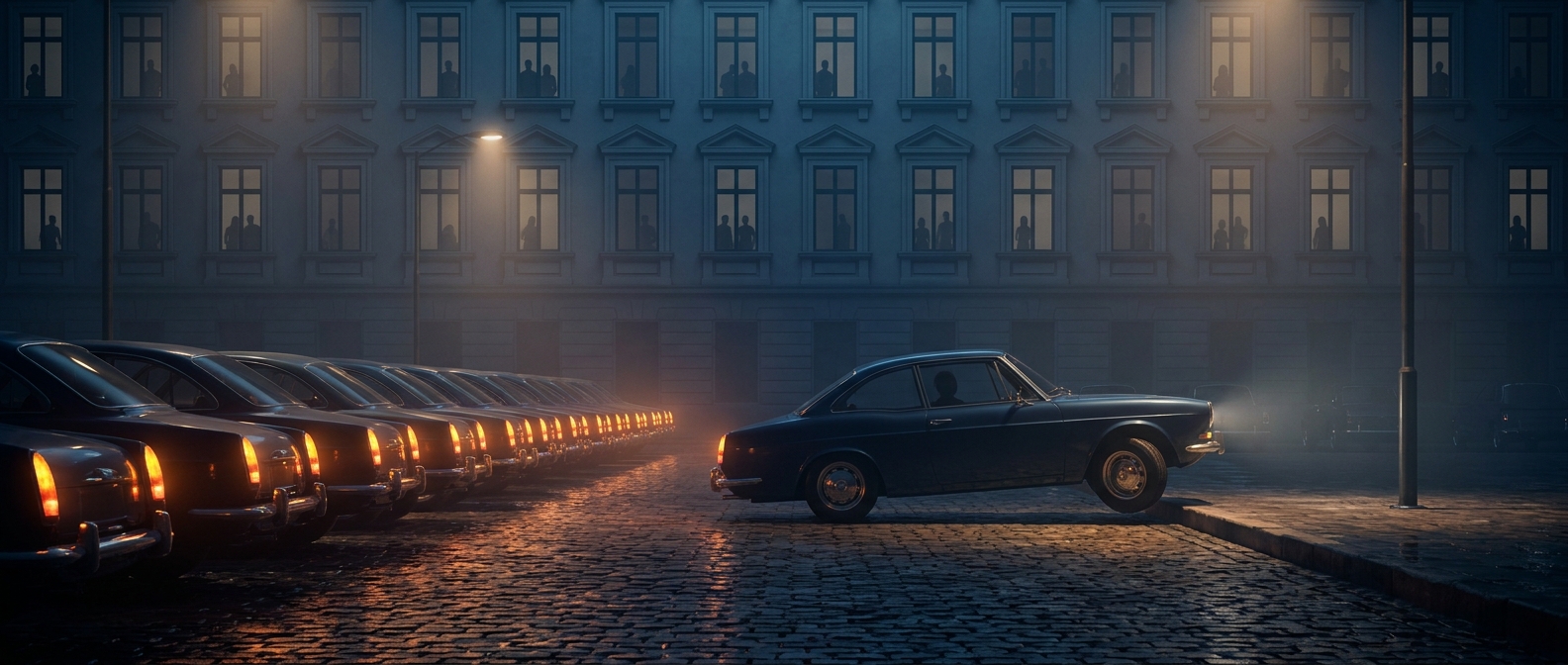
A parallel-parking lane is a narrow band along the edge of the street, not a row of deep pockets cut into it. That geometry matters: cars line up lengthwise, so the street gives up less of its width to storage. On a block with limited space, the curb can serve parked vehicles while leaving the middle of the roadway open for moving traffic.
The Tradeoff Is Paid at Each Parking Maneuver
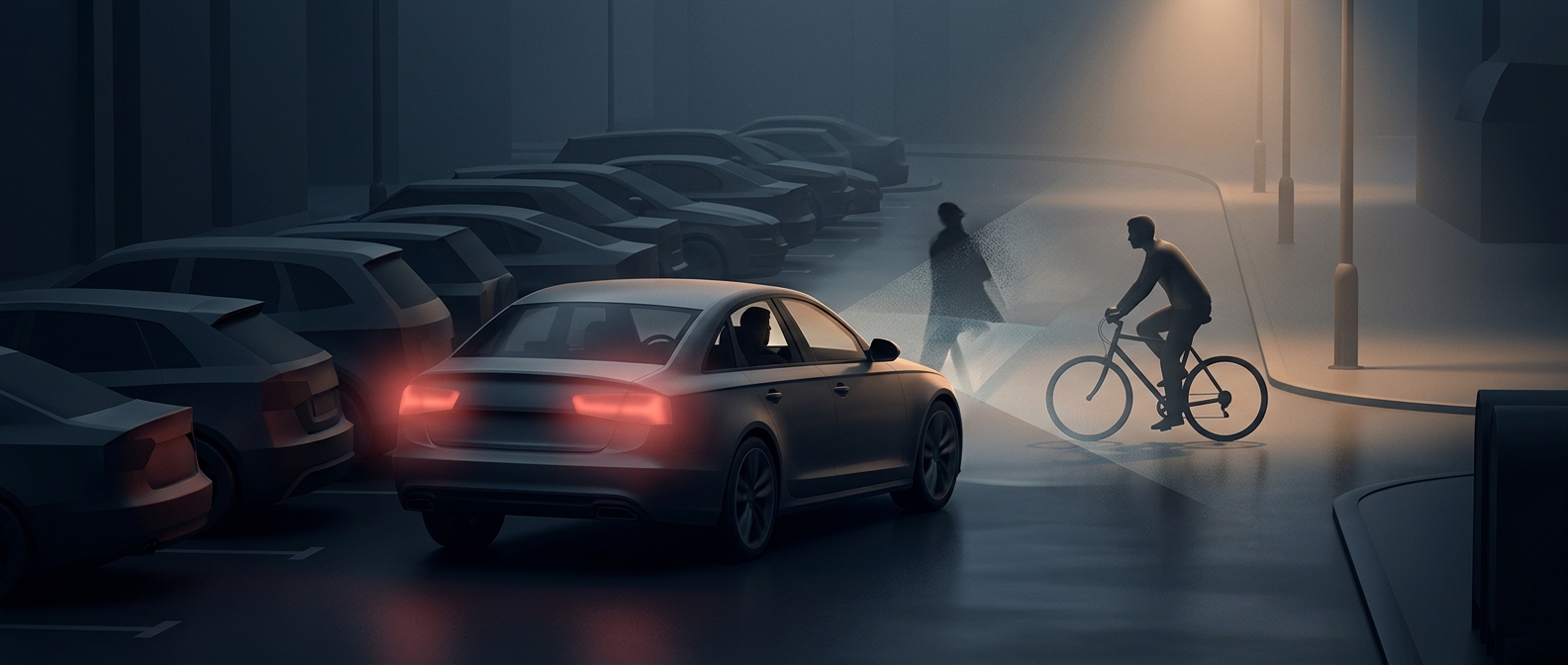
The space saved across the block makes individual spaces harder to enter. A driver must pull alongside the car ahead, turn into the gap, then straighten out before reaching the curb. The car swings partly into the travel lane during the maneuver, so following drivers may need to slow or wait. A gap that looks long enough can also be unusable if the driver cannot approach it at the right angle or has too little room to adjust.
That is why parallel parking depends on more than the painted length of a space. The driver needs clearance at both ends, and the street needs enough maneuvering room for the car to rotate into place. Traffic speed, vehicle size, visibility, and curbside obstacles all affect how practical a given gap is.
A Street-Space Choice, Not a Free Gain
Compared with angled or perpendicular parking, parallel parking generally sacrifices convenience for a slimmer footprint. Angled spaces can be easier to enter, but they extend farther into the street; perpendicular spaces use even more depth. The right arrangement depends on what a block needs to accommodate, including through traffic, loading, sidewalks, and parking demand.
The result is a familiar urban compromise: more usable roadway along the block, in exchange for a brief interruption whenever a driver threads into the curbside gap.