The elevator’s last cushion is built into the shaft
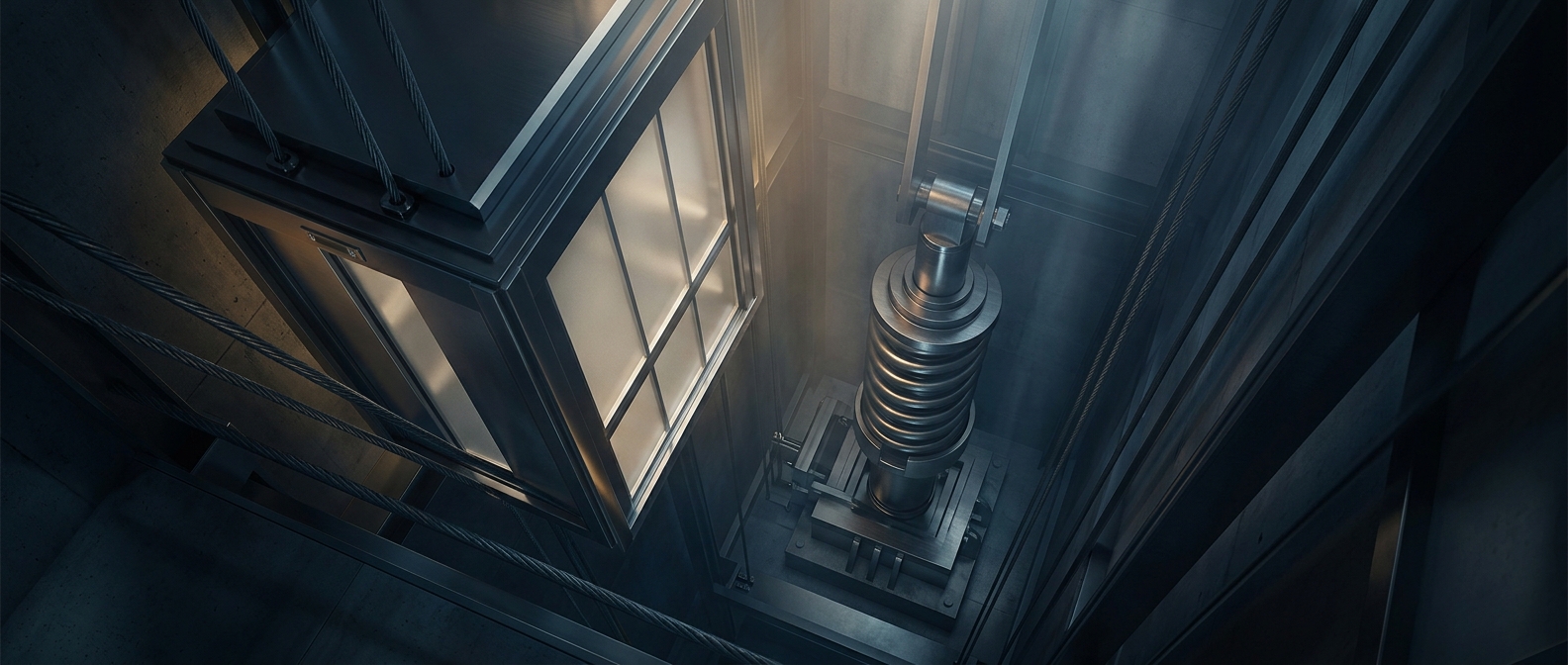
An oil-filled buffer is a heavy-duty safety device fixed at the bottom of an elevator shaft, beneath the car’s travel path. It is meant for an unusual situation: the cabin has gone past its lowest stopping point and is still moving downward. The buffer gives the car a controlled place to spend that motion before it can strike the floor of the shaft.
Turning a moving cabin into heat
The buffer works much like a hydraulic shock absorber, but it is designed for a much larger load. As the elevator car presses down on its piston, the piston forces oil through narrow openings inside the device. The resistance slows the car over a distance rather than bringing it to an abrupt stop in one instant. Some of the car’s motion is converted into heat in the oil and surrounding parts.
The buffer’s length and resistance matter: a faster or heavier moving car needs enough room to slow down without an impact that is dangerously sudden. That is why the device is matched to the elevator system rather than serving as a generic pad beneath the cabin.
A backup, not a normal landing
Buffers are a final safeguard, not the elevator’s routine braking system. In ordinary operation, controls and brakes stop the car at a floor; other safety mechanisms are intended to intervene if the car moves abnormally. The buffer addresses the narrow case in which the car reaches the bottom of its permitted travel anyway.
That role explains why the device sits out of sight in the pit beneath the lowest landing. It is not there to make every ride softer. It is there to make an extreme overtravel less likely to end in a hard collision.