Why an Empty Coaster Is Not a Full-Load Test
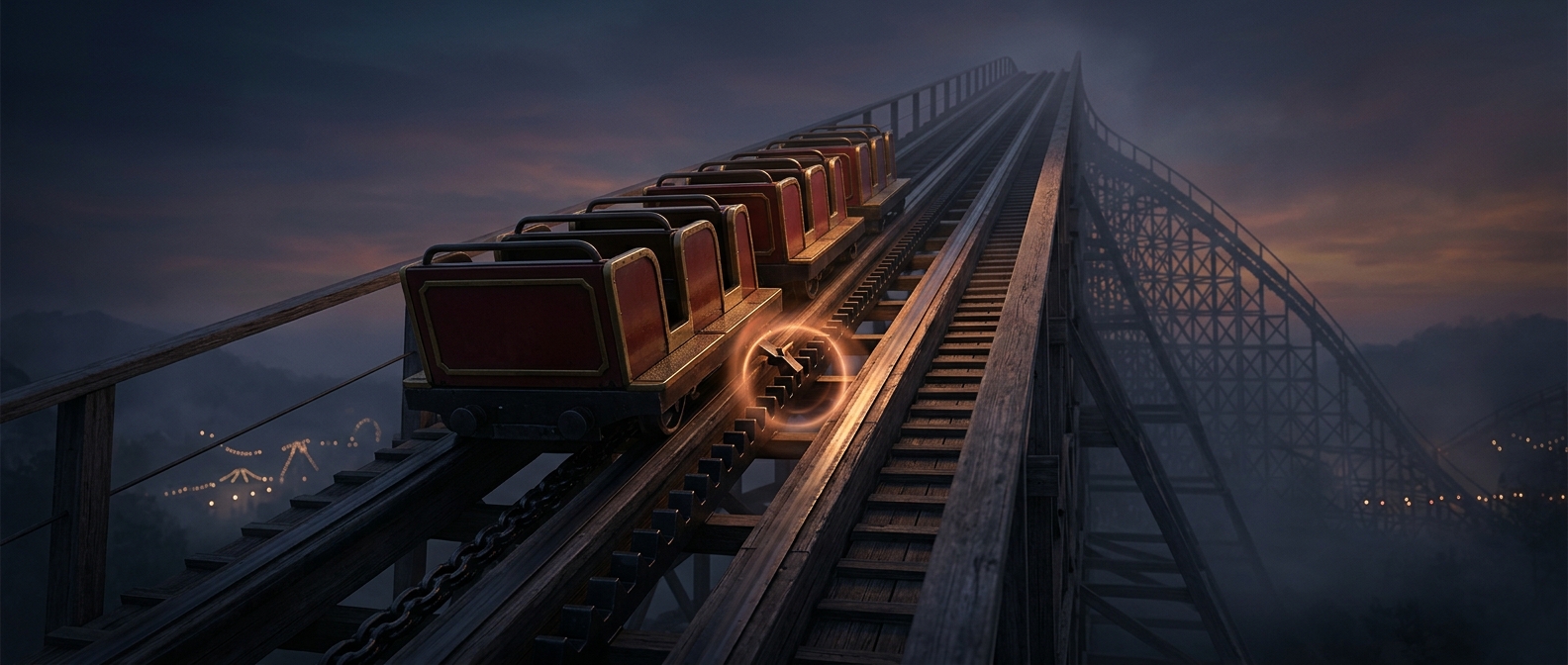
A coaster train does not travel through a ride in isolation: its cars, wheels, track, and passengers all form one moving system. Add people and the train carries more mass. That changes how much force the wheels and track must handle and how the train responds as it climbs, drops, turns, and brakes.
Gravity gives a heavier train more downward force, but that does not simply mean it will go faster. The ride’s shape and friction matter too. Engineers need to see the actual train’s behavior under a load closer to the one it will carry in service.
Why Use Water
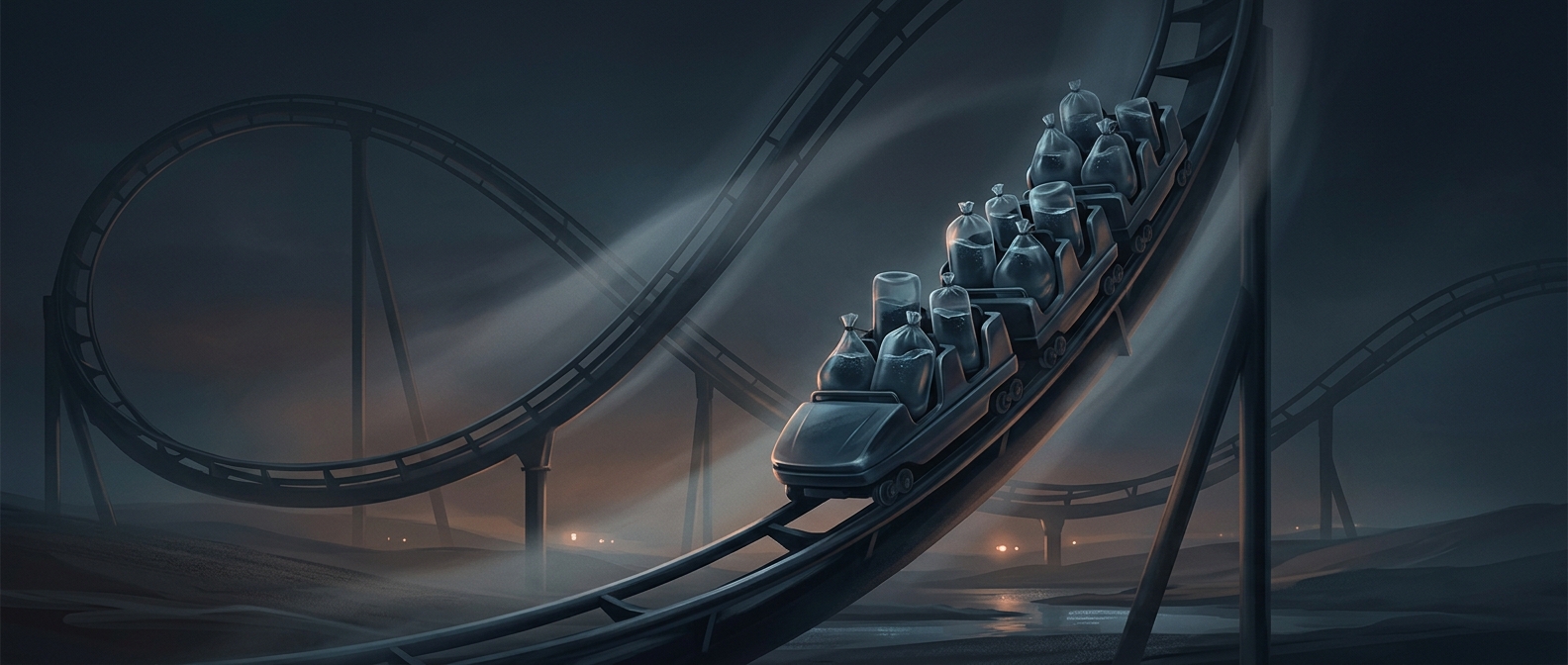
Water provides practical ballast: a way to add weight without putting people at risk. It can be carried in test dummies, then added or removed to create different loading conditions. That lets engineers assess the coaster with a loaded train before opening it to riders, rather than treating an empty test run as a complete picture.
The weight is useful because it exercises the ride as a system. A loaded train puts different demands on its wheels, restraints, track, and braking, and its motion can differ from that of a nearly empty train. The dummies are not there to imitate every movement a passenger makes; they supply the mass that makes the test more representative.
That makes the first real riders less like the test load and more like what the ride was designed to carry: a train whose behavior engineers have already checked with weight aboard.