Why uncertainty stretches a platform wait
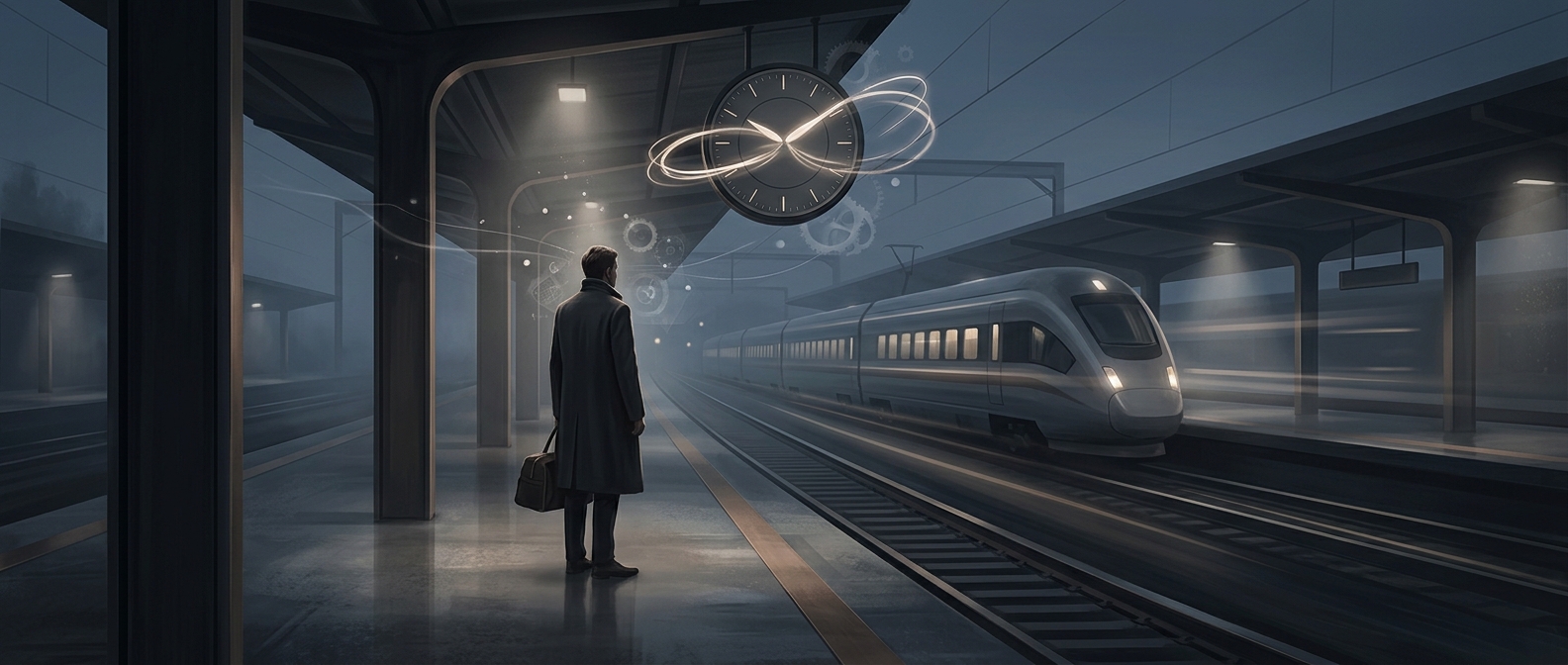
A wait is not experienced as a neutral stretch of minutes. When people do not know when a train will arrive, they have to keep checking for clues: a change on the display, an announcement, or movement down the track. That monitoring keeps the delay in the foreground. With a reliable arrival estimate, attention can shift elsewhere because there is a plausible point at which the waiting will end.
The uncertainty also makes each check consequential. Looking again might bring relief—or reveal that the delay has grown. When the information does not change, the passenger has spent attention without gaining a clearer plan. Minutes can feel unusually slow even though the clock is moving at its normal pace.
Arrival estimates change what passengers can do
A useful estimate is more than a countdown. It lets someone decide whether to stay on the platform, find a seat, buy a drink, or consider another route. Even an estimate that later changes can help if it is updated clearly: passengers can revise their plans instead of repeatedly guessing.
That is why transit information matters most when service is disrupted. A display that says a train is delayed but offers no indication of what comes next leaves riders unable to judge whether waiting is sensible. Clear updates cannot make the train arrive sooner, but they can turn an open-ended vigil into a decision with a basis—and give passengers back some control over the minutes before it arrives.