A weak link built into the fuel line
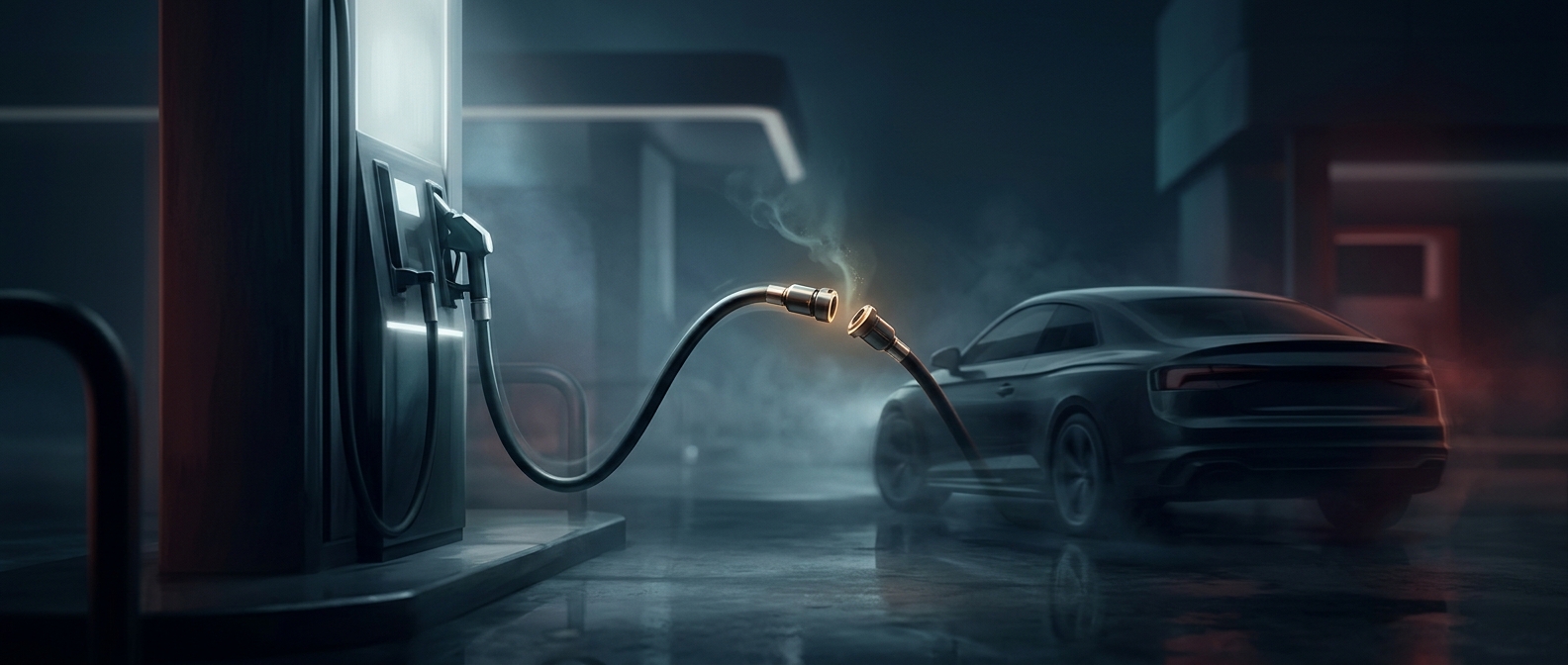
A gas pump hose has to be flexible enough to move around a vehicle, but it is also connected to equipment that should not be dragged across a forecourt. The breakaway coupling solves that conflict by acting as a deliberate weak link: it is designed to separate when the hose is pulled hard enough, rather than letting the force travel into the dispenser or tear the line unpredictably.
Separation also closes the line
A simple break would prevent the pump from being pulled along, but it could leave fuel flowing from the exposed ends. The coupling is built with shutoff valves that close as its two halves part. One valve stops fuel coming from the pump; the other helps keep fuel in the hose from spilling out. The result is not a perfectly dry system, but a controlled interruption instead of an open line under tension.
The coupling therefore has to balance two demands: stay connected during ordinary handling, yet release when a vehicle pulls away with the nozzle still attached. Its release point is chosen so a sudden, forceful tug can trigger the safety feature before the hose or dispenser takes the full strain.
A small failure that limits a larger one
Once the coupling separates, the pump cannot simply keep dispensing through that hose. The connection has to be inspected and restored before the line can be used again. That inconvenience is intentional: a repairable breakaway part is preferable to a damaged dispenser, a hose dragged into traffic, or fuel escaping from a torn line. The hose’s most important feature may be the place where it is meant to come apart.