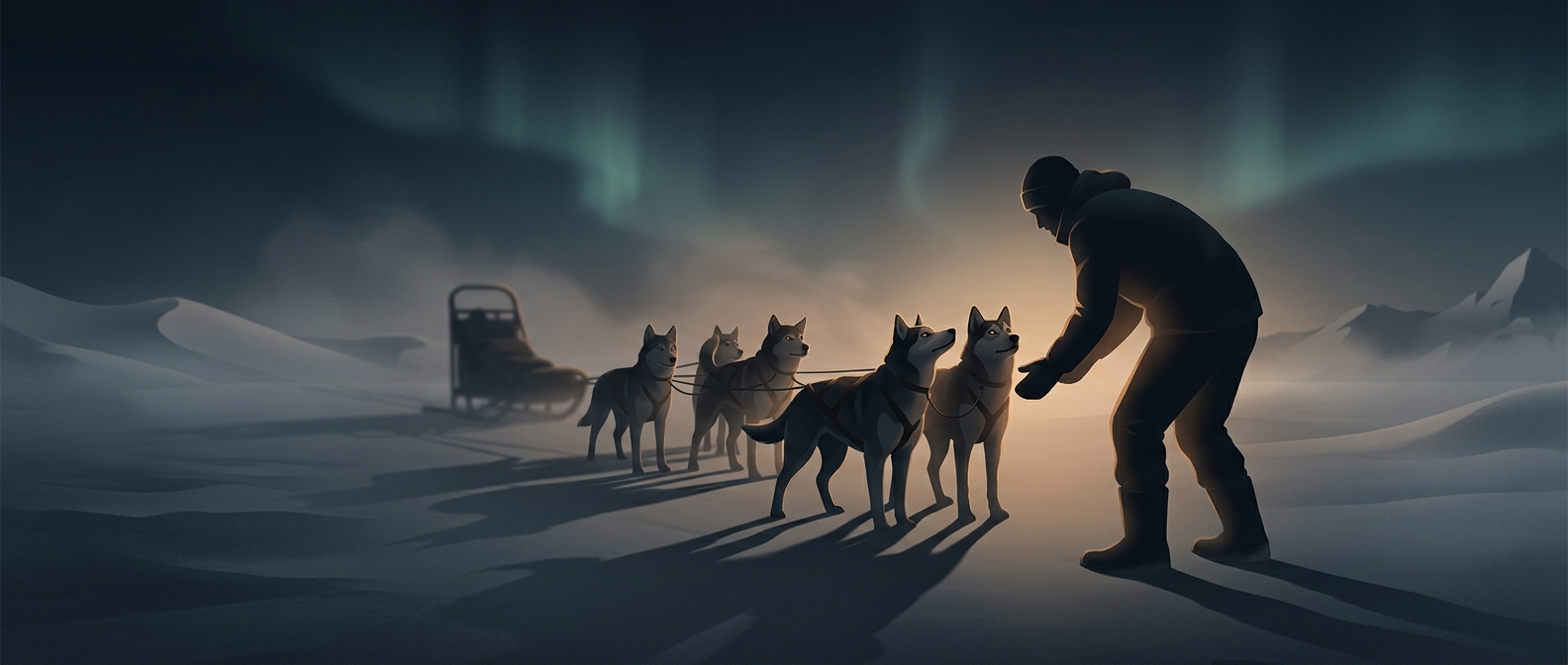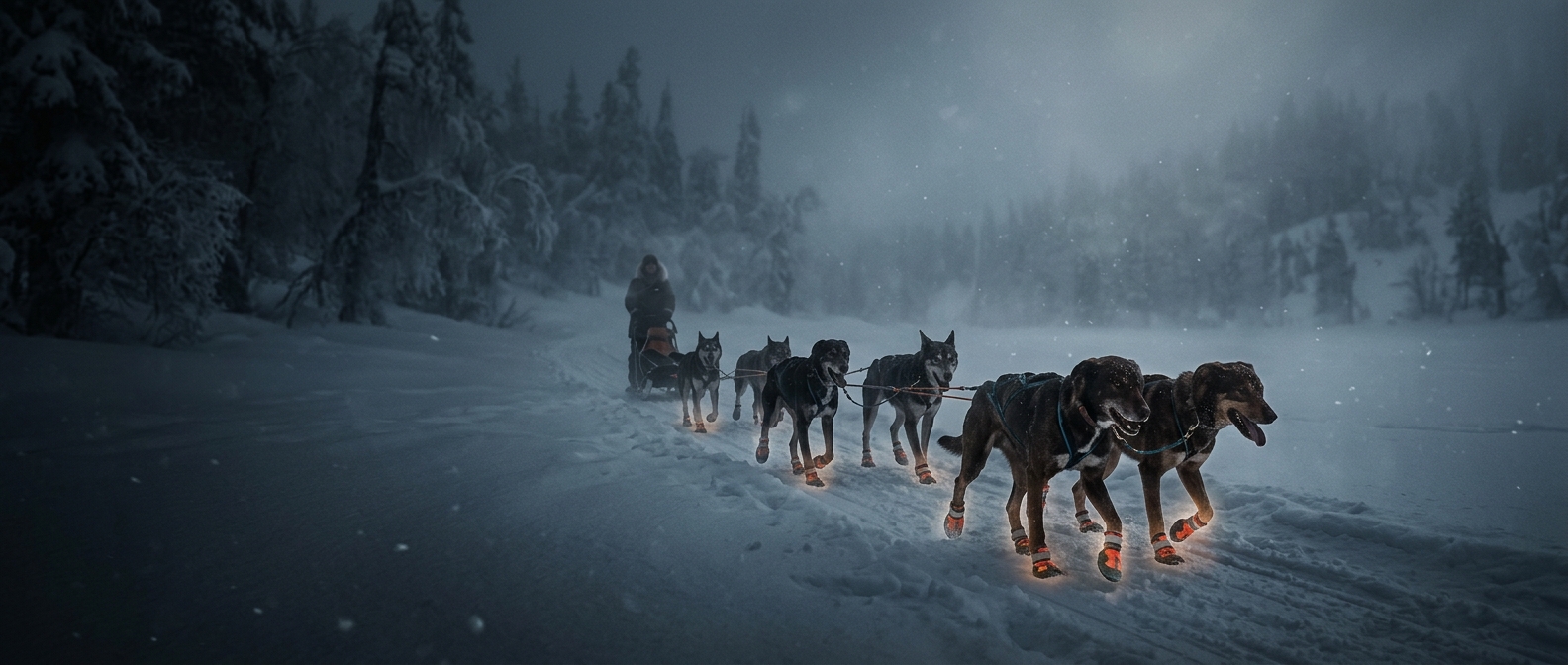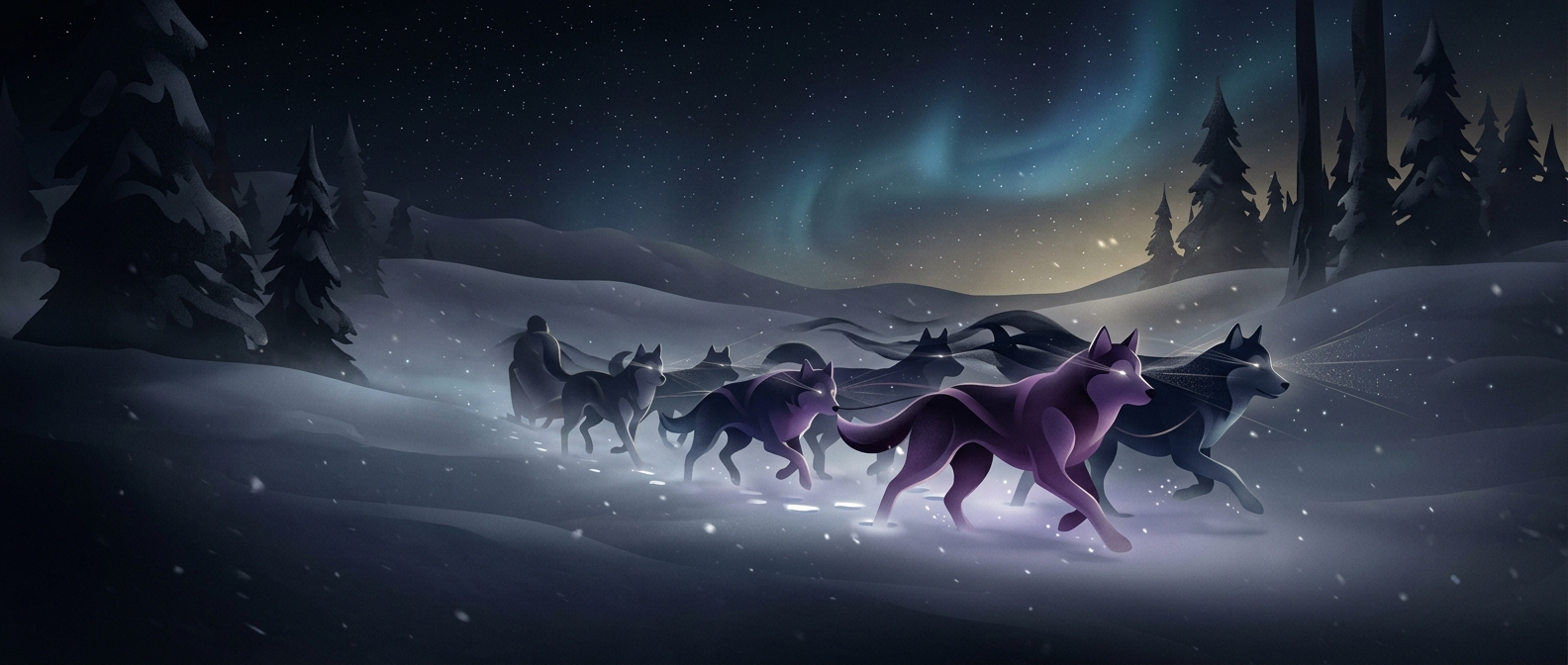
How a Sled Dog Finds a Trail in the Dark
A trail is more than a visible line. As people, animals, and other dogs pass, they leave tiny traces of odor on the ground and nearby surfaces. A dog’s nose can detect and distinguish many of these faint scents, giving it information that does not depend on daylight.
For a team, that can help the lead dogs stay on a route when the driver—often called a musher—cannot make out the track. The dogs do not need to see the trail as a continuous mark: they can sample the air and surface, then adjust their direction as the scent grows stronger or weaker.
Scent Helps, but the Team Still Has to Read the Route
Following odor is not the same as having a perfect map. Wind can carry scent away from its source, and fresh snow or changing conditions can make a trail harder to follow. Dogs may also rely on familiarity with the route and on cues from the terrain; the musher still gives commands and manages the sled.
That combination makes darkness less of a hard stop than it would be for a person traveling alone. The dogs can keep moving by following a trail they can smell even when their driver cannot see it—but their ability to do so depends on the conditions and the route.