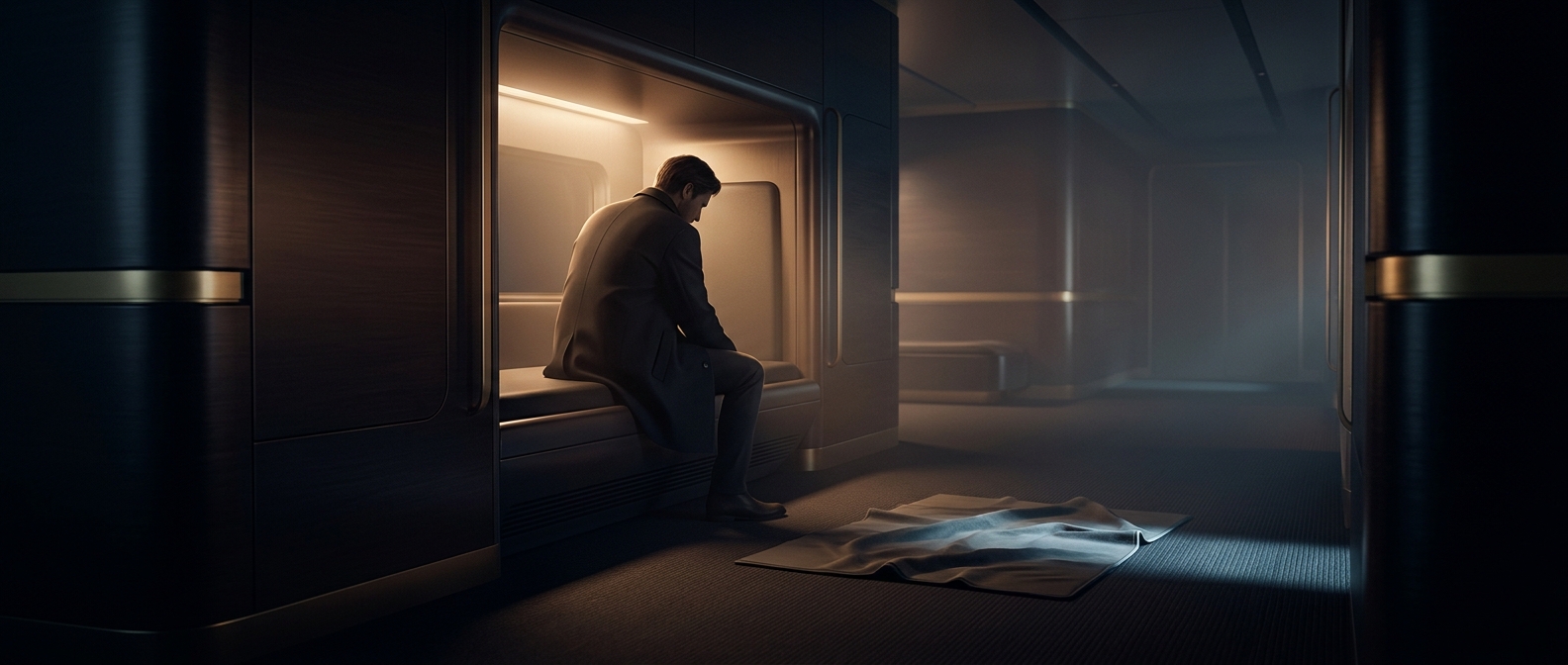
Why an open cabin floor is not spare space
An aircraft cabin is arranged around two competing needs: carrying passengers efficiently and keeping a clear path to the exits. Seats, armrests and overhead bins are fixed in place, so the aisle is one of the few routes people can use quickly when an emergency requires an evacuation. A person lying across it can force others to step over them or squeeze past, slowing movement at the moment seconds matter.
That route also has to stay usable for crew members, who may need to reach passengers, operate emergency equipment or direct people toward an exit. A body on the floor can obstruct those tasks even when it is not directly in front of an exit.
What turbulence changes
The floor can feel stable during smooth flight, but the aircraft may suddenly move up or down in turbulence. A seated passenger is held by a belt; someone lying loose on the cabin floor has no comparable restraint. That movement can throw the person into seat frames or other passengers, causing injuries and creating another obstacle in the aisle.
The practical distinction is between a space that appears empty and one that remains safe to use. In a cabin, the aisle must be ready for movement, and passengers need to be secured where the aircraft’s restraints are designed to hold them.