A memorial capsule on a scientific spacecraft
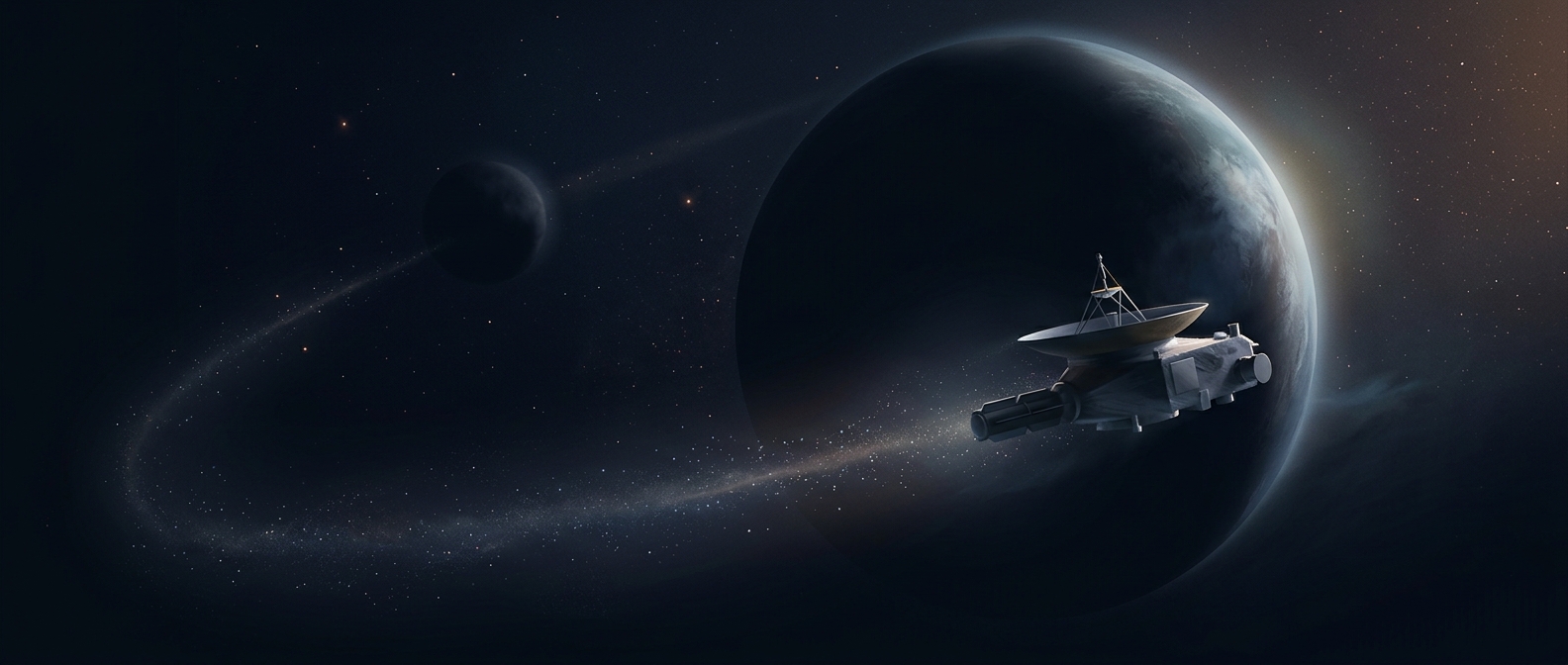
Clyde Tombaugh’s ashes traveled inside a small capsule attached to NASA’s New Horizons spacecraft. Tombaugh discovered Pluto in 1930, decades before the probe was built to study it up close. The capsule was a memorial tribute, not part of the spacecraft’s scientific equipment: it did not guide the probe or help its cameras collect data.
That distinction matters because New Horizons was designed around a demanding engineering goal: carry instruments across billions of miles, then gather as much information as possible during a brief encounter. Every component had to survive launch and the cold, harsh conditions of deep space. The ashes could make the journey as a compact keepsake without changing how the probe worked.
A flyby, not a visit
New Horizons did not brake into orbit around Pluto. Slowing a spacecraft enough to be captured by a distant world requires substantial fuel, so the mission instead followed a carefully planned path that carried it past Pluto at high speed. Its cameras and other instruments recorded the encounter as the spacecraft swept through, then sent the observations back to Earth.
That choice made the meeting fleeting but consequential: the probe could study Pluto close up and continue onward rather than stopping there. Tombaugh’s capsule went along for the same ride—not as a passenger in any practical sense, but as a small piece of a discoverer’s story carried through the encounter his discovery had made possible.