The road reached the puller first
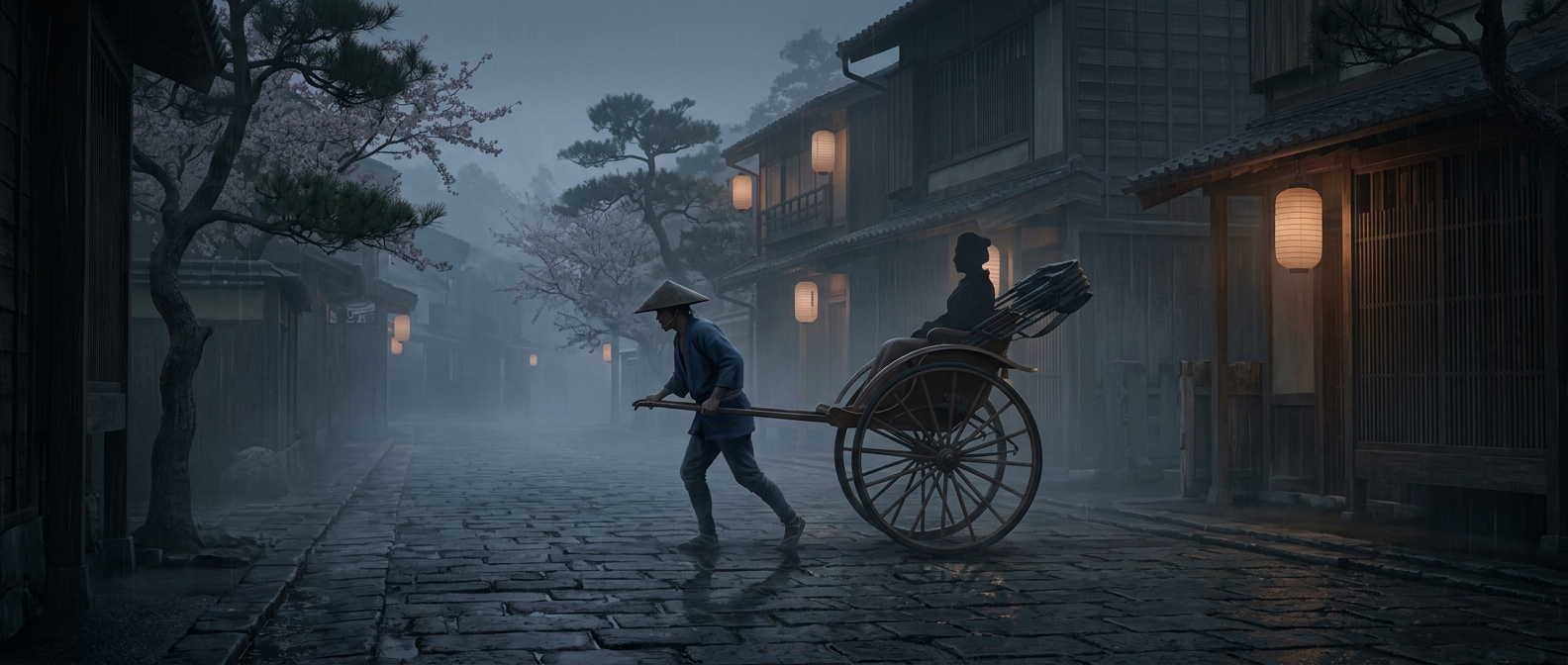
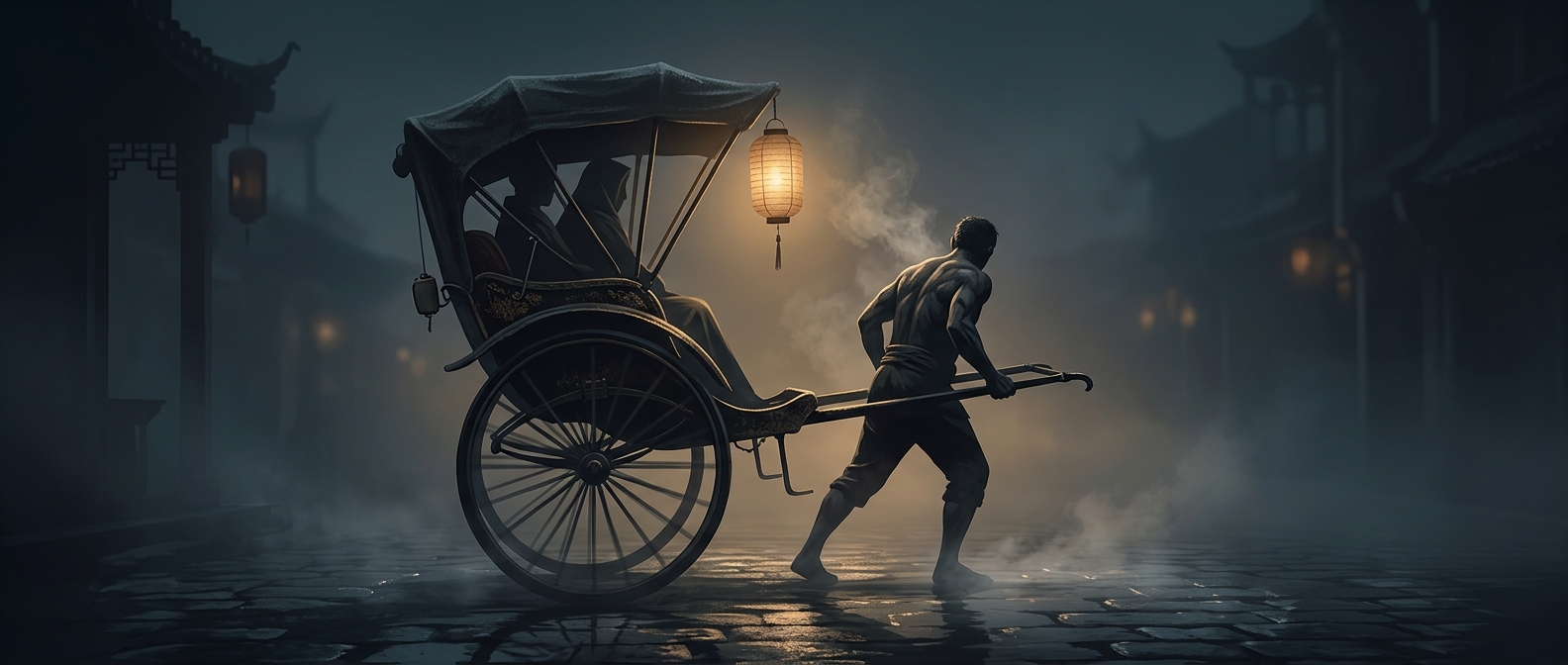
A hand-pulled rickshaw turns a person into both engine and part of the vehicle’s shock-absorbing system. The puller moves the carriage by running with its shafts in hand; when the wheels hit a rut or rough patch, the jolt travels through the frame and handles. The puller’s grip, arms, and body help steady the load. That is the grim meaning behind the idea that someone else supplied the suspension: the passenger could ride above the road while the person pulling felt its unevenness directly.
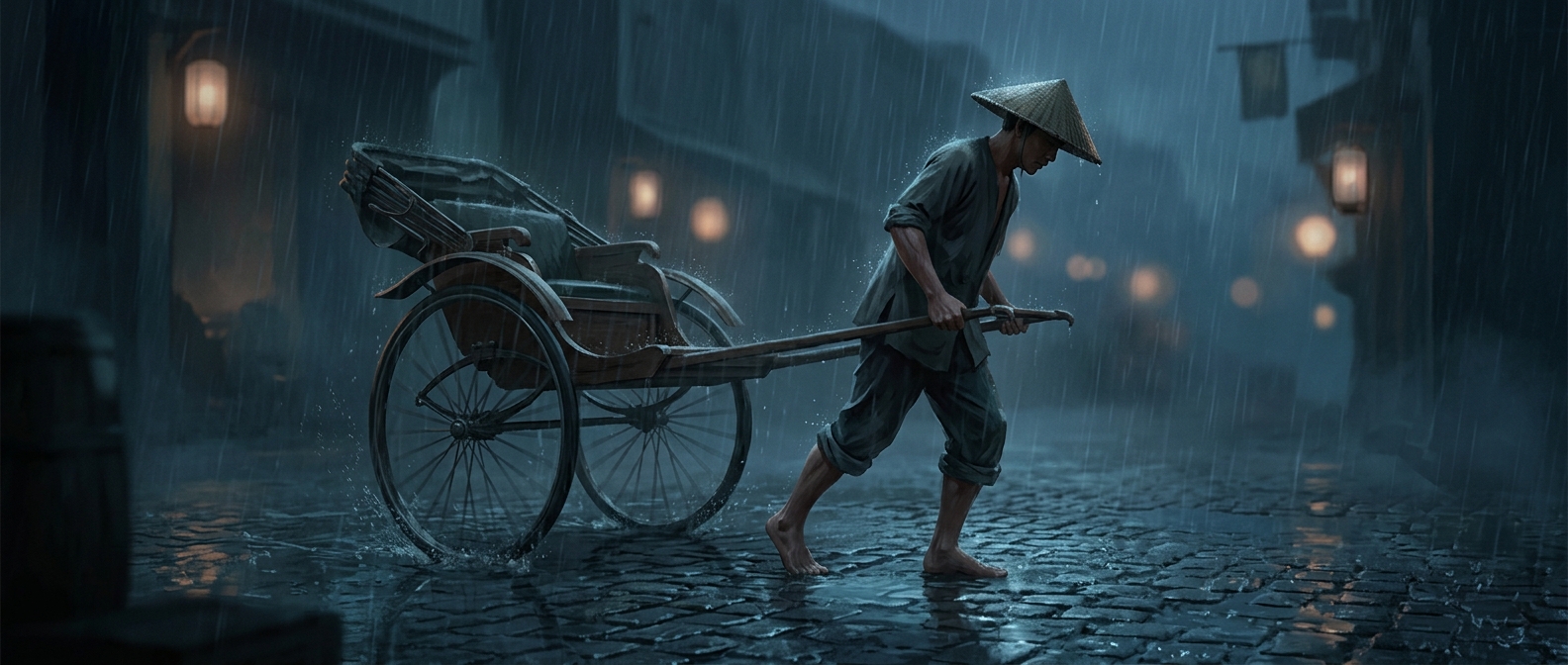
The feet faced their own punishment. Each stride landed on the street, so hot pavement in warm weather and icy ground in cold weather were not passing scenery but part of the working surface. Going barefoot also meant doing without a basic layer of protection.
Why footwear was not a simple fix
Footwear cost money, and a puller’s work demanded continuous movement. Those pressures could make shoes an expense to forgo, even when going without them exposed feet to heat, cold, and rough ground. The choice was not evidence that the conditions were comfortable; it shows how the cost of protection could fall on the worker least able to absorb it.
A rickshaw’s wheels carried the passenger’s weight, but they did not erase the human labor beneath the ride. Every trip depended on a puller’s legs to move the vehicle and a body to manage its jolts—often with bare feet meeting the same street the carriage rolled over.