A fare bought more than a place to sit
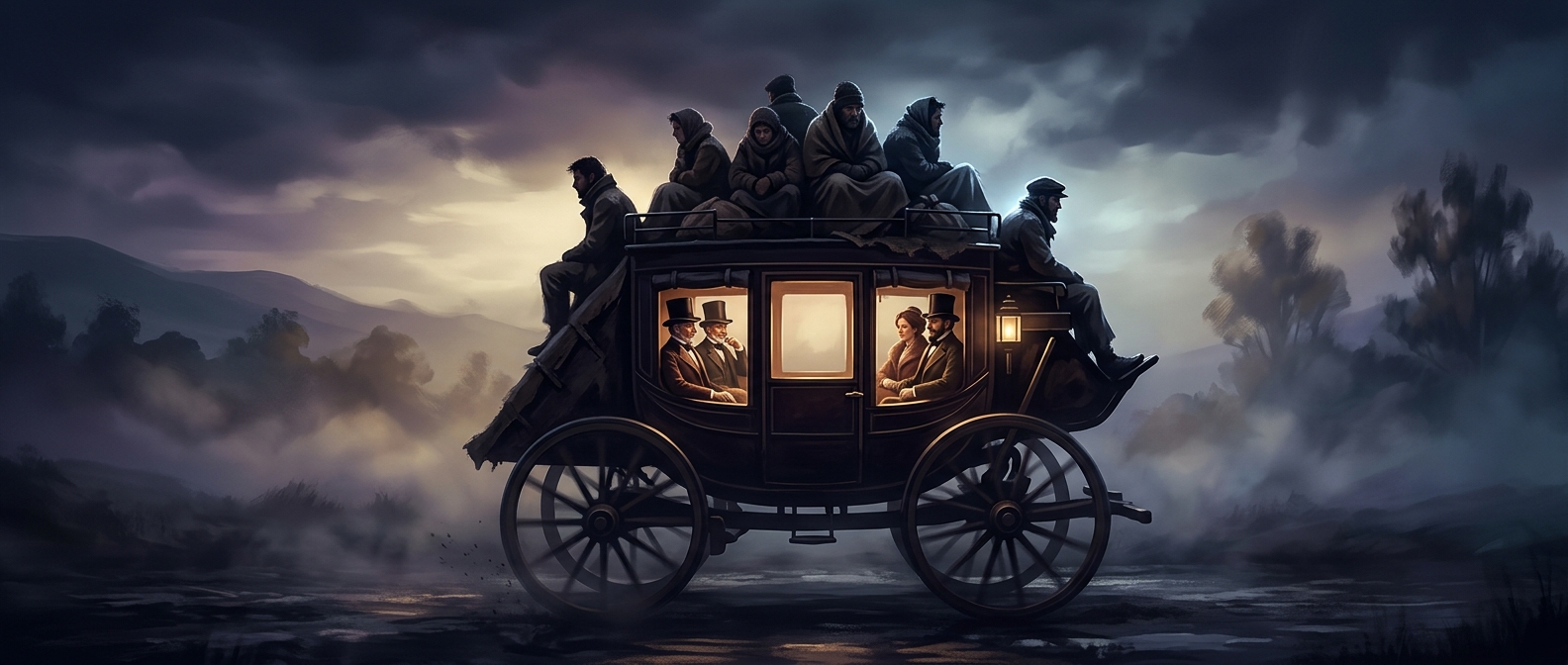
A stagecoach’s interior was a scarce resource. The enclosed compartment had limited room, but the vehicle’s roof could carry additional passengers as well as luggage. Operators could therefore sell different levels of comfort on the same journey: an indoor seat cost more, while a place above the coach was cheaper and exposed.
That difference mattered for the whole ride. Inside, passengers had a barrier against wind and rain. On top, riders faced the weather directly and had to endure the jolts and movement of an open perch. The lower fare made travel possible for people who could not afford an interior seat, but it did not buy an equivalent experience.
The coach made class visible
The seating plan turned a difference in money into a difference in physical position. Better-off passengers rode protected inside; those paying less were plainly visible above them. The roof was not simply a scenic vantage point—it was the less comfortable tier of a transport system that made extra room by using the vehicle’s exterior.
So the stagecoach carried more than passengers: its seating arrangement displayed who could pay for shelter, and who had to accept the wind and weather to reach the same destination.