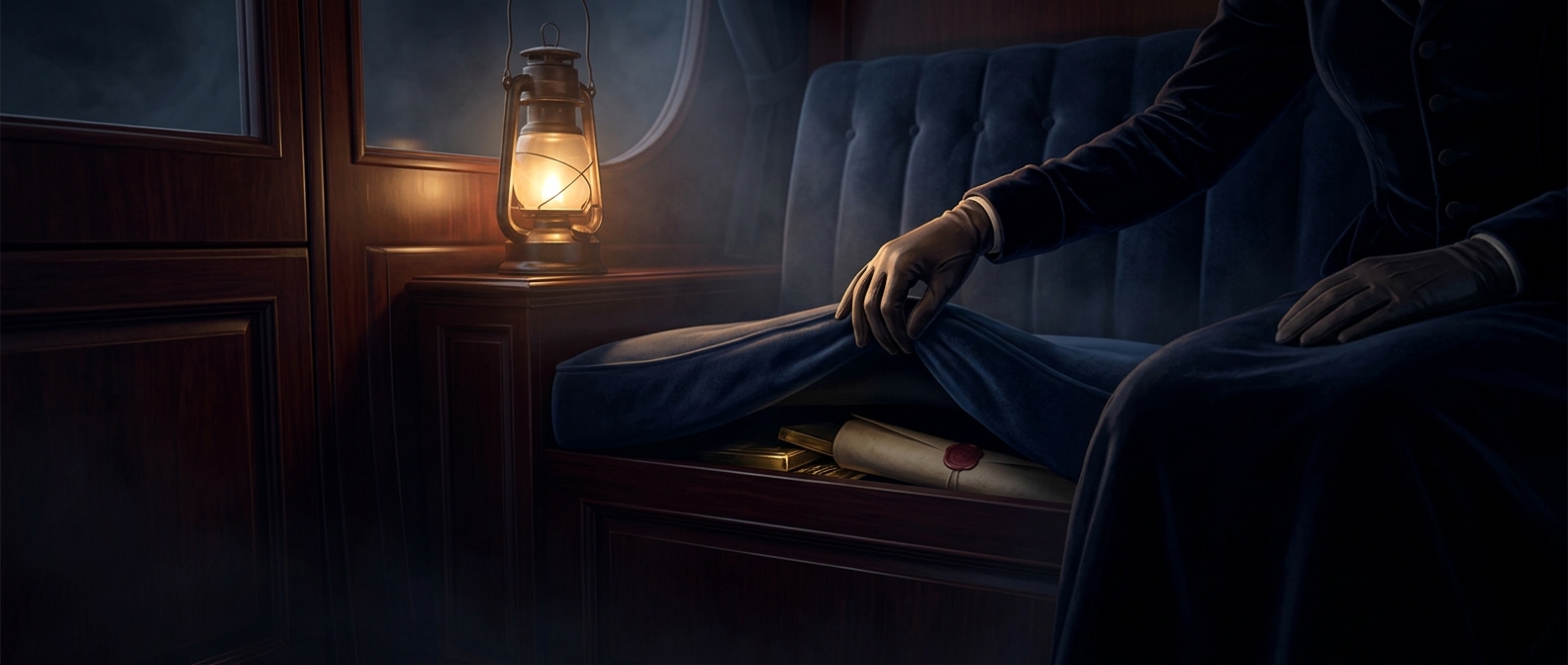
A carriage could hide more than its passengers
A Victorian carriage was not just a vehicle; it was also a way to carry money, documents, jewelry, and other small valuables from place to place. Roads could be rough, stops were unavoidable, and luggage might be handled by drivers, servants, or porters. A visible box or pouch was easy to notice—and a lock did not help if someone could simply take the whole container.
Concealed compartments offered a quieter form of protection: they made valuables harder to spot in the first place. A thief scanning the carriage for obvious luggage might see only finished woodwork and upholstery, not a place to search.
Concealment built into the bodywork
Carriage makers could use the space created by the vehicle’s structure, fitting small storage areas behind panels, beneath seats, or within other parts of the interior. The hiding place depended on the carriage’s design; there was no single standard compartment. A panel that looked like part of the trim might conceal a cavity, while a seat could disguise storage beneath its cushion.
This was security through appearance and access. The compartment had to be reachable by its owner, but not so apparent that every passenger or casual handler would think to look. That made craftsmanship part of the safeguard: a neat fit helped the hidden space disappear into the carriage’s ordinary finish.
A traveling safe with limits
A concealed compartment could reduce the chance of opportunistic theft, especially for small objects, but it was not a guarantee against a determined search. Its advantage was discretion, not the strength of a modern safe. The carriage itself became part of the hiding strategy: polished surfaces and comfortable upholstery were also camouflage.