Why a Stagecoach Swung as Well as Jolted
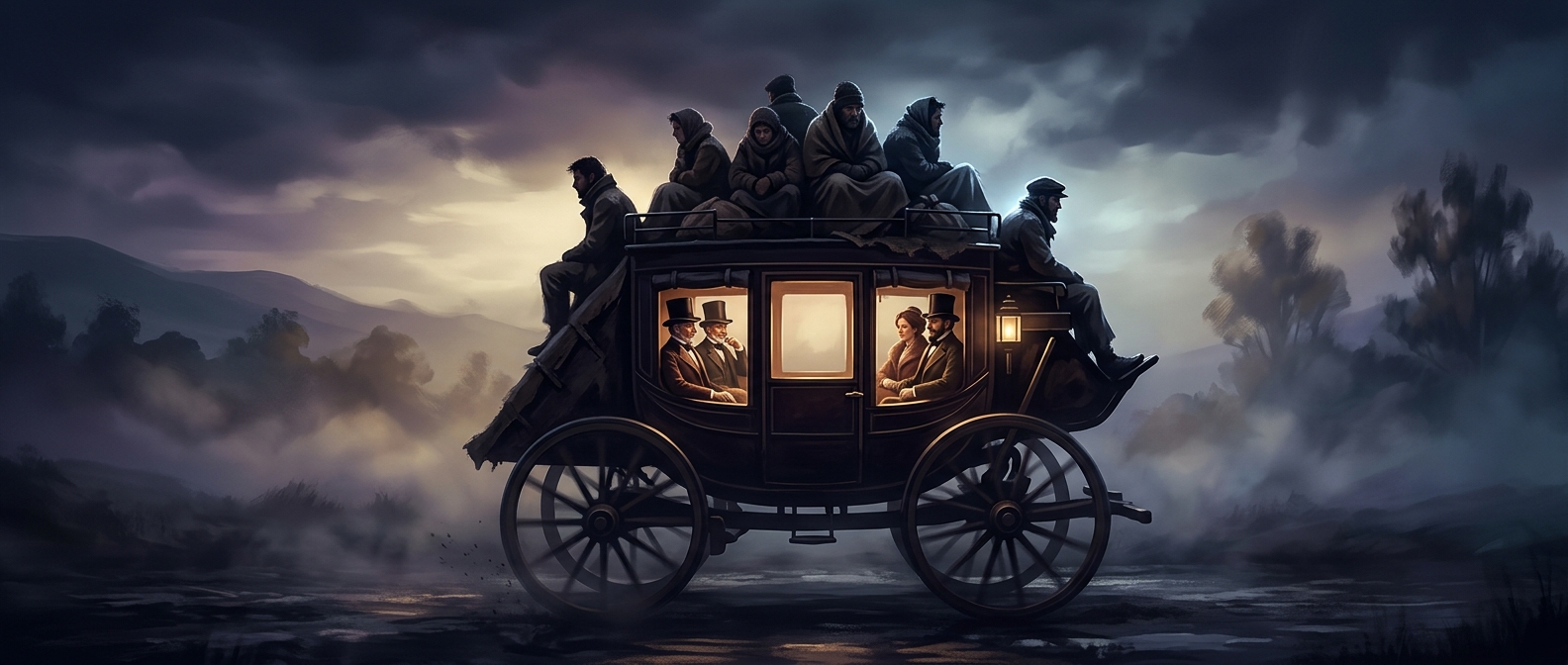
A stagecoach’s body was often suspended from the frame by thick leather straps, rather than resting rigidly on the axles. These straps acted like crude springs: when a wheel struck a rut, they could flex and soften the sharpest movement before it reached the passenger compartment. The body also swayed, though, and the straps could not absorb every bump—especially when the wheels dropped into a deep hole or climbed over uneven ground.
The arrangement was a compromise, not a modern suspension system. It reduced some shocks without isolating passengers from the road. The coach still had to carry people and luggage on wheels rolling over surfaces that could be rough, muddy, or deeply rutted. On a long trip, each jolt came through the floor and seat, while the coach’s swinging added a slower rocking motion.
Comfort Was Limited by the Whole Vehicle
Suspension could soften the impact, but it could not make the ride smooth by itself. The wheels, frame, straps, road, and speed all shaped what passengers felt. Hard benches offered little cushioning, and a crowded interior left little room to shift position when the coach lurched.
That is why a stagecoach could be engineered to take the edge off bumps and still feel punishing over hours. The leather straps changed the character of the motion; they did not erase it. Passengers rode inside a body that swung above the wheels while the road’s roughness kept working its way upward.