The last stretch of the journey
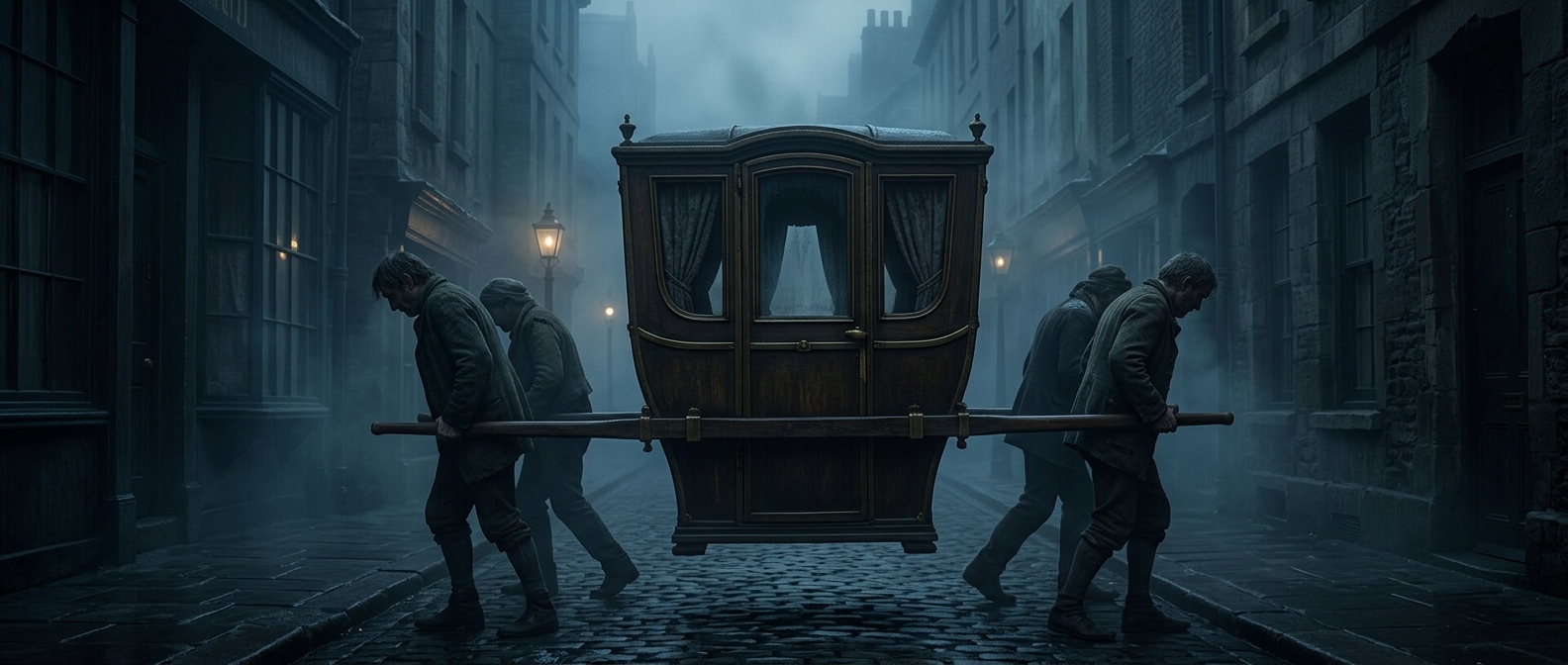
A carriage could bring a passenger close to a destination, but it could not always make the final approach comfortable. Streets might be uneven, crowded, or churned up by traffic. A sedan chair solved that last-mile problem: instead of stepping down and picking a way through the street, the passenger remained seated while bearers lifted the chair and carried it onward.
The chair’s body hung between long poles, with a bearer at either end. The poles transferred the passenger’s weight to the bearers’ shoulders; their coordinated steps kept the enclosed seat moving. Unlike a wheeled vehicle, the chair needed no clear track beneath it, so it could be maneuvered through tight approaches and over rough patches where wheels were awkward.
Comfort depended on someone else’s effort
That convenience shifted the physical cost of travel. The passenger avoided mud, jolting wheels, and the effort of walking, while the bearers supplied the power with their own bodies. The chair was therefore not simply a smaller carriage: it was a way to make a short urban transfer possible by replacing road access with human labor.
Its appeal also depended on having servants available to do that work. A smooth arrival at the doorstep could conceal the difficult part of the journey—the lifting, balancing, and walking required to carry another person through the same streets.