A Familiar Sequence, Not a Universal One
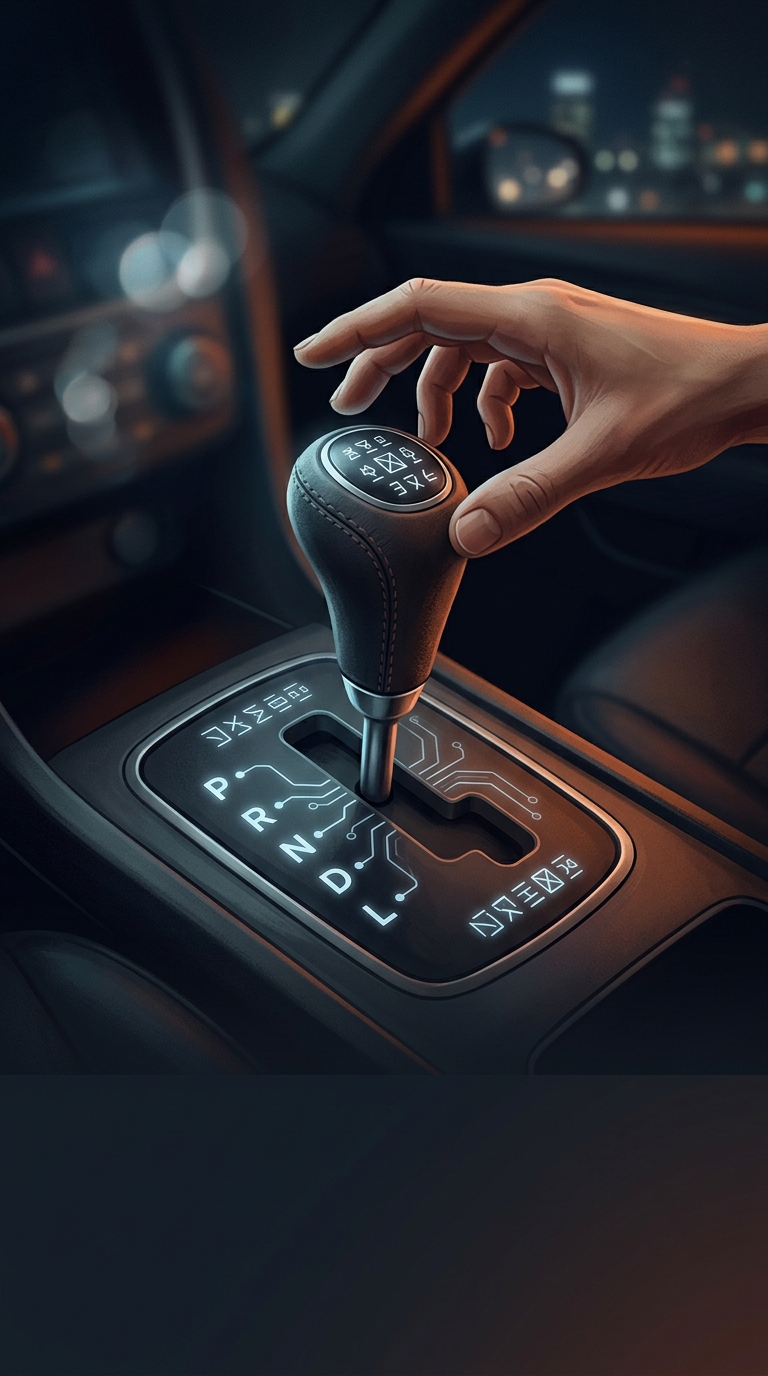
In many cars sold in the United States, the selector follows P–R–N–D: Park, Reverse, Neutral, Drive. If lower gears are available, they may appear below Drive as “L,” numbered ranges, or other settings. That familiar order is not literally identical in every car, country, or interface: some vehicles use buttons or dials, and some omit a low-gear position altogether.
The sequence is chiefly a standardization and safety convention. U.S. vehicle rules specify the order of automatic-transmission positions, giving drivers a predictable layout across models. That matters most when someone switches cars or must shift quickly without studying the console.
Why Reverse Sits Between Park and Neutral
The selector’s labels correspond to different jobs inside the transmission. Drive lets the car move forward; Reverse engages the mechanism for backing up; Neutral disconnects the engine’s drive from the wheels; and Park locks the drivetrain to help keep the vehicle from rolling. Park is placed at one end, with Reverse next to it, rather than among the forward-driving ranges.
The layout also works alongside safeguards. Many cars require the driver to press the brake before shifting out of Park, and the selector’s positions are often marked or electronically displayed so the chosen range is clear. These features help prevent a casual bump of the lever from setting the car in motion.
What “L” Actually Means
“L” generally signals a low range, in which the transmission holds lower gears for situations such as steep descents or slow, controlled driving. It is not a required final letter in a universal P–R–N–D–L pattern. The enduring idea is the ordered set of main positions; the extra ranges and the physical controls can vary. That consistency lets a driver find the essential choices by habit, even when the surrounding console looks unfamiliar.