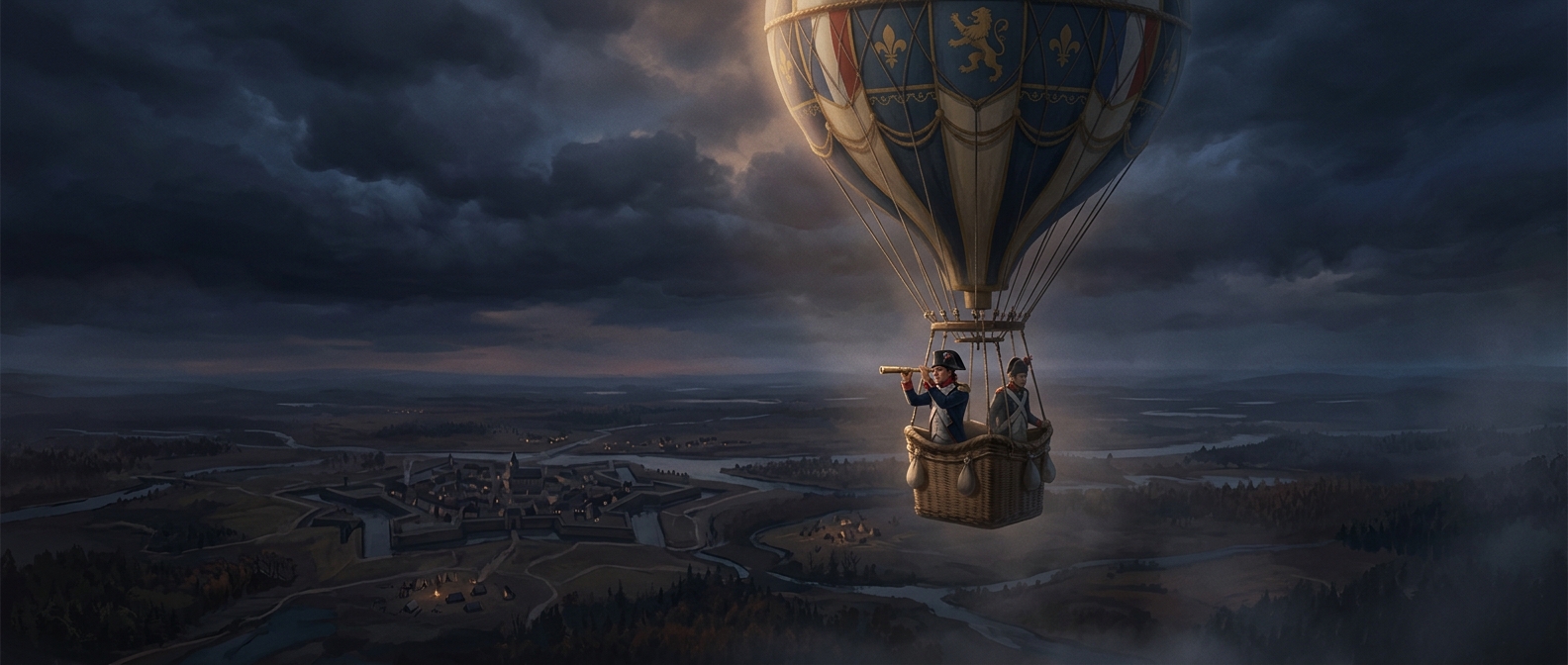
A fire, not a cloud of smoke, made the balloon rise
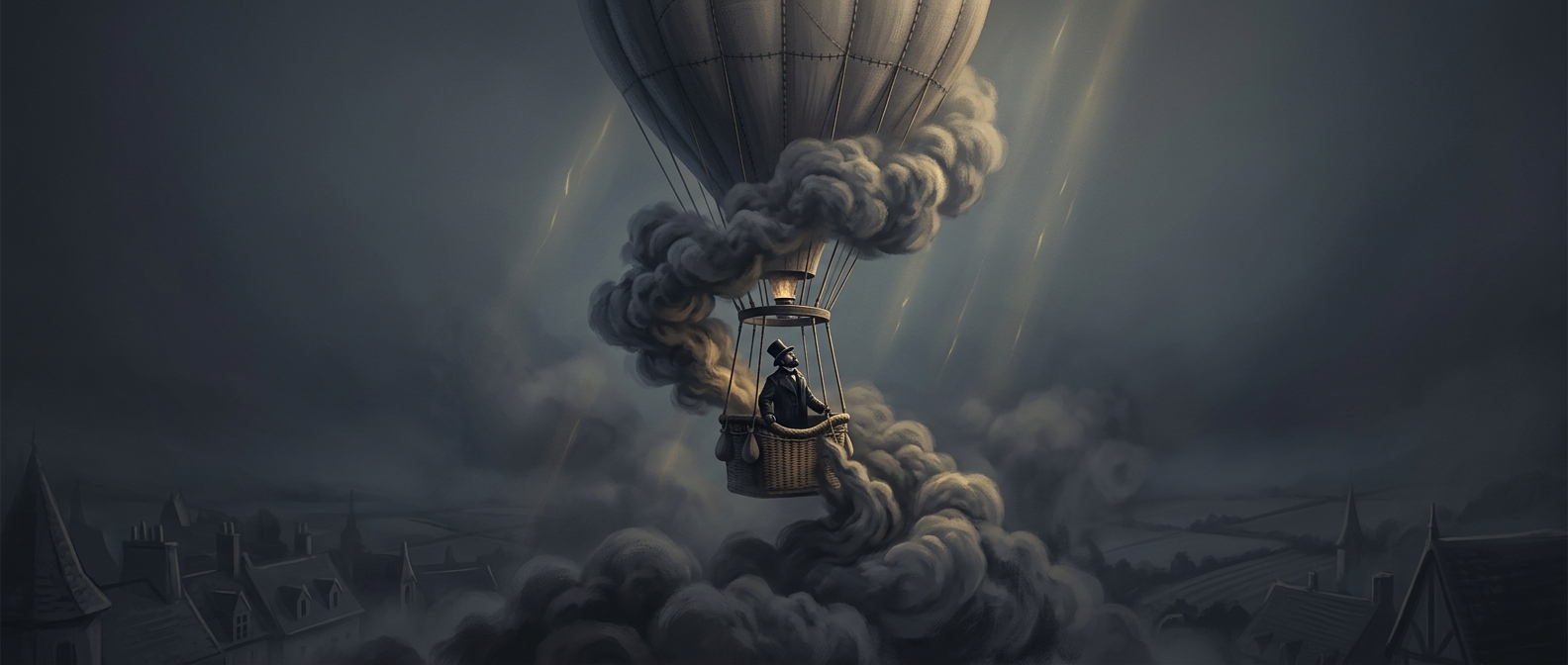
Early hot-air balloons had no compact gas burner. Their crews kept a fire burning beneath the open mouth of the balloon, feeding it materials such as straw and wool. The flame heated the air trapped inside the fabric envelope—the large bag that held the balloon’s lifting air.
Warm air expands and becomes less dense than the cooler air around it. The surrounding atmosphere then pushes up on the balloon more strongly than the balloon’s total weight pulls it down. As long as that upward buoyant force was greater, the balloon could climb with its passengers and basket.
Why the smoke could mislead
A plume of smoke made the fire visible and dramatic, but smoke was not the lifting gas. It was a byproduct of burning material. The useful part was the heat transferred into the envelope; smoke that escaped into the sky did not provide the balloon with a lasting lift.
That distinction mattered in flight. To gain height, the crew had to keep adding heat. When the air inside cooled, it grew denser, the upward force weakened, and the balloon began to descend. Early ballooning therefore depended on tending a fire while aloft—a delicate task beneath a fabric envelope that had to stay hot enough to lift, but not be damaged by the flames.