A truck built to cross the surf
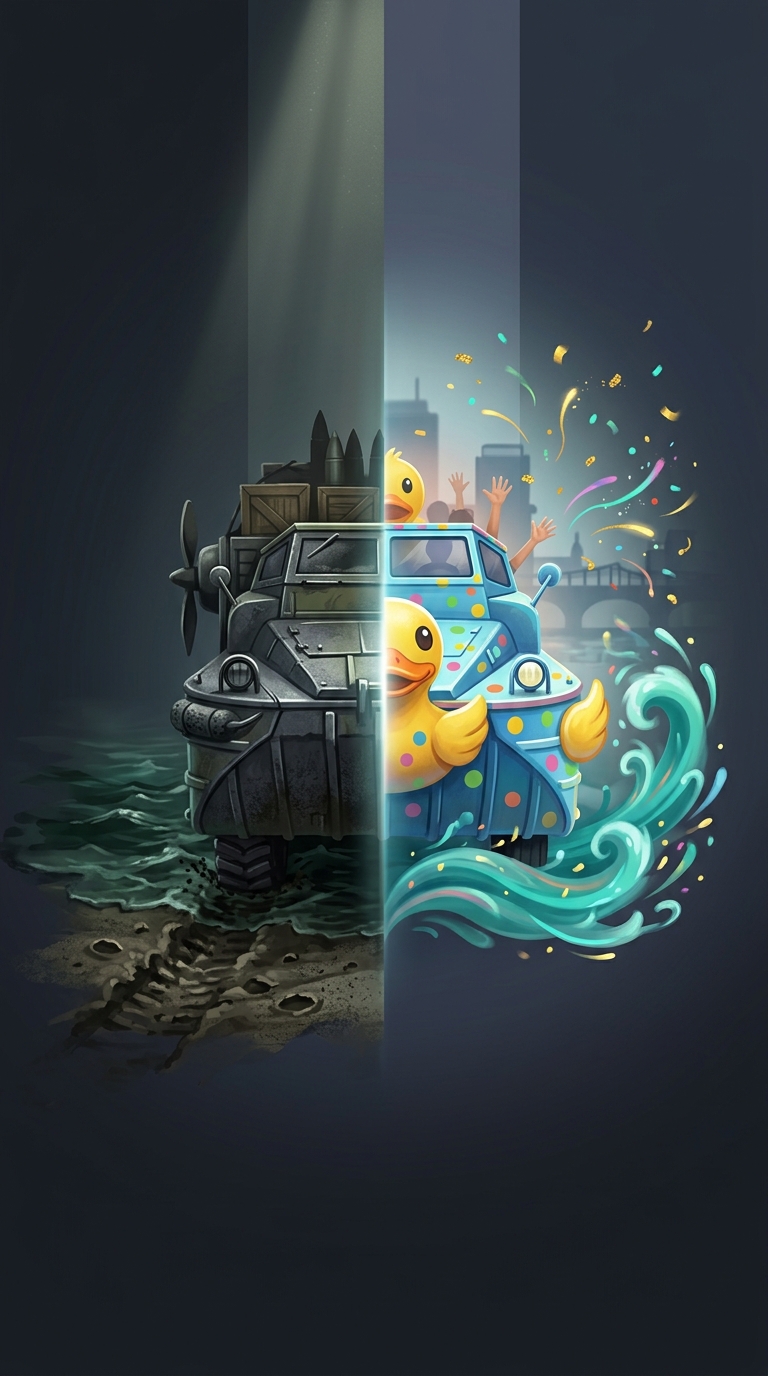
A conventional truck could carry supplies inland but could not leave a ship and drive through the sea. A landing craft could cross the water, but its cargo then had to be unloaded onto shore vehicles. The DUKW combined those jobs: it was a wheeled cargo truck inside a watertight boat-shaped hull, able to travel from a ship through shallow water and onto land.
One vehicle, two ways of moving
In the water, a rear propeller pushed the DUKW forward, while the sealed hull kept it afloat. As it reached shore, its wheels took over, carrying cargo beyond the beach. That handoff mattered because beaches were often the only available landing points; a force that could get supplies ashore but not move them inland would quickly run short.
The design did not make the vehicle a warship. Its advantage was practical mobility: instead of transferring cargo from boat to truck at the water’s edge, crews could keep it aboard one vehicle across both environments. That reduced a vulnerable, time-consuming break in the supply chain during an amphibious landing.
From battlefield utility to sightseeing
After the war, the DUKW’s unusual combination of hull, propeller, and road wheels made it easy to recognize—and useful for a very different kind of trip. Tourist operators turned the amphibious transport into a sightseeing vehicle, giving passengers a ride that moves from streets into the water. The same mechanical compromise that once carried supplies across a beach now supplies the spectacle: a truck that can simply keep going when the road ends.