Why a rail changed the ride
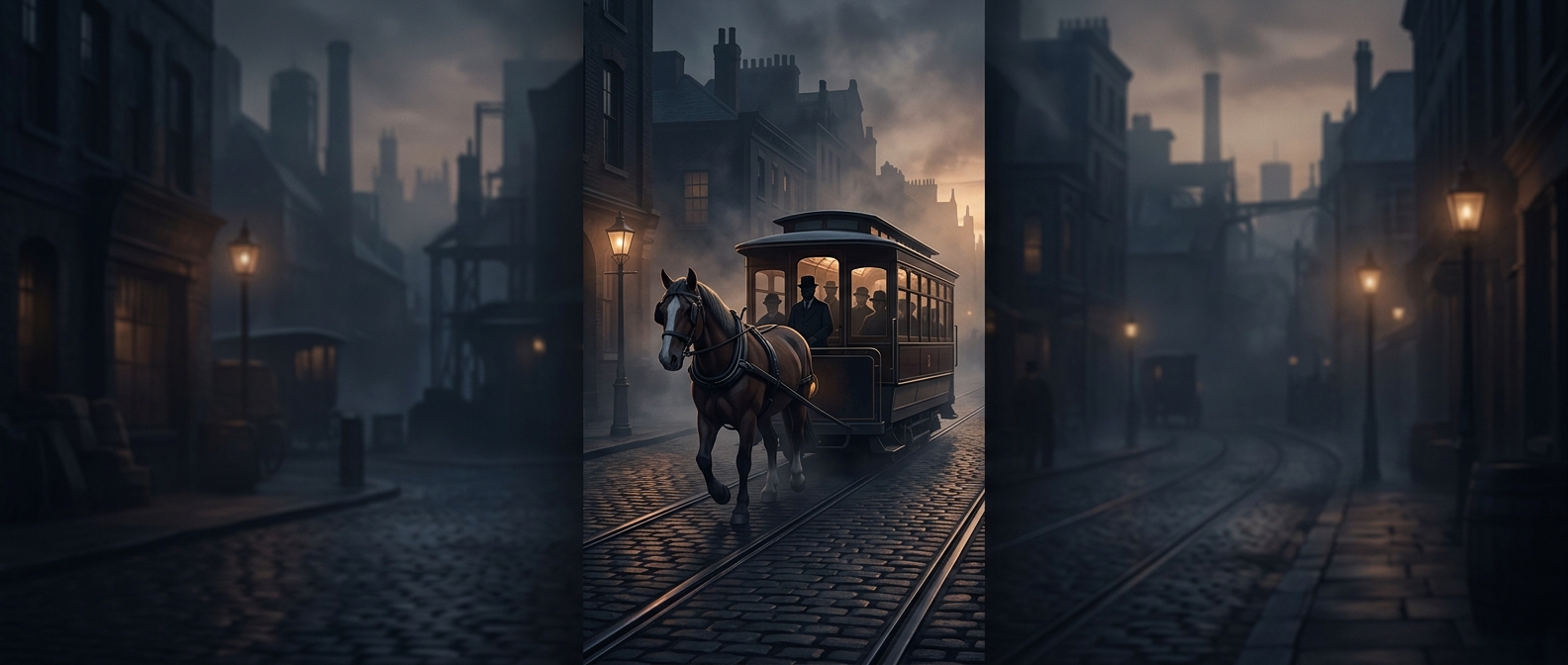
A horse pulling a wagon over a rough street had to contend with ruts, stones, and soft patches that made the wheels resist movement. A streetcar’s wheels instead ran on fixed rails, giving them a smoother, more predictable path. That reduced the effort needed to keep a heavy vehicle rolling, so a team could carry more passengers than it could in an ordinary road carriage.
The rails also shaped the city. A streetcar could follow a dependable route, but only where track had been laid. Installing and maintaining that track required investment in the street itself, while the vehicle’s schedule still depended on living animals that needed rest, food, and care.
The hidden cost of horse power
Horse-drawn cars exchanged one kind of friction for another. Their animals consumed feed and produced waste along busy streets; they could tire, become ill, or need replacing. Operators had to manage those limits while serving a growing stream of riders. The rails made each horse more effective, but did not remove the work and upkeep behind the service.
That distinction helps explain why the horse streetcar was an important step rather than a final solution. It combined the capacity of a larger vehicle with a smoother ride, yet its power source remained constrained by animal endurance and the needs of the stable. When electric traction became practical, cities could keep the rails and cars while changing what pulled them. The track had already solved the problem of moving a loaded carriage efficiently through the street; electricity offered a way to do it without feeding and rotating teams of horses.