Making Livestock Visible in a Blackout
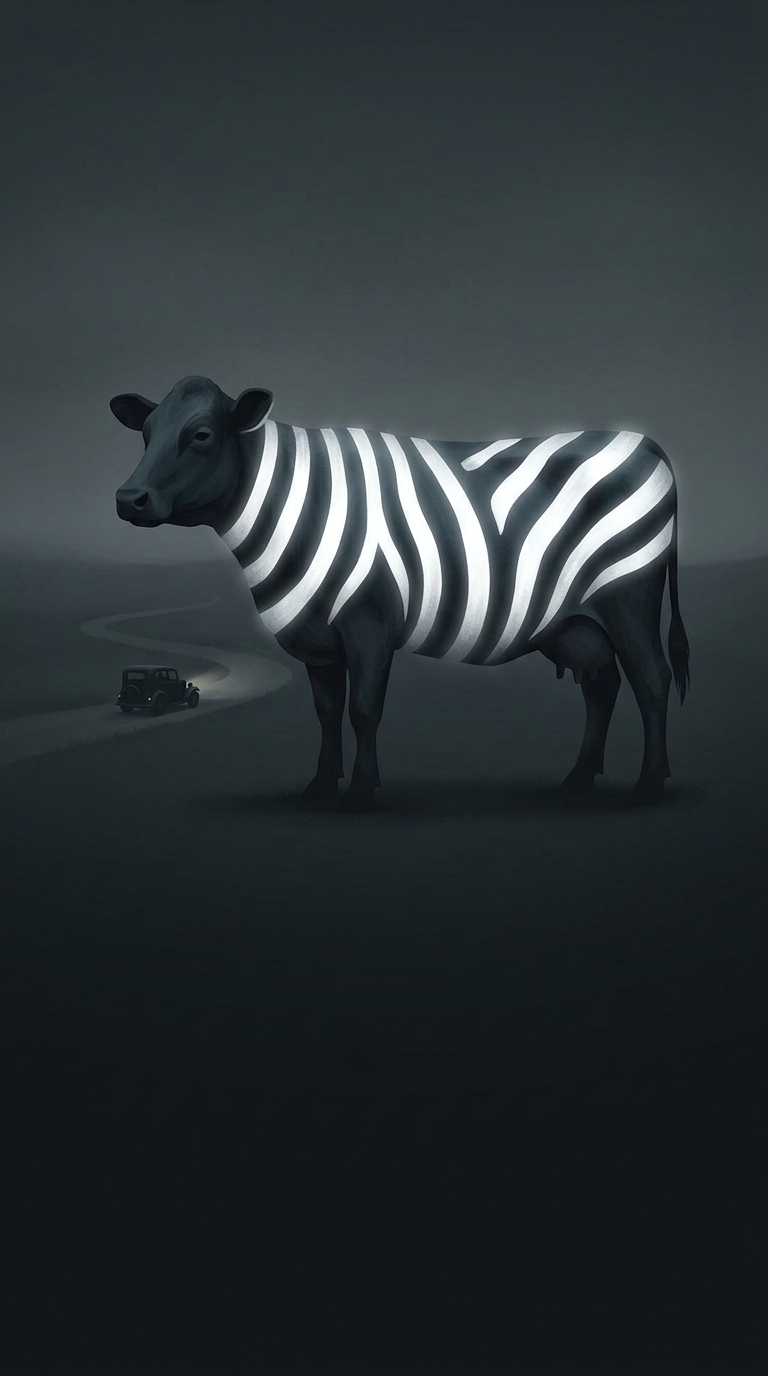
Wartime blackouts made familiar roads unusually hard to read. To hinder enemy aircraft, towns and countryside were kept dark, and drivers had to travel with restricted lighting. A cow crossing the road could disappear into the night until a vehicle was close enough for a collision to be difficult to avoid.
Turning Headlights Into a Warning
White paint offered a simple fix because it reflected a vehicle’s headlight beam back toward the driver. Stripes on a cow’s sides could make its outline stand out against the dark, giving motorists more time to recognize an animal and slow down. The paint did not light the road or make the cow visible from every angle; it made the limited light available do more useful work.
A Road-Safety Measure With Wartime Limits
The measure addressed a specific tradeoff: blackout rules reduced the light drivers could use, while livestock still moved through rural lanes and across roads. Marking animals shifted some of the burden of visibility from motorists to farms, where cows could be painted before being turned out.
It was a low-tech form of conspicuity—the quality of being easy to notice—applied to a moving hazard. In the dark, a few reflective stripes could turn an indistinct shape into a warning with enough time for a driver to react.