A swimming pool’s hidden geometry
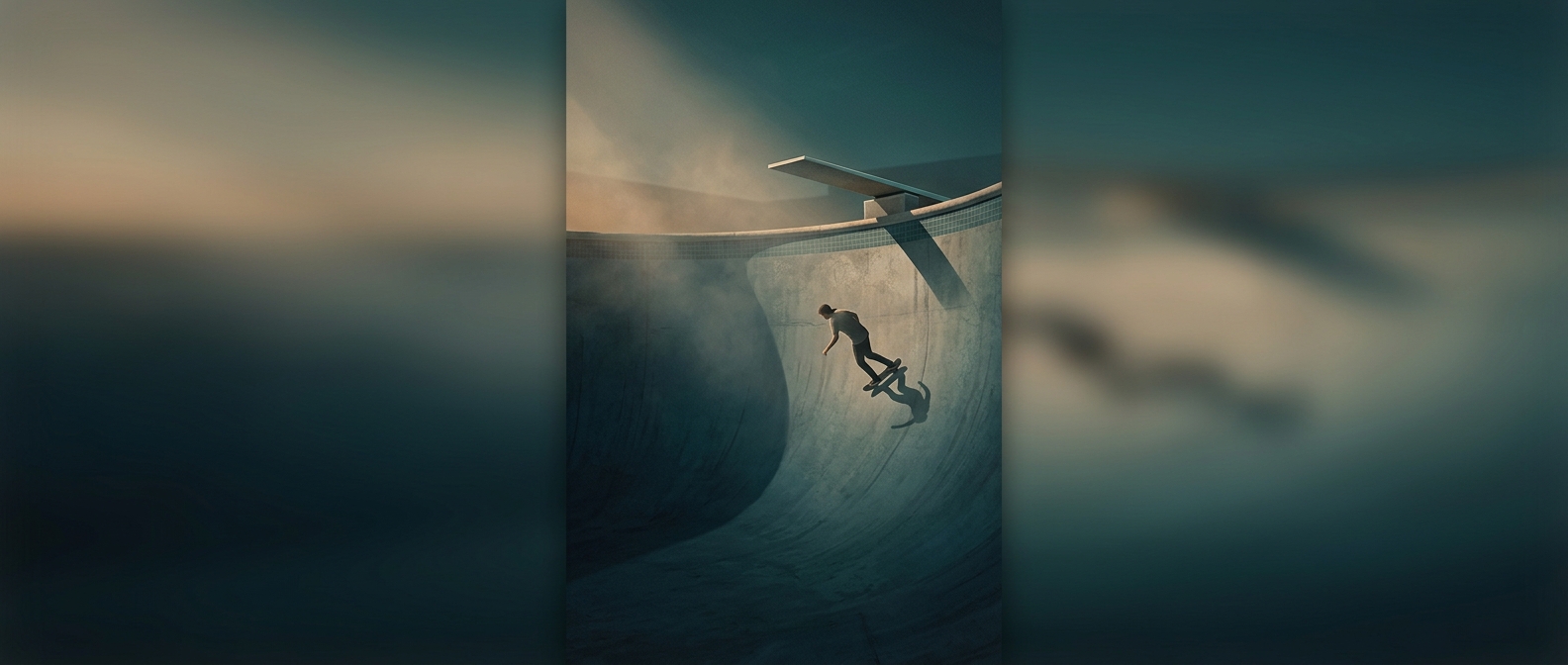
A backyard pool was not simply a bowl-shaped place to skate. Its deep end joined a flat bottom to steep, curved walls, a shape that let a rider carry momentum upward instead of hitting a sharp corner. Leaning into a turn redirected the board across the curve; gravity then pulled it back down, where the rider could build speed for the next climb.
That curved section is called a transition. Its smooth, continuous surface made a drained pool feel less like ordinary pavement and more like a wave: riders could pump their bodies through turns to gain speed, then climb higher on each pass. The rim, often finished with rounded coping, marked the edge of the ride—and a challenge to reach without losing control.
From backyard terrain to vertical skating
In the 1970s, skateboarders in drought-stricken parts of California began seeking out empty swimming pools. The pools offered steep, varied terrain that flat streets could not, and their different shapes rewarded experimentation: a wall might be gentle enough for a long carve, or steep enough to force a quick, committed turn.
Riding higher brought the board close to the pool’s rim, opening the way to maneuvers that went beyond simply carving the bowl. As skaters pushed those limits, the pool became a model for purpose-built terrain, including ramps with similarly curved walls. The key innovation was not just skating in an unusual place; it was discovering that a surface designed to hold water could convert a skateboard’s forward motion into repeated climbs, turns, and descents.