A vehicle shaped for the street it had to use
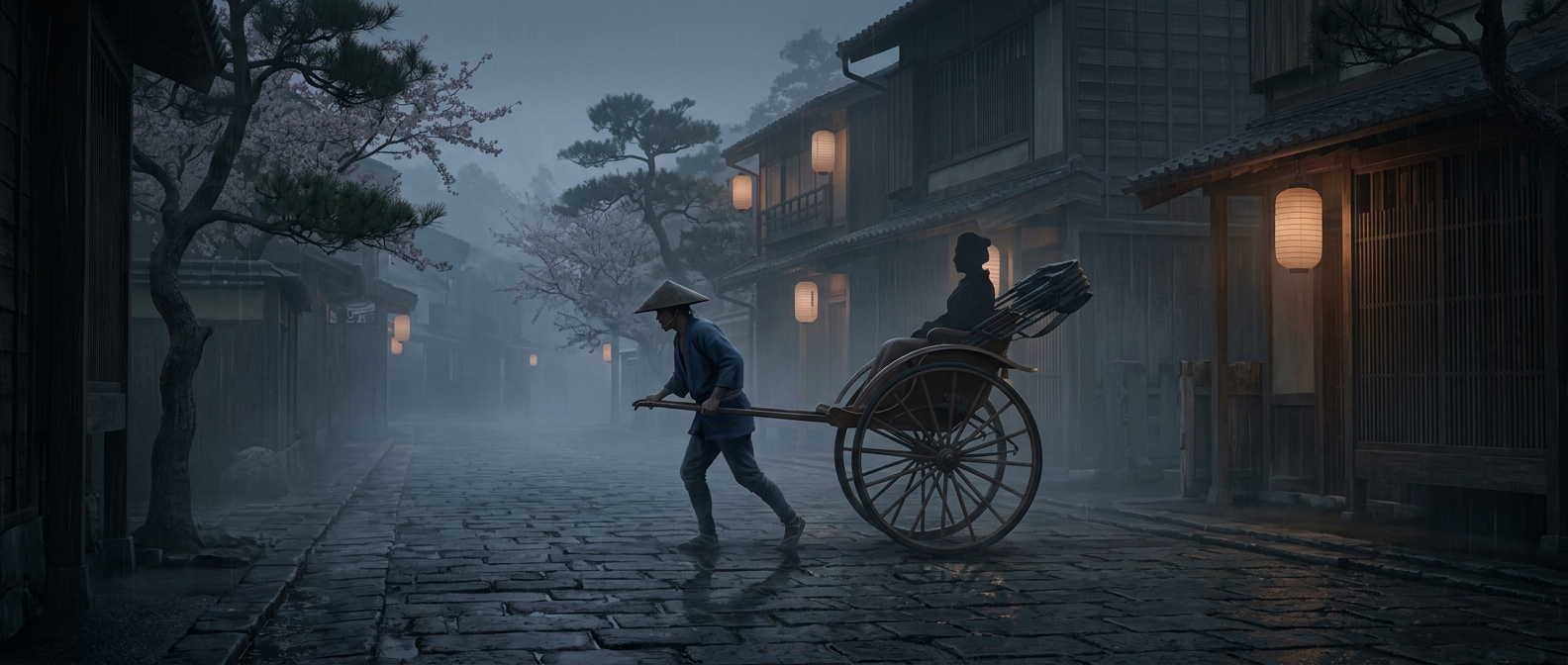
In crowded Japanese towns, many streets were narrow, and travel often meant sharing space with pedestrians and other traffic. A large carriage needed room not only to move forward but also to turn and pass. The rickshaw’s compact, two-wheeled frame could thread through tighter gaps, while its puller could guide it around obstacles at close range.
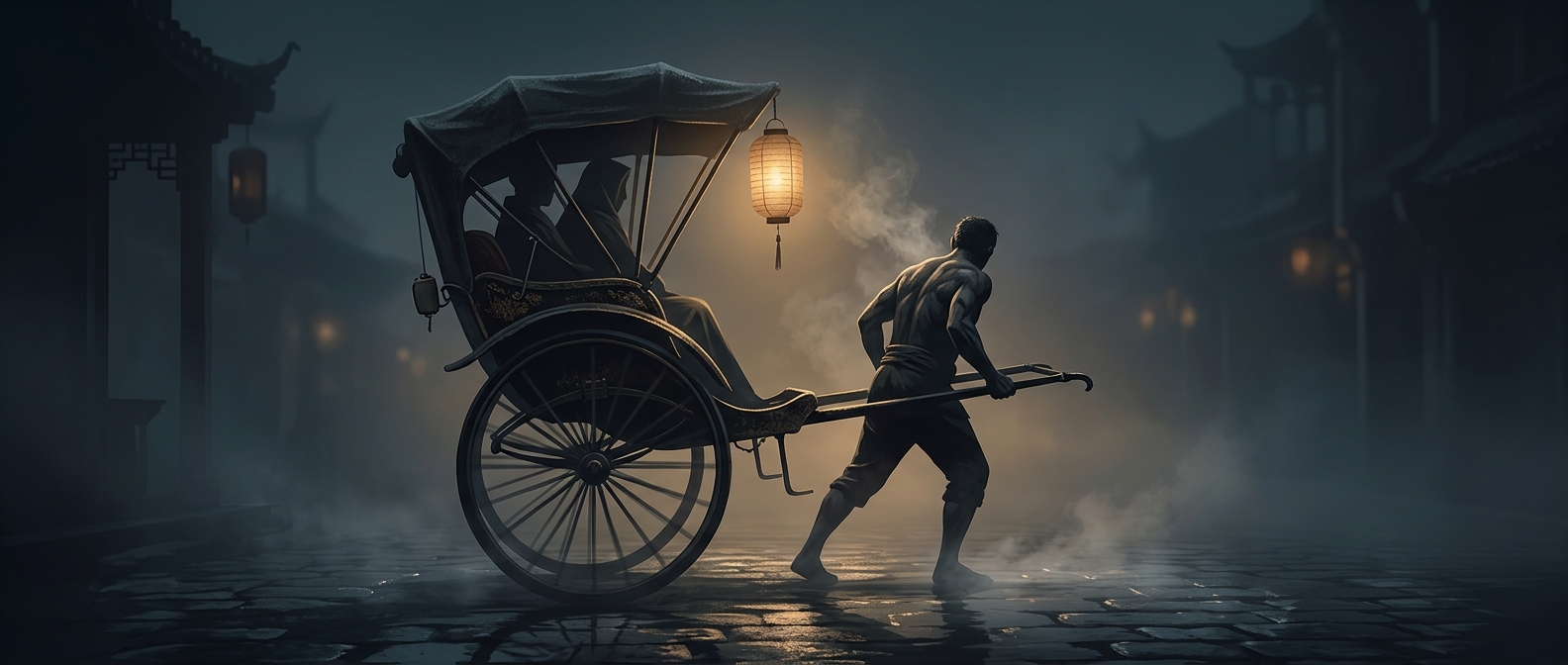
Its layout also kept the vehicle relatively simple: a passenger sat between two large wheels, with long shafts extending forward for the puller to hold. That arrangement avoided the bulk of a carriage built around a horse and offered a direct way to carry one or two passengers along existing streets, without waiting for roads to be widened or transport infrastructure to change.
The tradeoff behind the convenience
The same design that made a rickshaw nimble also made its service depend on a person’s strength. That meant no animal to feed and maintain, but the work and physical cost shifted onto the puller. For passengers, the bargain was practical: hire a ride that could reach places a larger vehicle might struggle to navigate.
Rickshaws therefore fit the street network rather than remaking it. Their success rested on a simple match between a small vehicle and tight urban routes—and on labor that could take the vehicle wherever wheels alone could not.