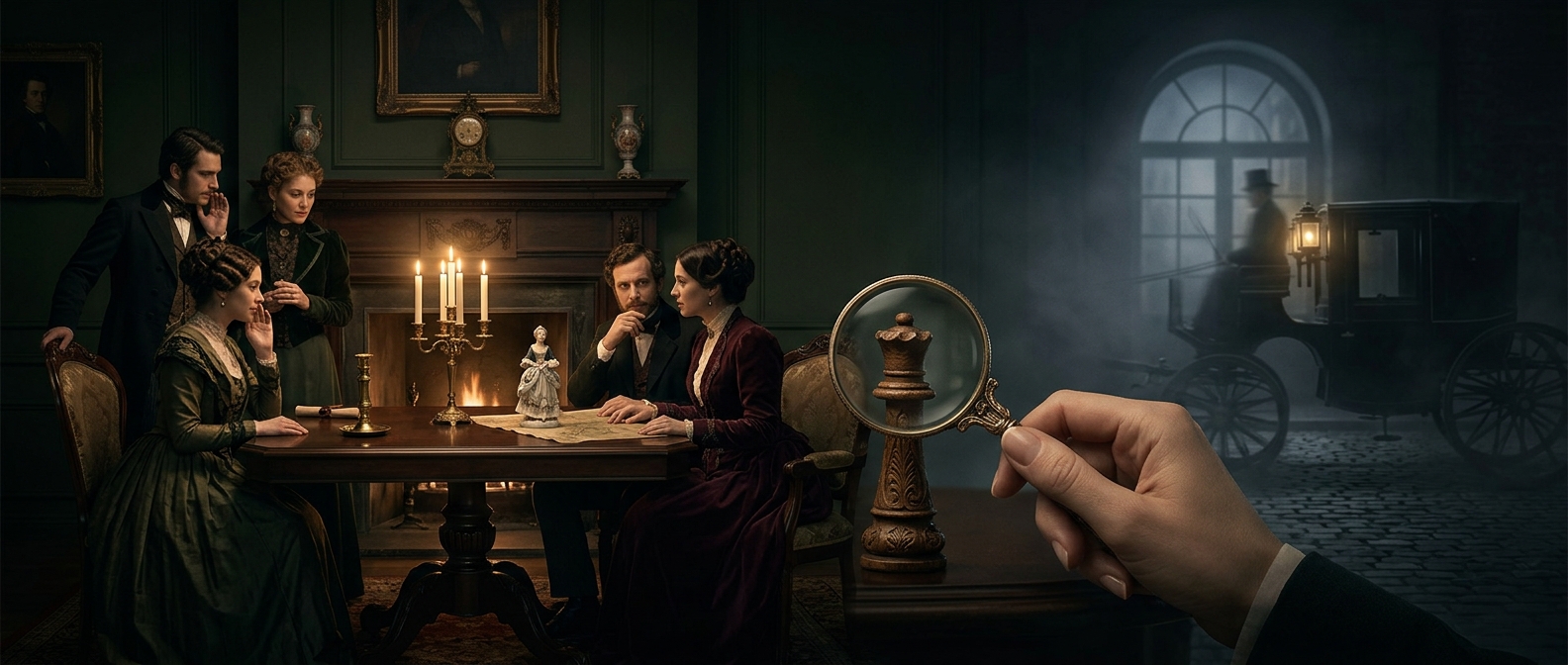
A room became the game board
In Victorian parlors, a guessing game could turn ordinary household surroundings into shared entertainment. One person picked an object without naming it; the others asked questions or used a clue to work out which object was meant. The challenge was not finding something rare, but noticing familiar things in a new way.
That made the game easy to start. It needed no cards, board, or special equipment—only a group with a view of the same room. A chair, picture, or household ornament could become the focus of everyone’s attention, while each guess narrowed the possibilities.
Why the format lasted
Parlor games suited social visits and evenings spent indoors: they gave a group something to do together without interrupting conversation or requiring much preparation. I Spy also let players adjust the difficulty. A broad hint could keep younger or less experienced players involved; a more restrictive clue made the search harder.
The game’s staying power comes from that simple design: it turns looking into a contest of attention. Once someone secretly chooses an object, the room feels different—not because anything has moved, but because every visible detail might now be the answer.