A throne that moved only with help
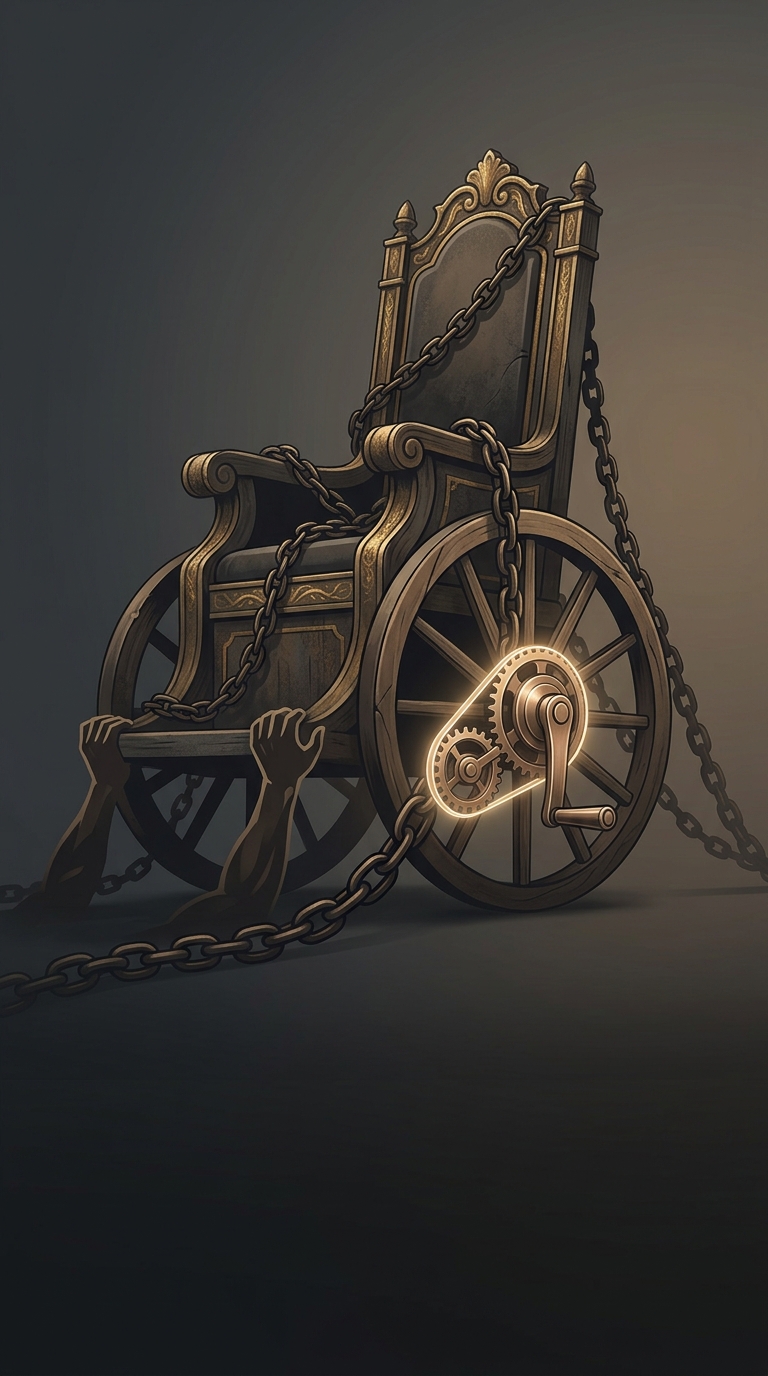
Philip II’s chair solved a problem of access, not self-propulsion. Its tiny wheels could roll the king from one place to another, but attendants had to push it. The chair’s mobility therefore depended on a human-powered system: the person seated could be transported, while other people supplied the force and direction.
That distinction matters. A wheeled seat is not automatically an independently usable wheelchair. Small wheels are difficult to push over uneven floors or thresholds, and a massive wooden frame would have made the effort greater still. The chair worked best where attendants could manage its weight and the route was suitable—conditions a royal household could provide more readily than most people could.
Mobility shaped by status and setting
The chair combined a seat of authority with a practical means of moving a ruler whose health limited his mobility. Its armrests and throne-like form offered support and preserved the visual dignity of a king; the wheels made it possible to relocate him without carrying him in an ordinary seat.
But the design also made its limits visible. There were no large hand-rims for Philip to turn, and the wheels were not intended to let him travel under his own power. The chair extended the king’s reach through his attendants, rather than giving him independent movement. Its usefulness rested as much on the people and palace around it as on the wooden frame itself.