A pump turns a few strokes into lifting force
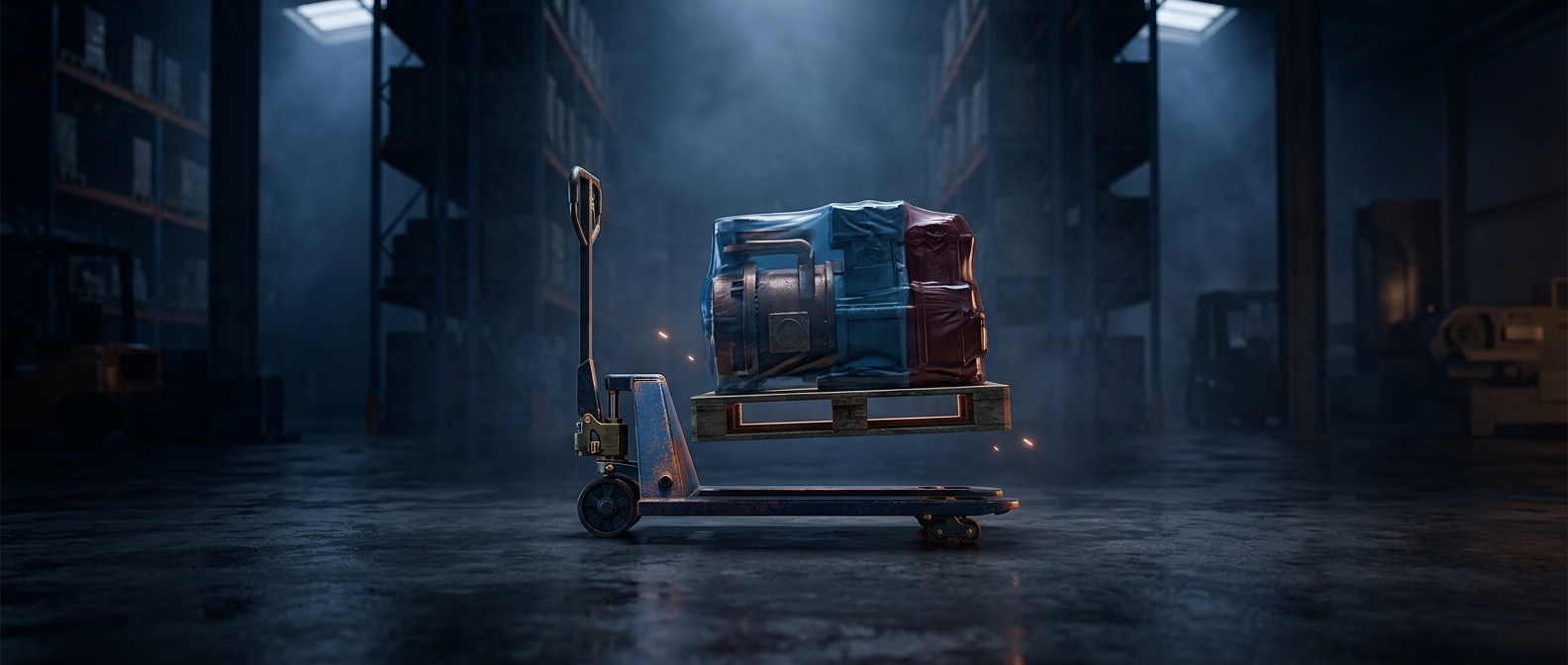
The long handle does more than steer. When an operator pumps it up and down, it drives a small hydraulic pump: the pump pushes oil into a cylinder, and the pressurized oil moves a piston that raises the forks. The handle’s leverage and the hydraulics let a person apply force gradually rather than heave the load upward in one motion.
To lower the forks, the operator opens a release valve. Oil flows back out of the cylinder, so the pallet settles under control instead of dropping freely. The same basic system makes the jack useful for both lifting and precise placement.
The low lift is a design constraint—and an advantage
A pallet jack is built to move loads across a floor, not to raise them to working height. Its small wheels can enter the narrow space beneath a pallet, then roll the lifted load along a warehouse surface. Keeping the load close to the floor also limits how high its center of gravity rises, helping the jack stay manageable as it turns.
That design has limits: the jack needs a pallet it can get beneath and a route its wheels can cross. Rough ground, steep slopes, or a gap too large for the wheels can stop it. In a warehouse, though, the small lift is enough to transform a heavy, stationary stack into one that can be rolled to its next destination.