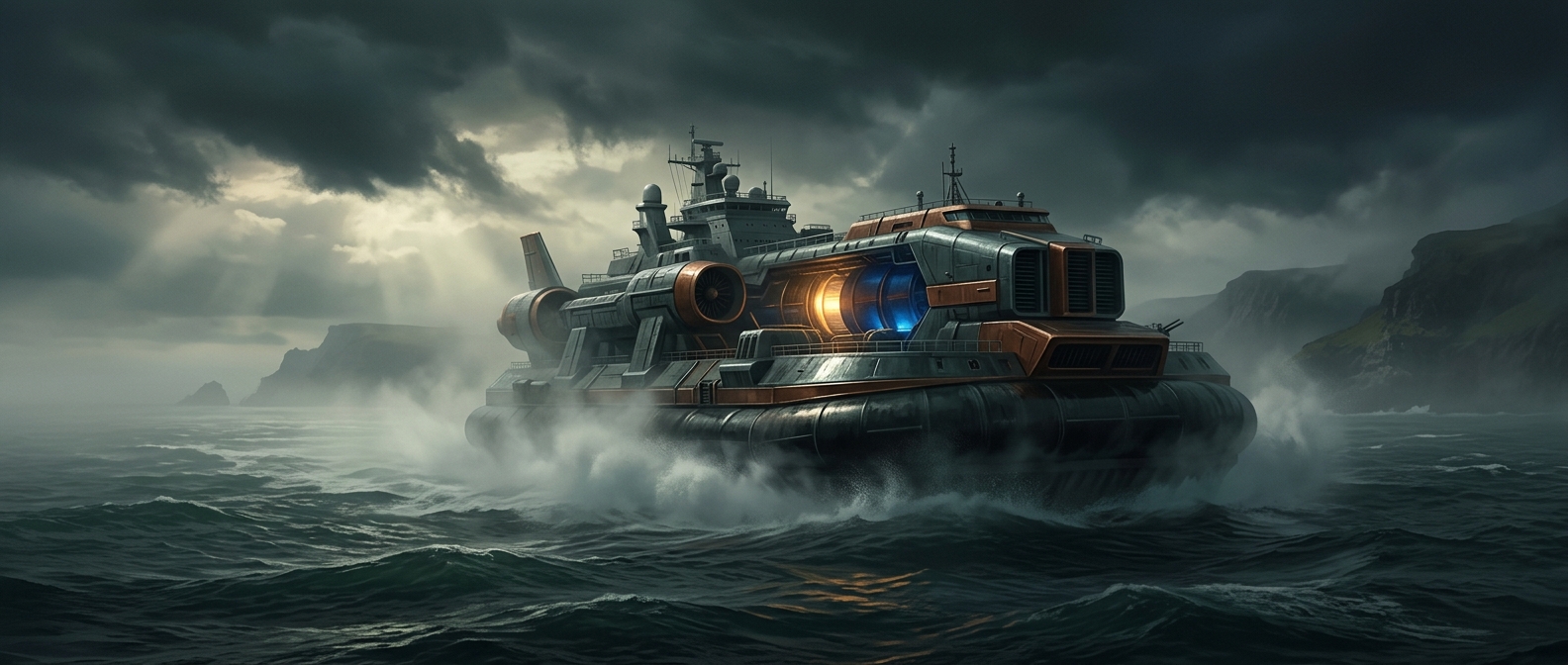
The power plant had to lift the vehicle, too
A hovercraft does not travel like a boat pressing through water. Large fans push air beneath its hull, raising it on a cushion; other fans or propellers provide forward thrust. That arrangement can cross water, mud, or other flat surfaces, but it demands a steady supply of power just to keep the craft aloft.
A nuclear reactor seemed to offer a way to keep that power coming without frequent stops for conventional fuel. In principle, heat from the reactor could be converted into electricity or mechanical power for the fans. But the reactor would not replace the fans or make the craft simpler: it would add a second, highly complex system to a vehicle already built around moving enormous volumes of air.
Why the hovercraft was an awkward place for a reactor
A reactor needs shielding to reduce radiation exposure, along with robust systems to control it and contain radioactive material. That equipment adds mass. On a hovercraft, extra weight means the lift system must move more air to raise the craft, which in turn requires more power. The proposed energy source could therefore create a feedback problem: the protection needed for the reactor made the vehicle harder to lift.
The setting also mattered. A craft designed to skim across water would have to manage the reactor safely while moving, operating near a marine environment, and potentially facing collisions or rough conditions. Those demands would shape the hull, maintenance arrangements, emergency plans, and where the vehicle could be allowed to operate—not just its engine room.
Endurance versus complexity
Nuclear power could reduce dependence on frequent fuel stops, but it would not mean maintenance-free travel. The reactor and its safety systems would require specialized handling and oversight, while the craft still needed its fans, controls, and other machinery maintained. The central engineering question was not simply whether a reactor could produce enough energy. It was whether the benefit of carrying that energy source outweighed the weight and operational burden of carrying a reactor safely on a vehicle that had to stay light enough to hover.