How an outrigger turns a narrow canoe into a stable platform
The side float, often called an ama, is connected to the main hull by crossbeams. Its power comes from distance: because it sits well away from the canoe’s centerline, even a modest upward push from the water can create a strong turning force against a roll.
As the canoe tips toward the float, the ama sinks farther and displaces more water. That displaced water pushes upward, resisting the tilt. If the canoe rolls the other way, the float may rise clear of the surface, so the arrangement is not simply a pair of equal supports. The paddler’s weight, the hull’s shape, and the direction of waves still matter.
Stability comes with a design tradeoff
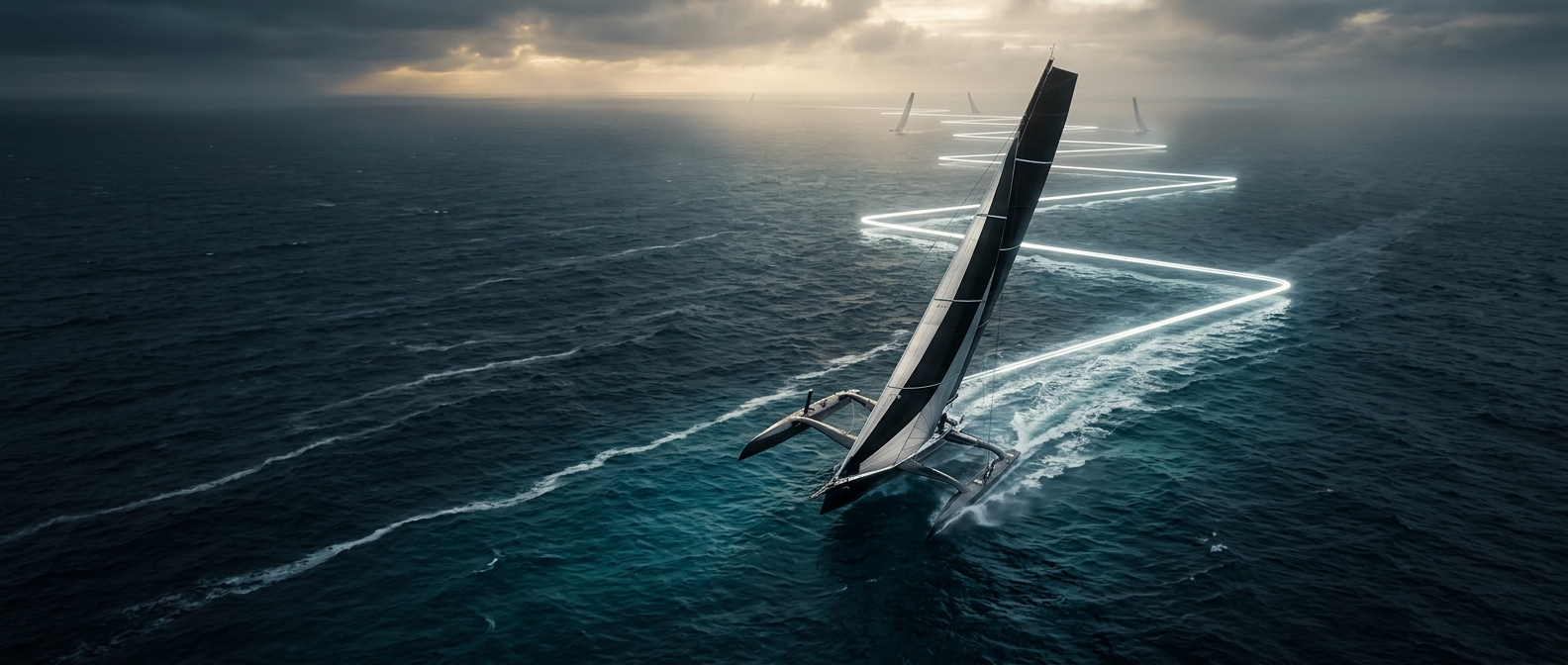
The outrigger lets designers keep the main hull relatively narrow, reducing the amount of hull pushing through the water. But the crossbeams and float add structure, and the canoe behaves differently depending on which side the float is mounted. A wave or sharp turn can also load the connecting beams, so they must transfer force between the float and the hull without letting the two move independently.
That combination—slim main hull, wide-set support—makes an outrigger useful where a narrow boat needs more resistance to rolling without becoming broad across its entire length. Its balance is not magic or a guarantee against capsizing; it is a carefully placed source of leverage, with the water itself supplying the counterforce.