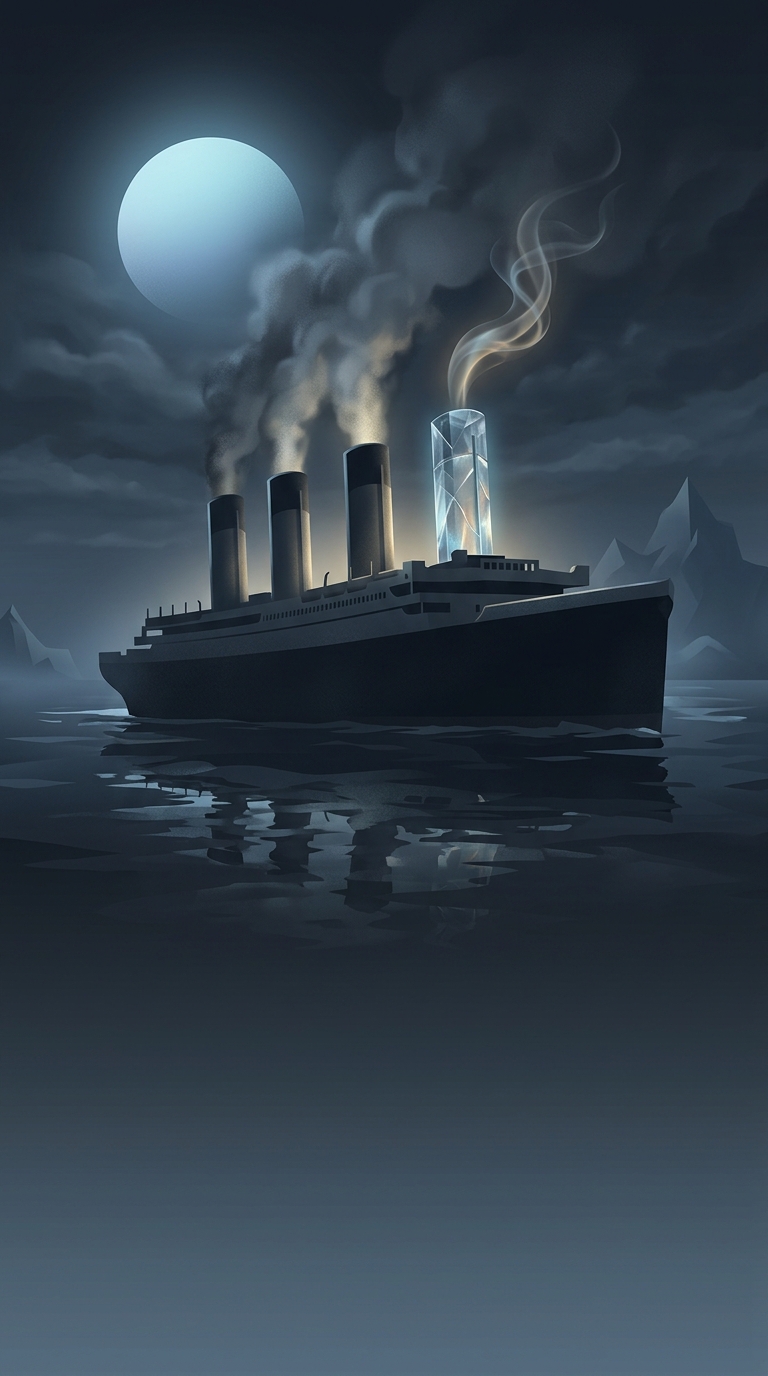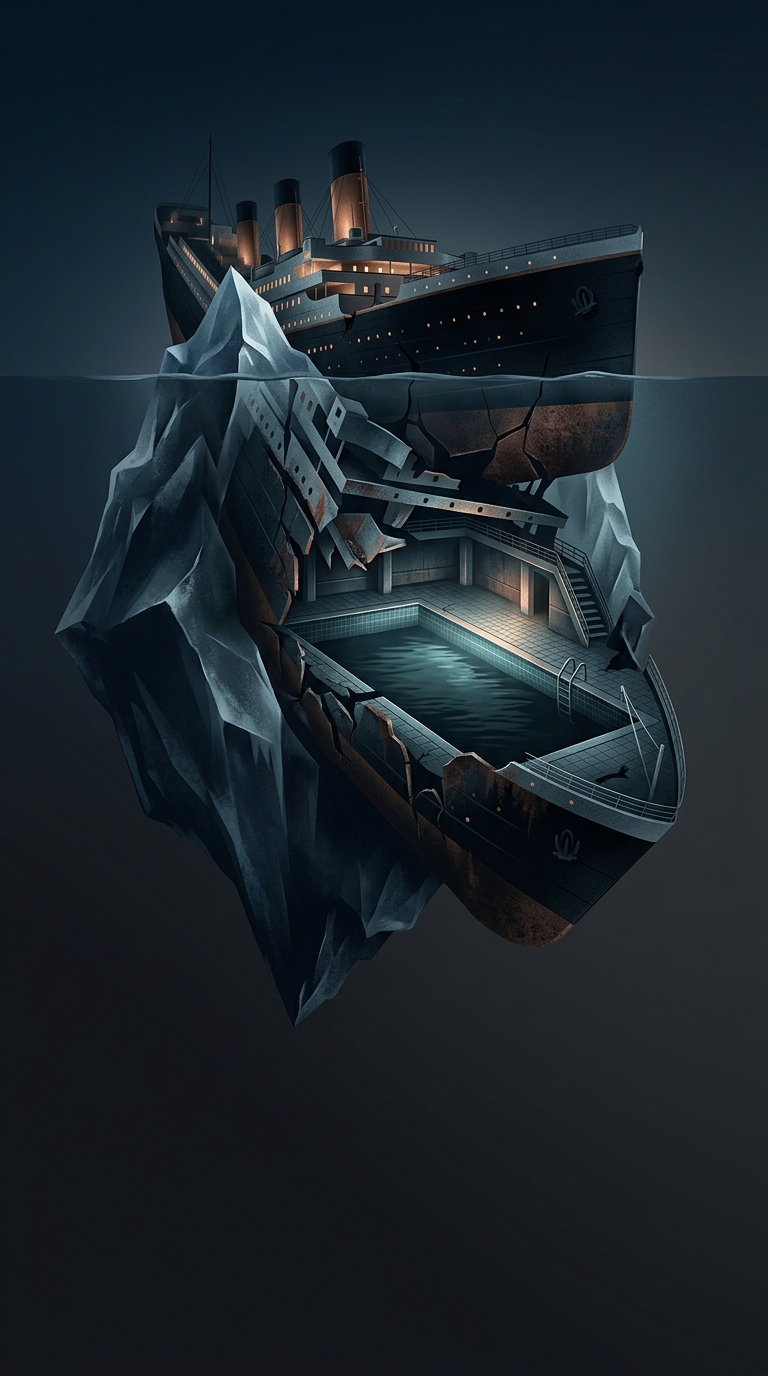
A coal fire was another problem aboard Titanic
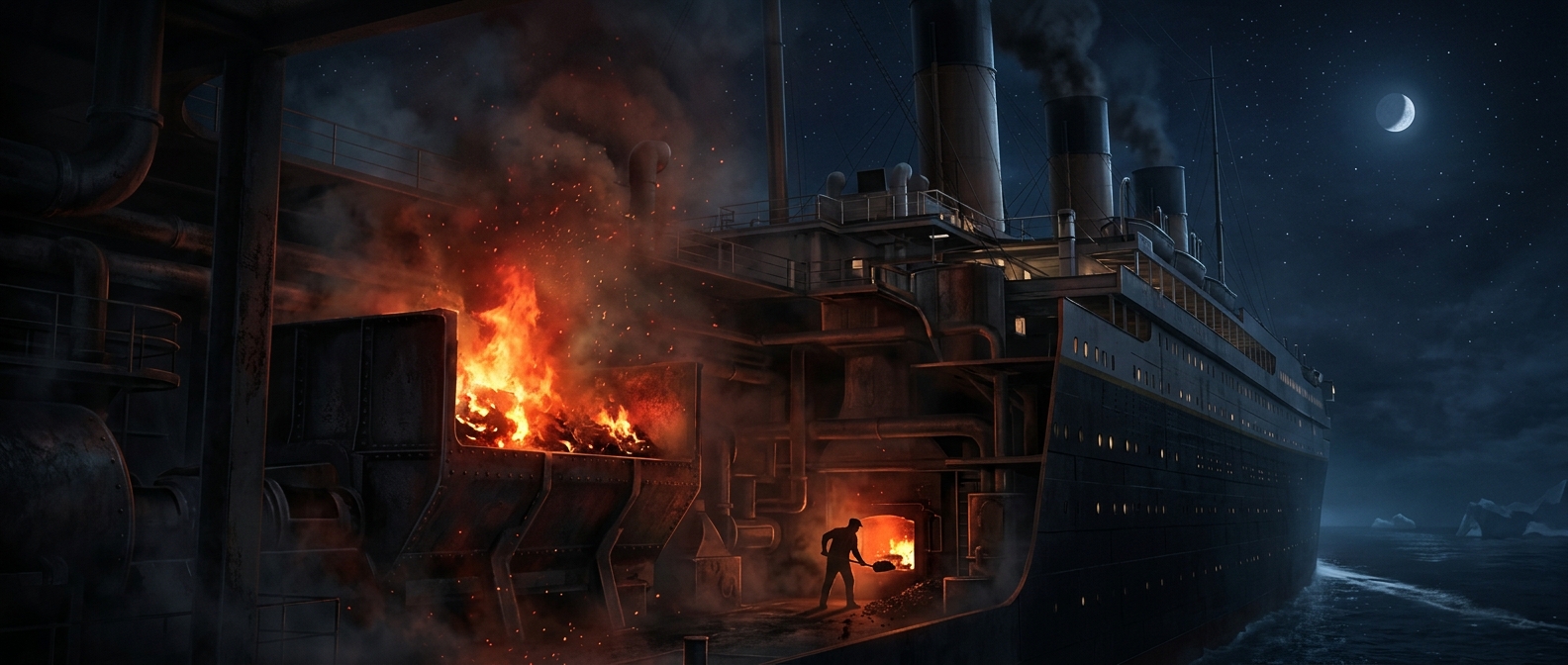
Before the iceberg entered the story, heat was already building in one of Titanic’s coal bunkers. A bunker was a storage space for the coal that fed the ship’s boilers. Crew members shifted coal to reach and manage the burning material—an awkward job in a cramped compartment aboard a moving ship.
Coal could heat up on its own. As freshly mined coal reacted slowly with oxygen, it released heat; if that heat accumulated faster than it escaped, the coal could begin to smolder. Steamships carried enormous stores of fuel, so bunker fires were a recognized hazard, not an unheard-of emergency.
Why moving the coal mattered
The crew’s response was practical as well as risky: coal had to be moved to expose the hot area and keep fuel available to the boilers. Shifting it also changed the bunker’s airflow and could bring fresh coal into contact with the smoldering material. Managing the fire therefore meant handling the fuel itself, not simply putting water on a flame.
The important distinction is between a real onboard fire and a proven cause of the disaster. The bunker fire was part of the voyage before the collision, but that fact alone does not establish that it weakened the hull or determined how the ship sank. Titanic was already managing a familiar industrial hazard; the iceberg then created a much more immediate crisis.