Why Titanic Had a Fourth Funnel
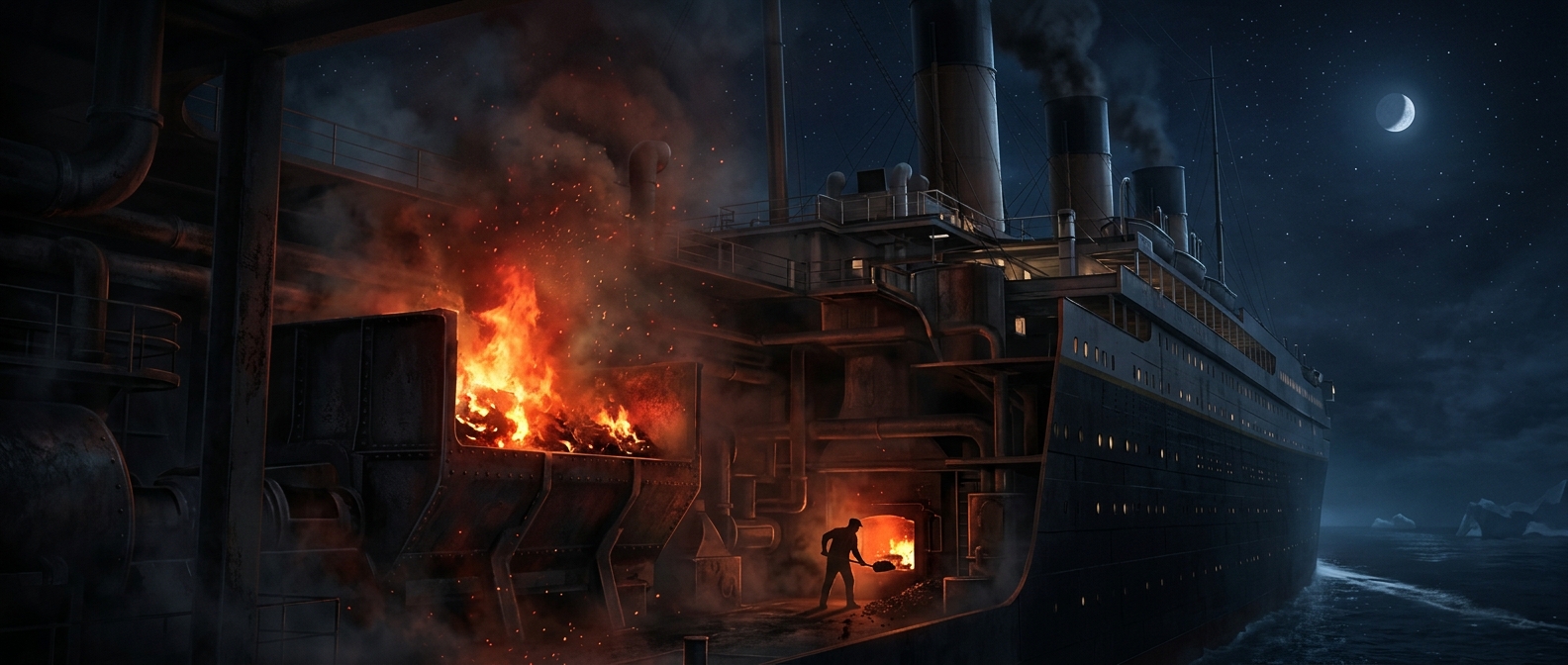
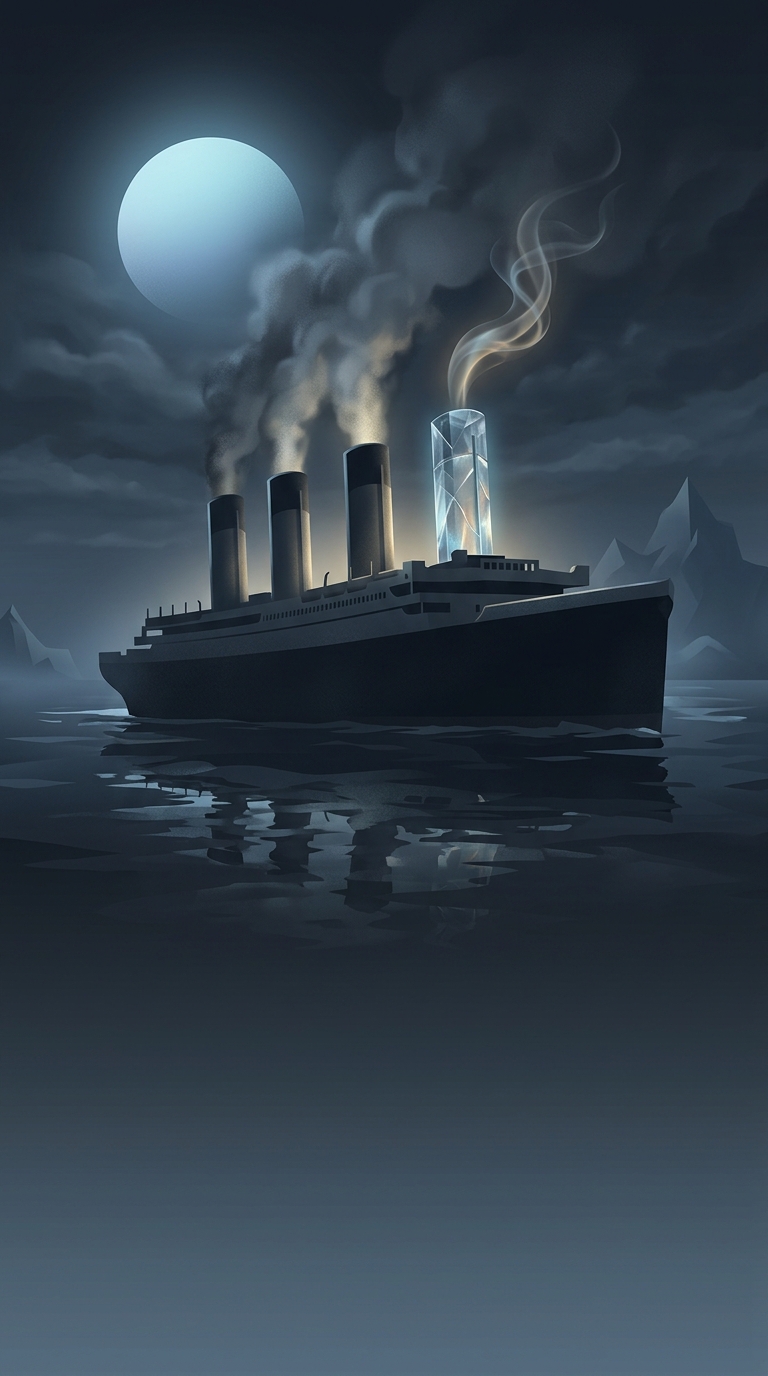
Titanic’s fourth funnel was not connected to the boilers, so it did not carry their smoke. The first three did that work. But calling the fourth one entirely fake misses its practical role: it helped ventilate parts of the ship, including spaces that needed a way to move stale air out.
A Working Ship That Also Had to Look the Part
Funnels were among the most visible features of an ocean liner. Three large funnels might have handled the ship’s exhaust, but a fourth gave Titanic a longer, more balanced silhouette. It made the vessel look powerful and substantial from the dock and at sea—an important part of how a new liner presented itself to passengers and the public.
That appearance was not separate from engineering. A ship this large had many enclosed rooms, and ventilation meant circulating air through them. The extra funnel provided a high outlet for air without needing to serve as a boiler exhaust. Its size and placement could therefore support airflow while also completing the ship’s visual profile.
The Difference Between Smoke and Air
The distinction is simple: three funnels carried the visible exhaust from the boilers; the fourth was principally a ventilation feature. From a distance, all four looked like the same kind of stack, but their jobs were not identical.
That combination of function and display is what makes the fourth funnel memorable. It was not just a prop, nor was it another smoke-producing chimney. It helped ventilate the liner while giving the ship the imposing, symmetrical outline people still recognize.