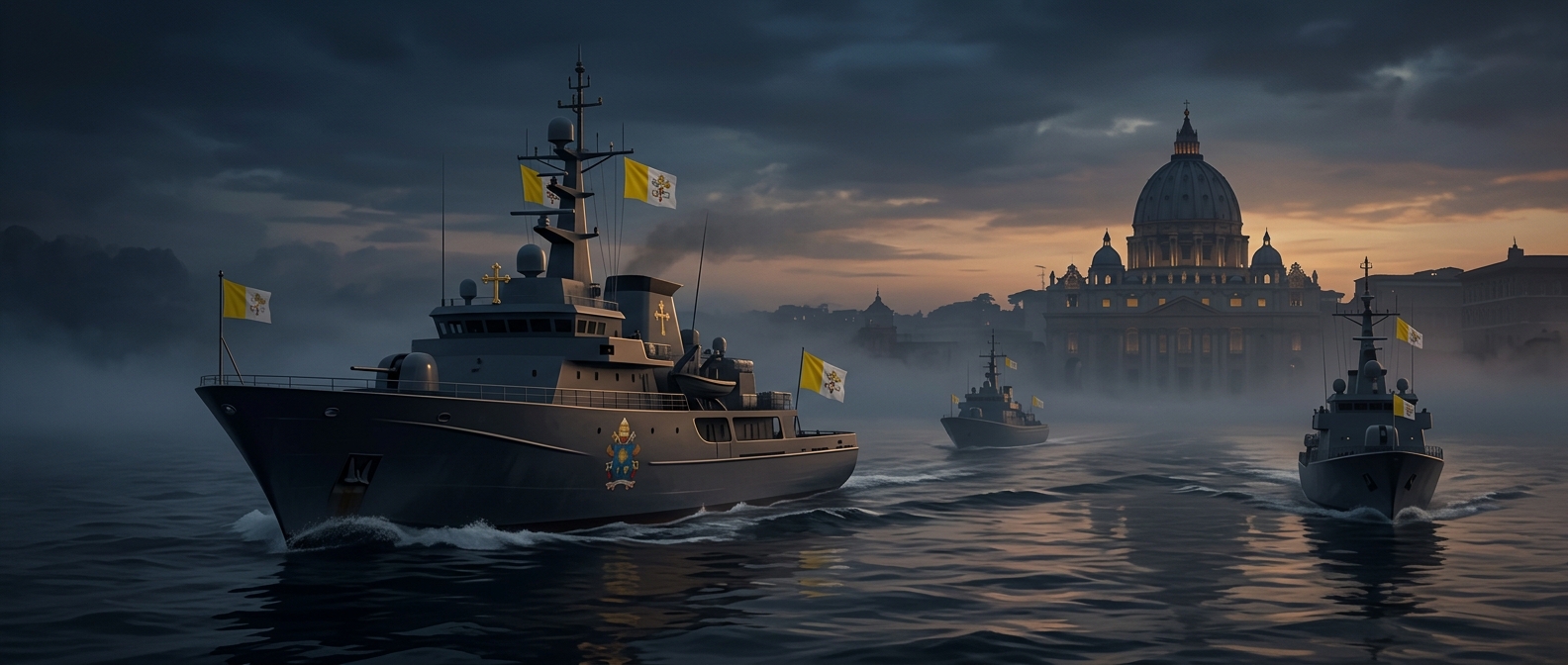
A landlocked state can still have a maritime flag
A ship’s flag is more than a symbol painted on its stern. It identifies the country whose law governs the vessel at sea—a role known as flag-state jurisdiction. International maritime law recognizes that a state does not need a coastline to let ships sail under its flag. That principle makes the Vatican’s legal ability distinct from its lack of access to the ocean.
The flag comes with responsibilities
A state that registers a vessel takes on duties tied to its nationality: it must oversee matters such as safety, documentation and compliance with maritime rules. The ship does not become a naval vessel simply because it carries a state’s flag, and flying a flag does not give that state territory in the waters the ship crosses. The flag marks the vessel’s legal connection to the state; it is not a claim over the sea.
Legal possibility is not a fleet
Vatican City has no navy and no coastline, so the right to have vessels sail under its flag should not be mistaken for evidence of a substantial Vatican shipping fleet. The distinction is the striking part: maritime law separates a state’s capacity to register ships from its geography. A country can be legally represented on the open sea by a vessel even when it has no shore from which that vessel could depart.