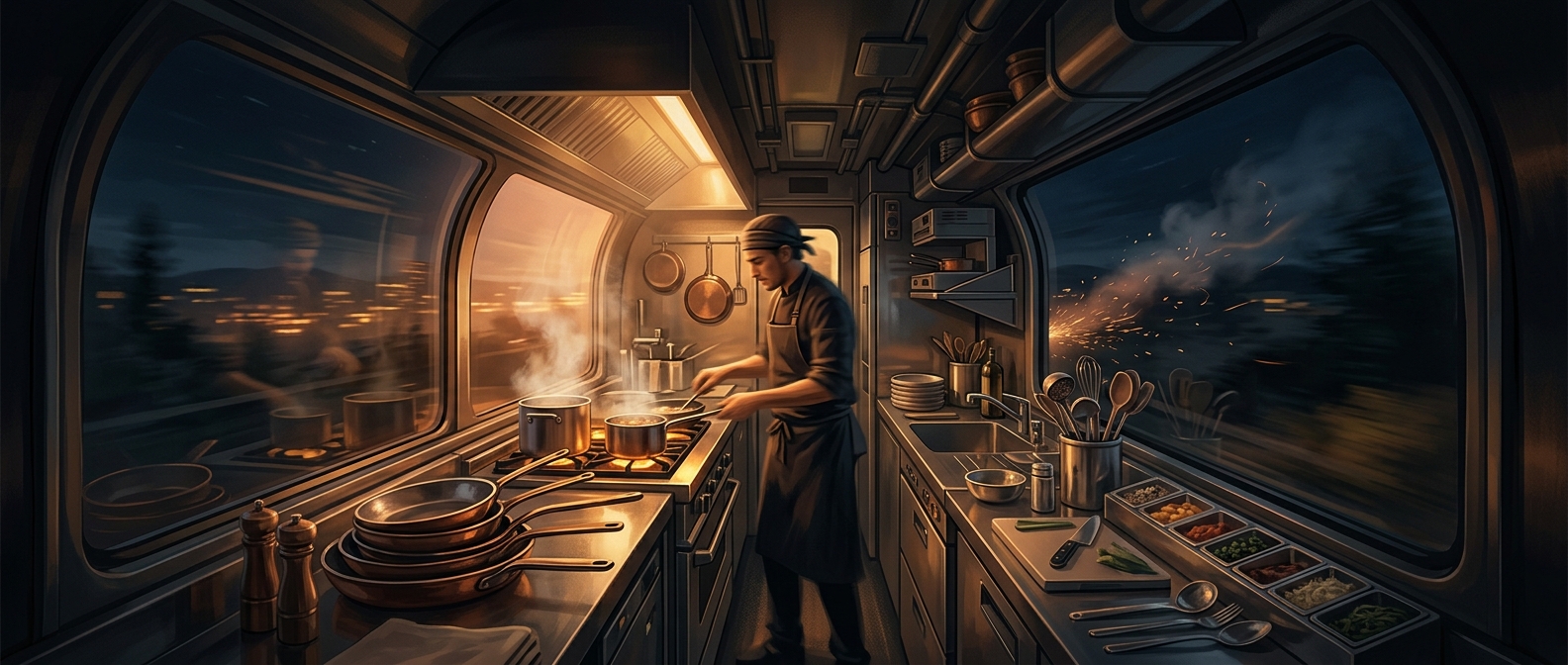
The pan keeps moving after the train does
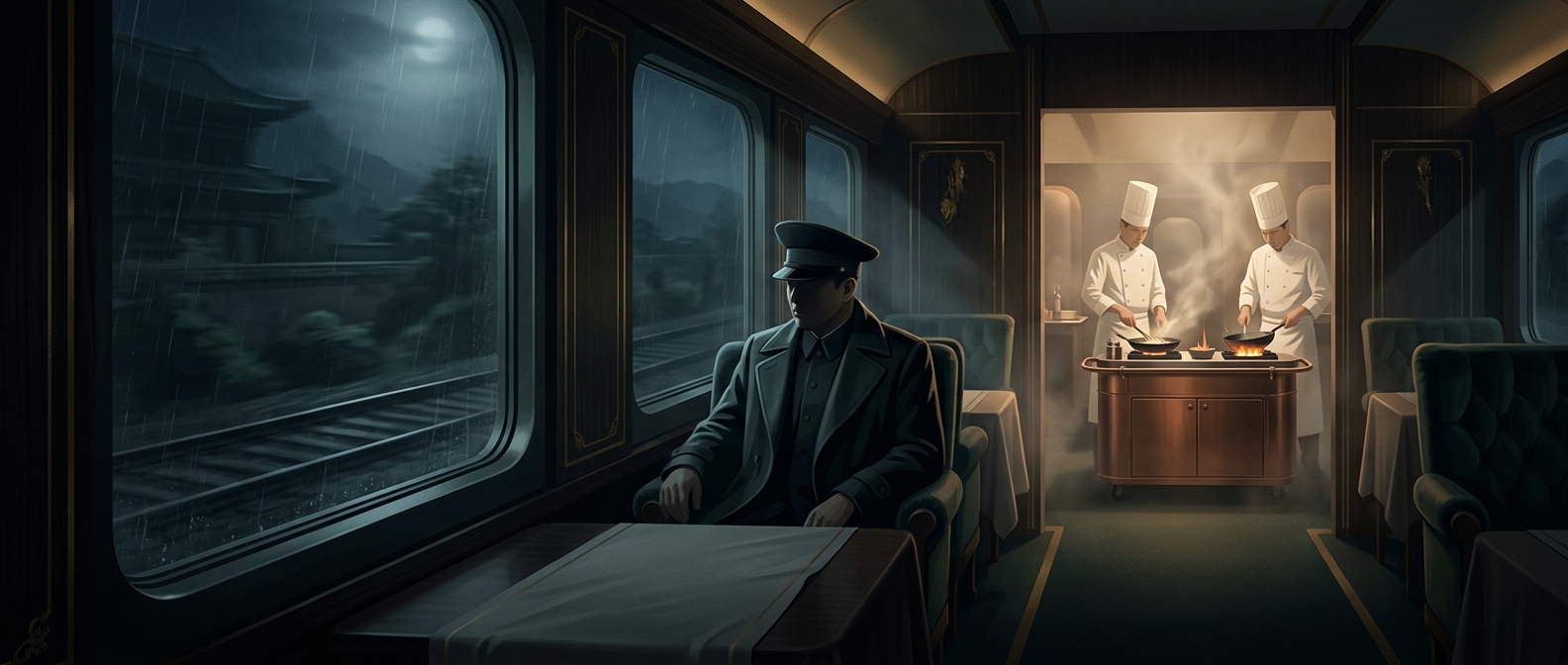
When a train slows, speeds up, or rounds a curve, a pan does not automatically stay still. Its contents have inertia: they tend to keep moving in the direction they were already traveling. A sudden brake can send soup surging toward the front of a pot; a turn can pull it toward one side. The same forces act on the chef, who must work while the floor shifts beneath them.
Designing a kitchen around motion
The first defense is to keep equipment from sliding. Secured appliances and work surfaces give pans a stable place to sit, while high sides and lids help contain food when the train sways. These are not just conveniences: a loose hot pan or a spill can become a safety problem in a narrow workspace.
Cooking technique matters, too. A chef has to anticipate movement rather than react only after a wobble begins. Filling a pot close to the brim leaves little room for liquid to slosh; covering it limits splashes. The practical lesson is simple: leave room for motion, both inside the cookware and around it.
Every turn changes the task
A train kitchen cannot rely on a perfectly steady floor. The chef must account for the route’s shifts while handling hot food, tools, and dishes. The challenge is not merely cooking in a small space; it is keeping each part of the process under control while the workspace itself is moving.