From railroad car to roadside lunchroom
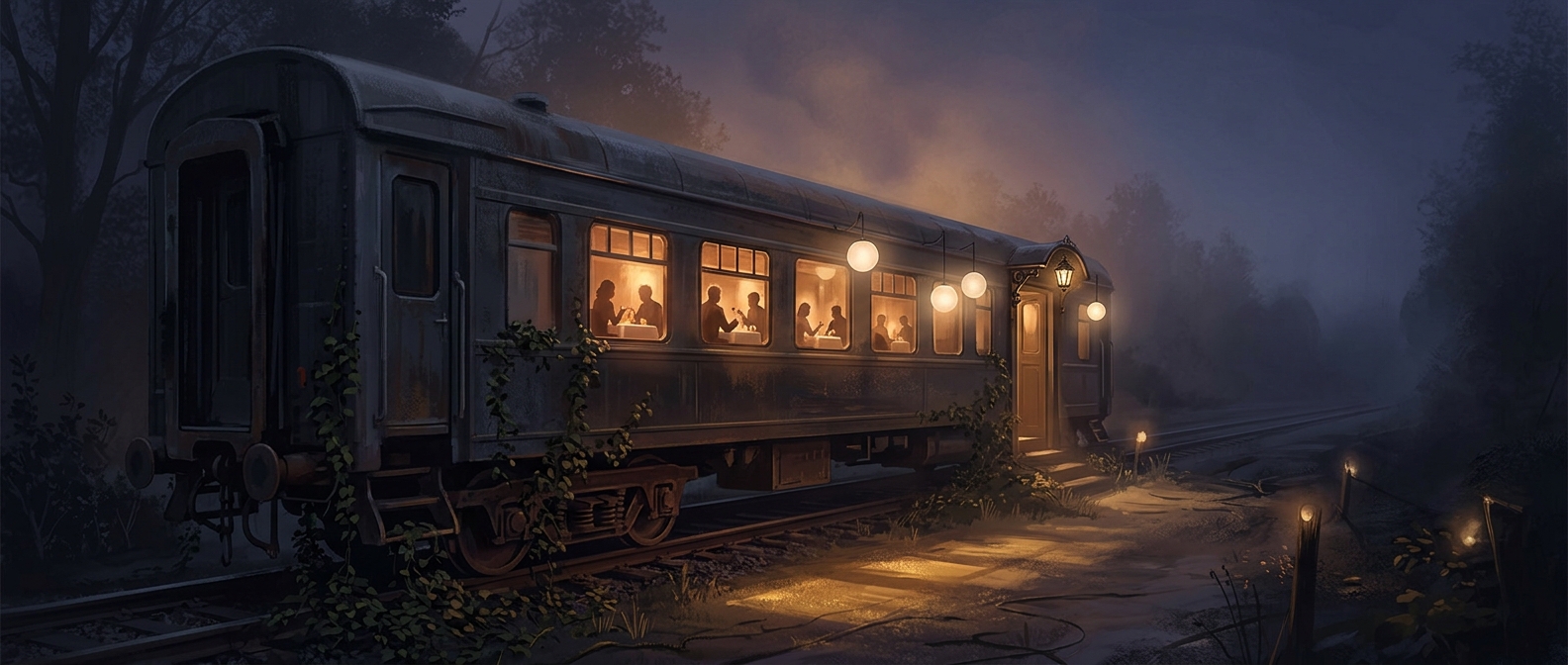
The American diner did not simply roll off a train. Its shape emerged as food sellers adapted the compact logic of railway dining cars to a different setting: a roadside business that needed to serve many people in a small footprint.
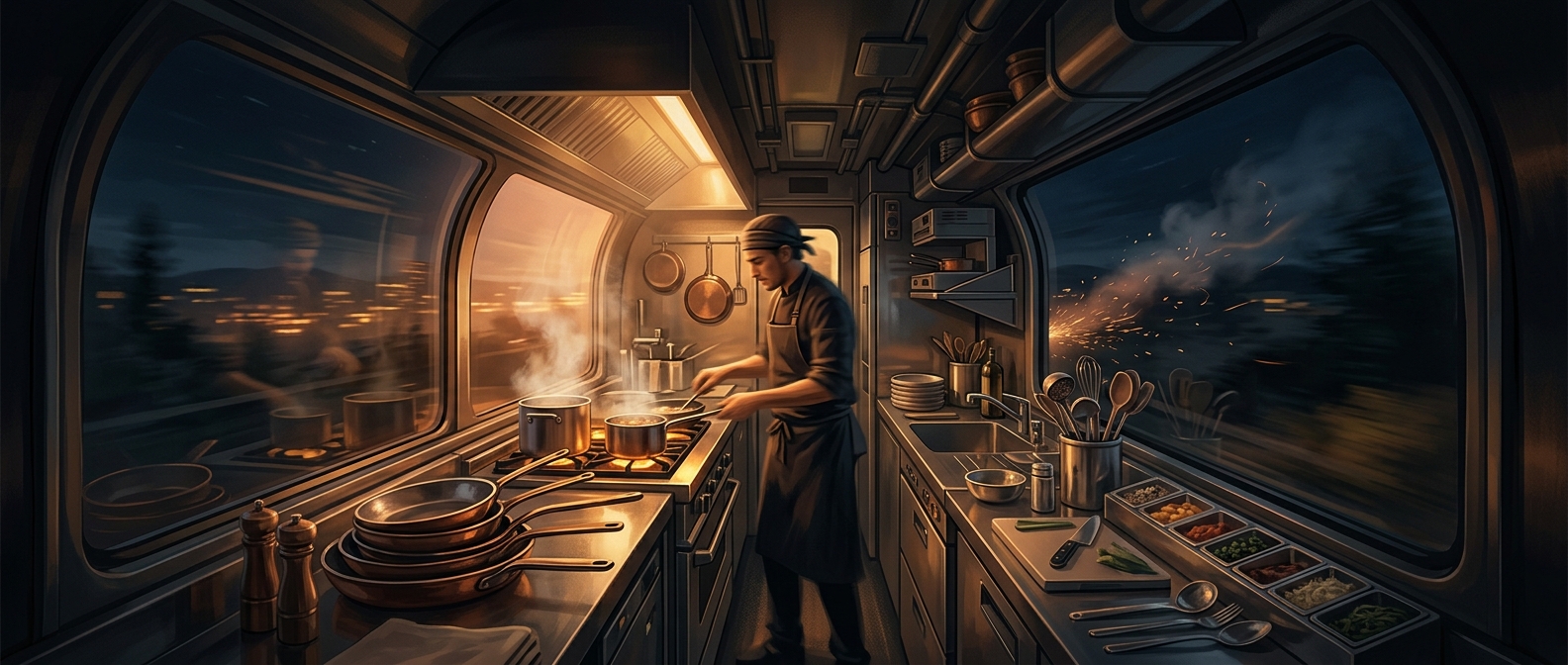
Early lunch wagons were mobile food stands, often serving workers at night. As they became fixed eateries, their narrow, elongated form remained useful. Like a train car, a diner could fit a line of seats and a serving area into a tight space, with customers close to the food and the staff.
A layout built for quick turnover
The railway-car resemblance was more than decoration. A long counter with stools made it possible to seat people along one side of the room rather than devote precious floor space to separate tables. A compact kitchen behind the counter let cooks prepare orders within easy reach of servers, while customers could eat and move on without a formal dining-room setup.
That arrangement suited diners’ practical role: convenient meals for people passing through or working nearby. The narrow building could also fit on a small roadside lot, where a larger restaurant might not.
The look became part of the appeal
Diner builders carried the streamlined, self-contained feel of a railcar into permanent buildings, adding broad windows and polished surfaces that made the interior visible from outside. The design advertised what the business offered: a bright, accessible place where food was served without ceremony.
So the diner was not a railway dining car in disguise. It was a roadside answer to a similar problem—how to fit seating, cooking, and service into a long, limited space. That efficient shape helped turn a practical lunchroom into an unmistakably American kind of restaurant.