Two wheel systems, two different jobs
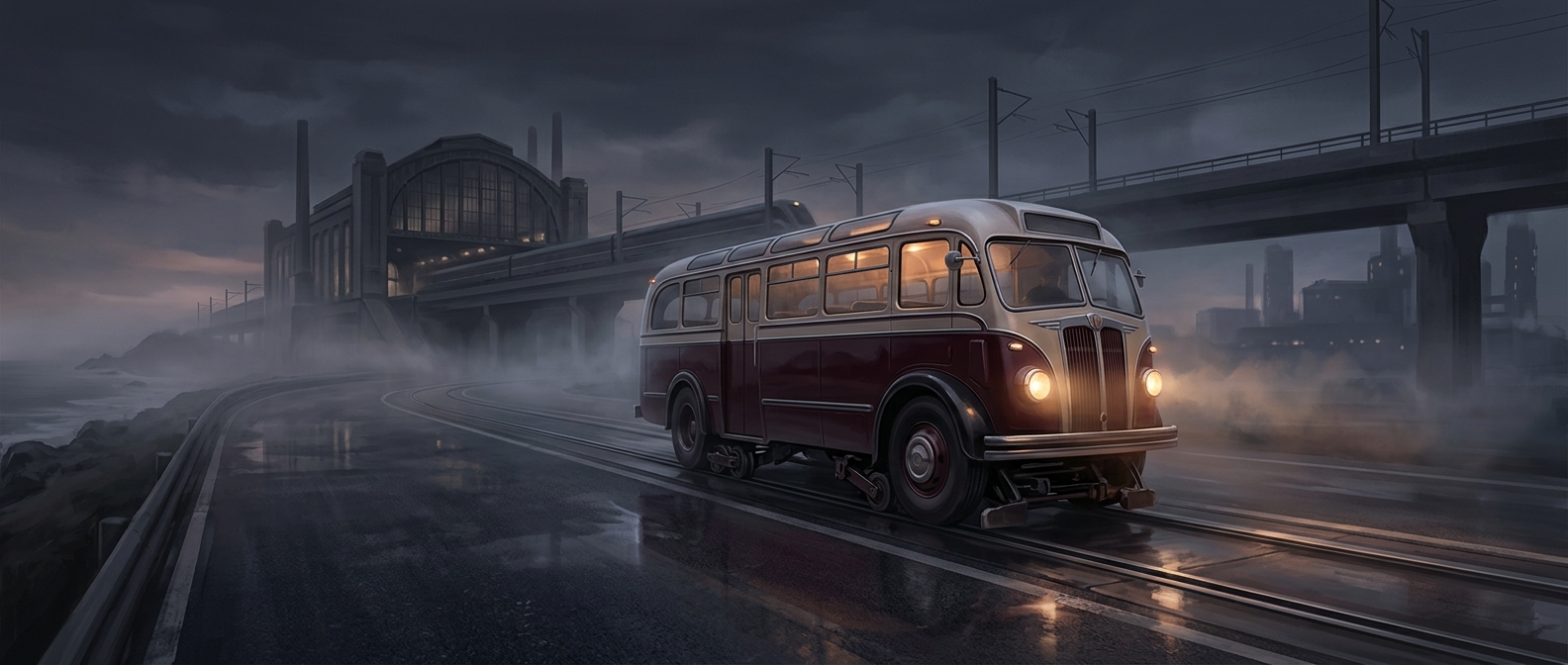
The key to a road-rail bus is that its wheels do not all do the same work. On a road, ordinary rubber tires support and propel the vehicle, and the driver steers it as usual. On a railway track, a second set of small guide wheels lowers onto the rails. Their flanges—raised edges that keep a wheel from slipping sideways—hold the vehicle in line, while the road wheels continue to supply the driving force.
That division of labor means the rails guide the bus rather than power it. The vehicle does not need to swap its road tires for train wheels: it changes which wheels control its direction.
Changing modes changes the driver’s task
To move from road to track, the guide wheels must be lowered and aligned with the rails. Once engaged, the track fixes the vehicle’s path. The driver can no longer steer around an obstacle as on an ordinary street; steering comes from the rail-and-guide-wheel arrangement. To return to the road, the guide wheels are raised so the bus can turn and maneuver on its tires again.
The design therefore depends on a suitable place to make the transition. A road-rail vehicle can travel beyond the track network, but while it is rail-guided it remains constrained by the route and by the need to enter or leave the rails at an appropriate connection.
The tradeoff behind one vehicle
Combining road and rail capability can avoid changing vehicles when a journey includes both kinds of route. In exchange, the bus carries two wheel systems and must switch between two very different ways of moving: flexible steering on pavement and fixed guidance on rails. Its unusual trick is not that it becomes a train, but that the track takes over steering while the bus’s road wheels keep it moving.