Why a train can make a tunnel boom
A fast train does not simply pass through a tunnel; it compresses the air in front of it. Because the tunnel confines that air, the pressure disturbance travels ahead of the train as a wave. At the far end, the wave can emerge as a sudden burst of sound known as a tunnel boom. The effect becomes especially noticeable at high speeds, where the train pushes air forward more forcefully.
That noise was not just an onboard comfort problem. It could disturb people living near tunnel exits, making quieter operation an engineering requirement as Japan’s high-speed trains became faster.
A shape borrowed from a diving bird
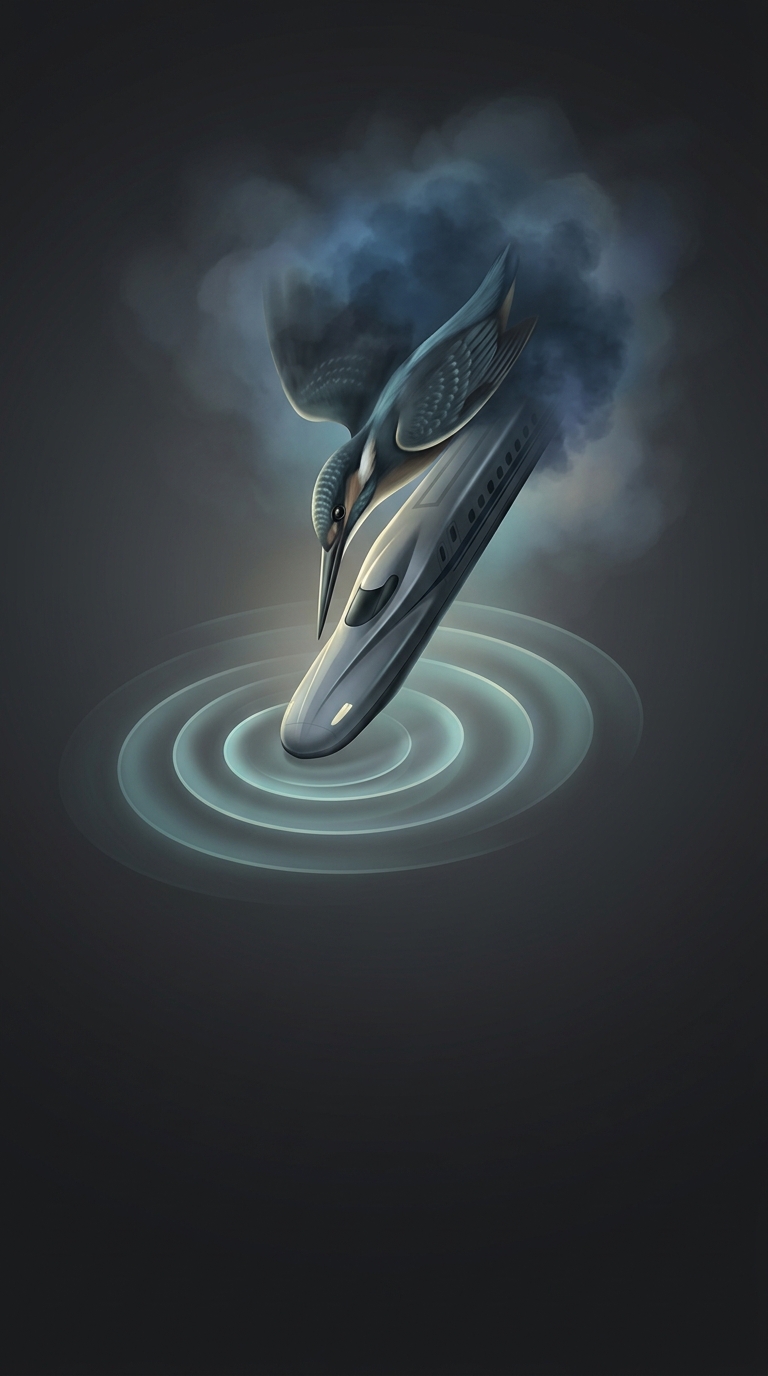
Engineer Eiji Nakatsu looked to the kingfisher, which plunges from air into water with relatively little splash. The useful idea was not that a train and a bird move through the same kind of fluid, but that a carefully tapered shape can enter a different environment with less abrupt disturbance.
The train’s redesigned nose lengthens and smooths the transition as it meets the air inside the tunnel. That changes how pressure builds ahead of the train, reducing the strength of the wave that eventually reaches the exit. It is a small example of a broader design principle: the shape of a vehicle can manage the air it displaces, not just the air flowing over it.
A quieter tradeoff at high speed
A longer, more carefully shaped nose also has to fit the practical demands of a train: it must work at speed and connect to the rest of the vehicle without compromising its function. The kingfisher-inspired profile helped address a problem created by the tunnel itself, rather than by a faulty engine or loose component.
The result is a striking chain of cause and effect: a bird’s streamlined entry suggested a way to soften the pressure wave, and that quieter wave meant less of a cannon-like report when the train reached daylight.