Cooking on a moving train is a logistics problem
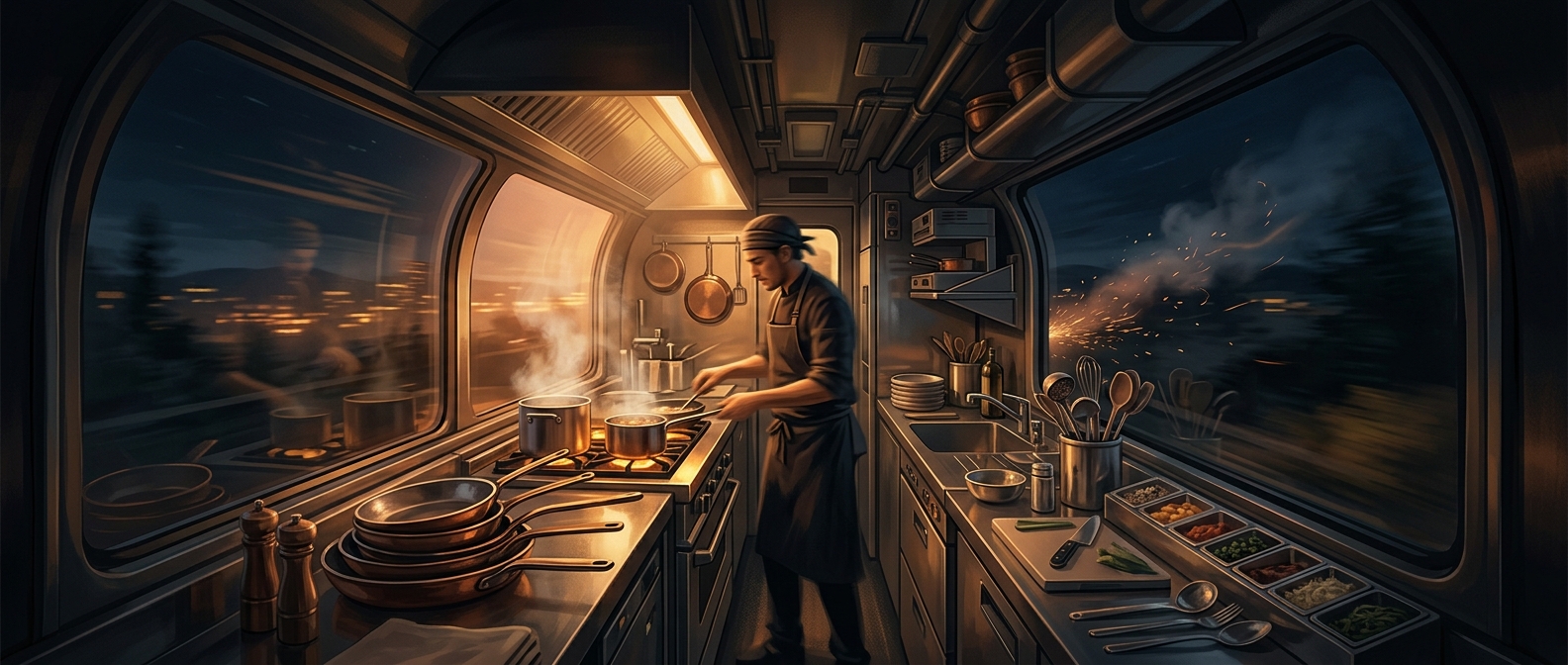
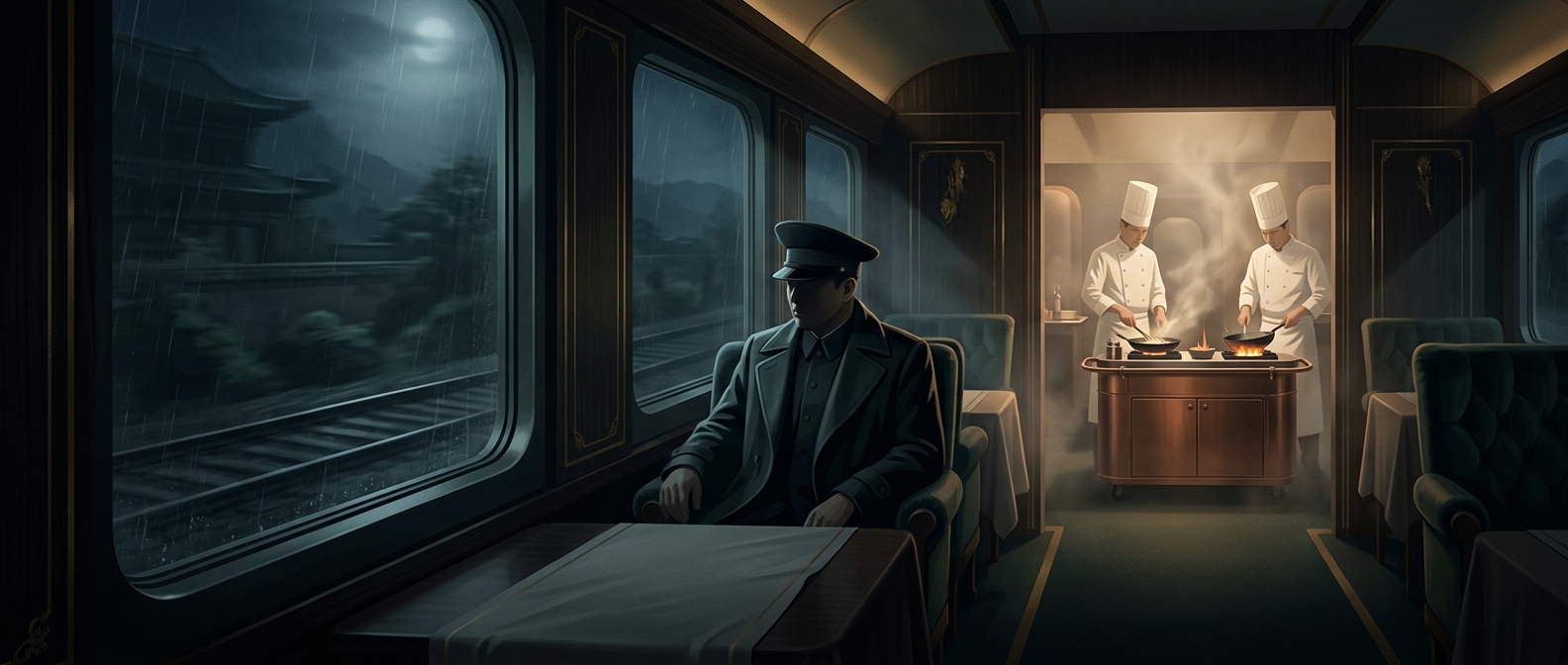
A train kitchen has to do more than store food and heat it. It has to let cooks prepare and serve meals while the floor beneath them is in motion. In any rail kitchen, limited space and the movement of the carriage make ordinary kitchen tasks less straightforward: hot pans and liquids must be handled carefully, and supplies need to be organized so cooks can reach them without cluttering the work area.
That turns the kitchen into part of the train’s service system. Ingredients must be available during the trip, preparation has to fit the journey’s schedule, and finished dishes must get from the kitchen to diners while the train is moving. A cook can adjust a meal as it is prepared; a packed snack cannot.
A restaurant experience, built into the journey
Having chefs aboard made meals an ongoing service rather than something passengers had to bring with them or wait to find at a stop. The distinction matters especially on a private train, where the journey itself is meant to include attentive hospitality. The luxury was not just having food on board—it was having people able to turn ingredients into a meal along the way.
That service came with a tradeoff: a kitchen and its staff occupied valuable space and required supplies, planning, and work throughout the trip. In return, the train could offer a dining experience without depending on a station restaurant. It carried not only the ingredients for dinner, but the means to make dinner happen while the rails kept moving.