A control surface hidden beneath the grip
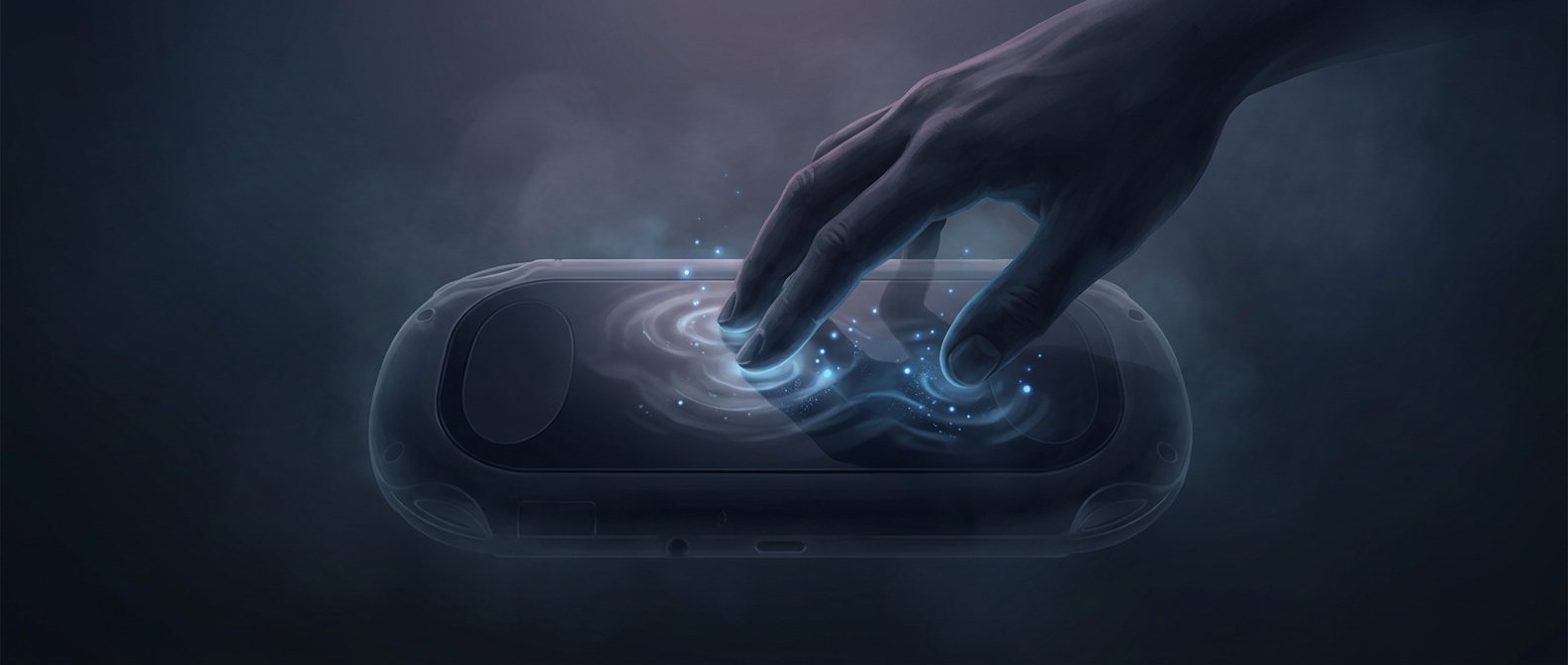
The Vita’s rear touchpad gave game makers another place to put controls without adding more buttons to the front. Because a player’s thumbs could stay on the screen and its controls, a game could use the fingers behind the system for a separate action—such as moving a cursor or tracing a gesture.
The panel sensed a finger’s electrical effect, much like a phone touchscreen. It did not require a hard press, and its smooth surface offered little physical clue about where a touch-sensitive area began. That made it flexible for game design, but also made the boundary between “holding the console” and “using a control” easy to blur.
The grip became part of the interface
A handheld is held differently from a phone: fingers curl around its edges and rest across its back. A player could therefore activate the pad while simply supporting the Vita, especially if a game assigned an action to a broad area rather than a precise gesture. The same sensitivity that let a light touch register a deliberate input could make an ordinary shift in grip look like one.
Developers had to account for that tradeoff. Rear-touch controls could create interactions that felt novel, but they also asked players to learn an invisible control surface while keeping the device steady. On the Vita, the player’s grip was not just how the game was held; it could become part of the game’s input.