Hashish at the Writing Desk
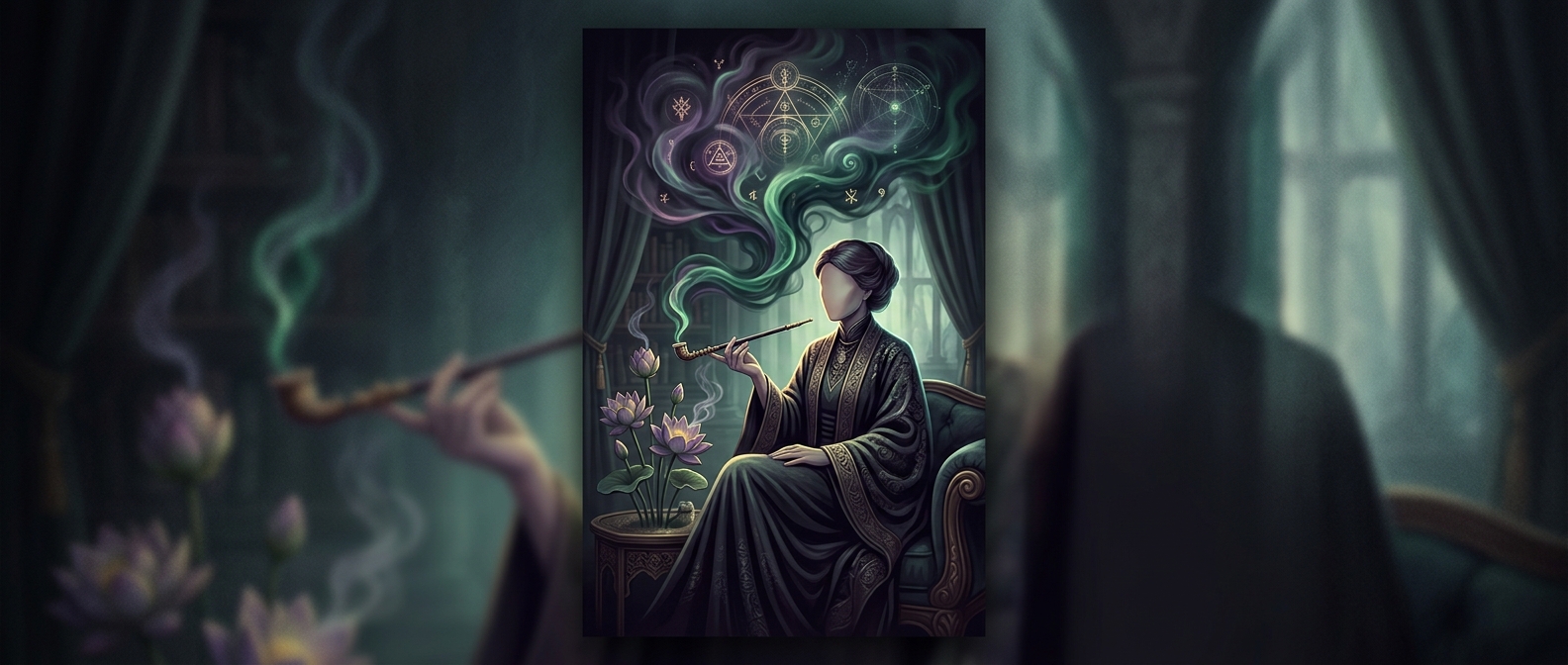
Accounts of Helena Petrovna Blavatsky describe her smoking hashish while writing about hidden spiritual masters—figures she presented as sources of esoteric wisdom. Hashish is made from the resin of the cannabis plant, which contains compounds that can alter perception and attention. Calling it “pure” distinguishes the resin from a mixture, but does not tell us its strength or how it affected her.
The image is striking because it joins two different kinds of authority: a writer’s personal experience and a claim to knowledge from beyond ordinary life. In the late nineteenth-century spiritual world Blavatsky helped shape, hidden teachers offered a way to explain where secret teachings came from. Her accounts placed those masters at the center; the reports of hashish use add a detail about the setting in which she wrote, not proof of how she received the ideas.
Experience and Explanation
Cannabis can change mood, perception, and the flow of thought, but those effects vary from person to person. They cannot establish that a spiritual vision is true—or explain a particular passage on their own. Blavatsky’s writing instead gained meaning within Theosophy, the movement she helped found, where claims about hidden knowledge were interpreted through a spiritual framework.
That distinction makes the detail worth remembering: the reported smoking is part of the story of Blavatsky’s writing, while the authority of the “masters” came from the beliefs attached to it.