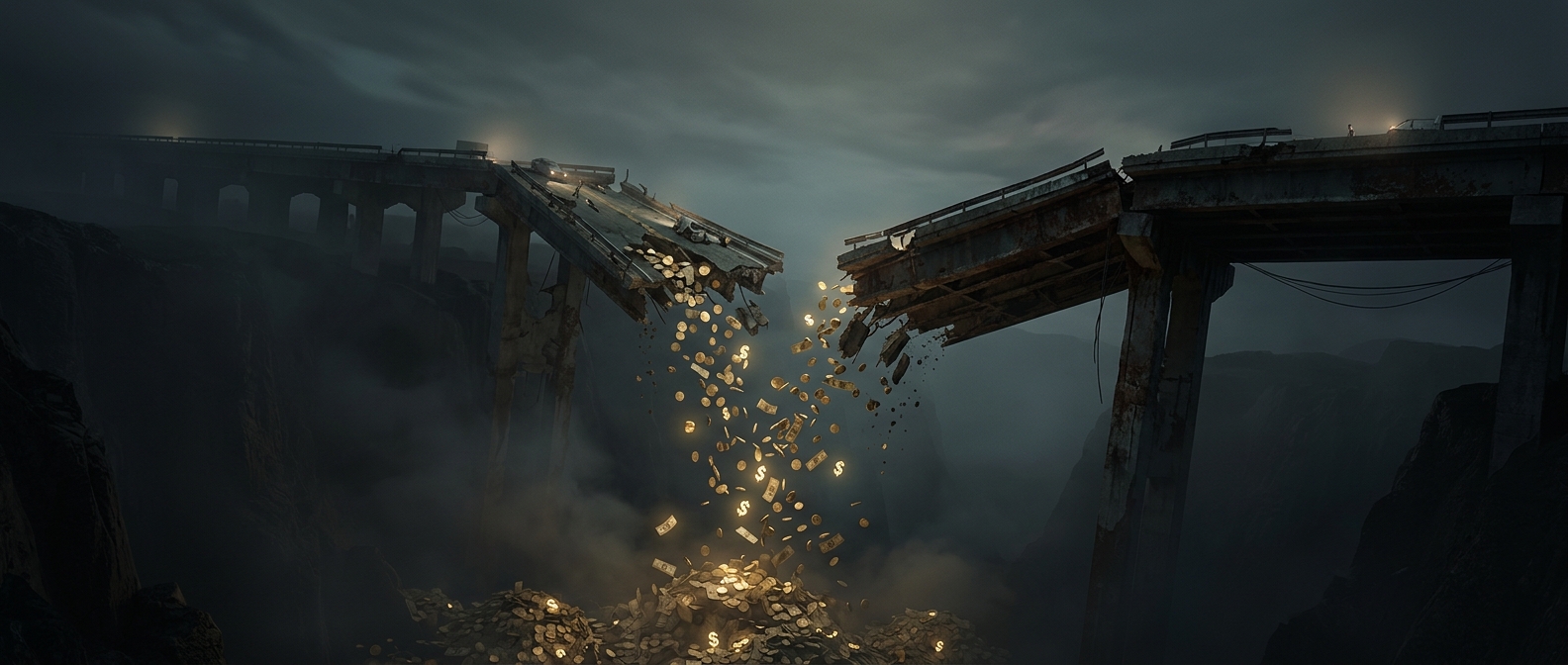
How Small Infrastructure Defects Become Large Bills
Water is often the quiet accelerant. It seeps into a road’s small crack, weakens the layers beneath the pavement, and lets passing traffic widen the damage. In a pipe, a minor leak can erode surrounding soil; in a bridge, water and salt can speed corrosion of steel. The visible defect may be small while the damage around it is spreading.
Early maintenance can interrupt that process: seal a crack, clear a blocked drain, or replace a worn component before it strains neighboring parts. If repair is postponed, the job may eventually require rebuilding a larger section—or replacing the asset altogether. The cost rises not simply because the original repair was delayed, but because deterioration creates more work and can damage connected systems.
The Bill Includes More Than the Repair
When infrastructure fails, the repair invoice is only part of the economic cost. A closed road can lengthen commutes and delay deliveries. A broken water main can interrupt service and damage nearby property. Those losses fall on residents, businesses, and public agencies, even if they do not appear in the maintenance budget that was cut or postponed.
That creates a difficult budgeting incentive: routine upkeep competes with urgent needs, while the consequences of neglect may arrive after the decision-makers and budgets have changed. Repeated across roads, water systems, bridges, and other networks, small acts of deferral can compound into enormous repair needs and disruption. The original defect may fit under a worker’s hand; the eventual bill can reach far beyond the asset itself.