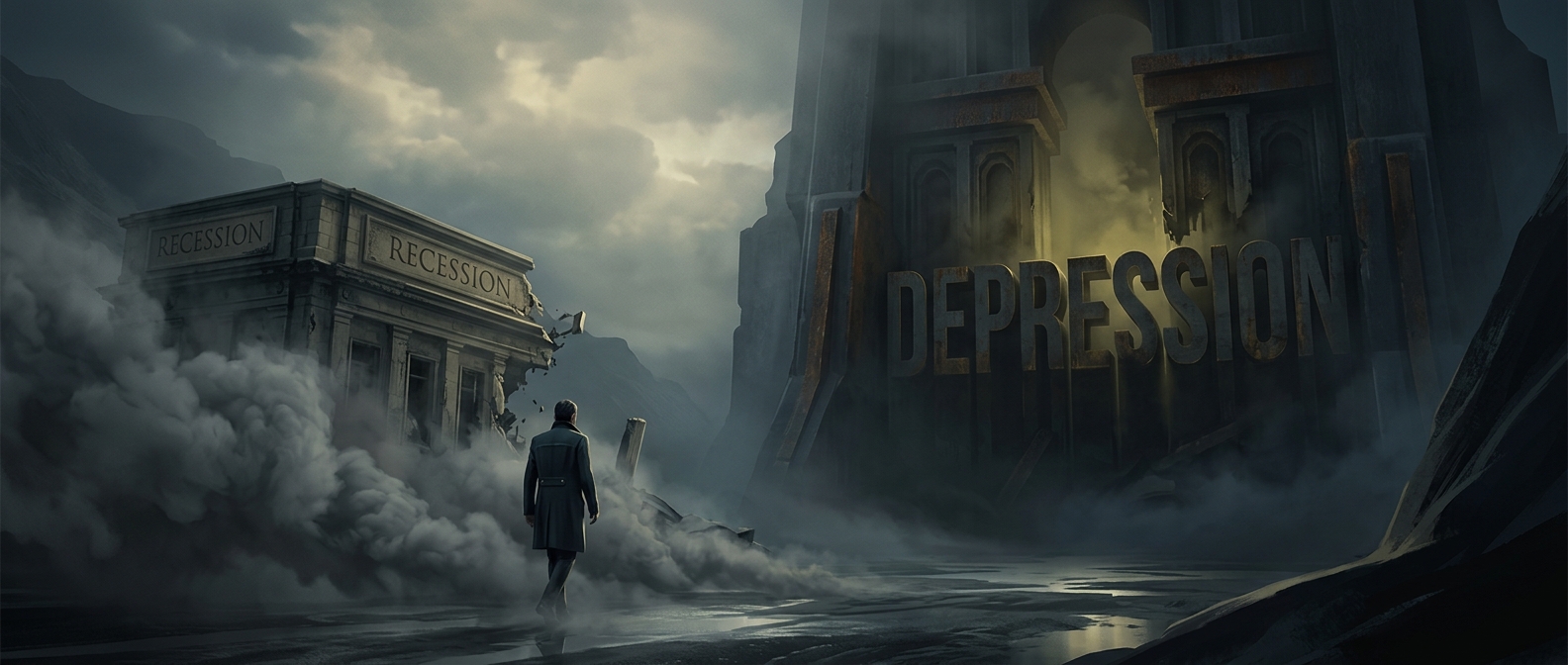
A downturn is measured across the economy
A recession is not simply any dip in one statistic. Economists look for a broad decline in economic activity: businesses produce and sell less, households spend less, and jobs and incomes weaken. These changes reinforce one another. Falling sales can lead companies to cut shifts or lay off workers; lost pay then reduces spending further.
Because the signals do not all turn at once, identifying a recession involves judgment. Output may be shrinking while some employment measures still look steady, or conditions may worsen in one sector before spreading. There is no single gauge that cleanly marks the start and end of every downturn.
“Depression” signals severity, not a separate rule
The word depression is generally used for a downturn understood to be exceptionally deep, prolonged, or damaging across many parts of the economy. It carries the memory of the Great Depression, which made the term a powerful shorthand for economic collapse. But it does not name a separate stage that begins when a specific statistic crosses a defined line.
That distinction matters because the label shapes how people describe a crisis, not how economists calculate a universal threshold. Two observers can agree that output and employment have fallen sharply yet disagree over whether “depression” is the right word. The concrete test for households is less about the label than about how long work, income, and business activity remain impaired.