Why Chapulines Turn Crunchy
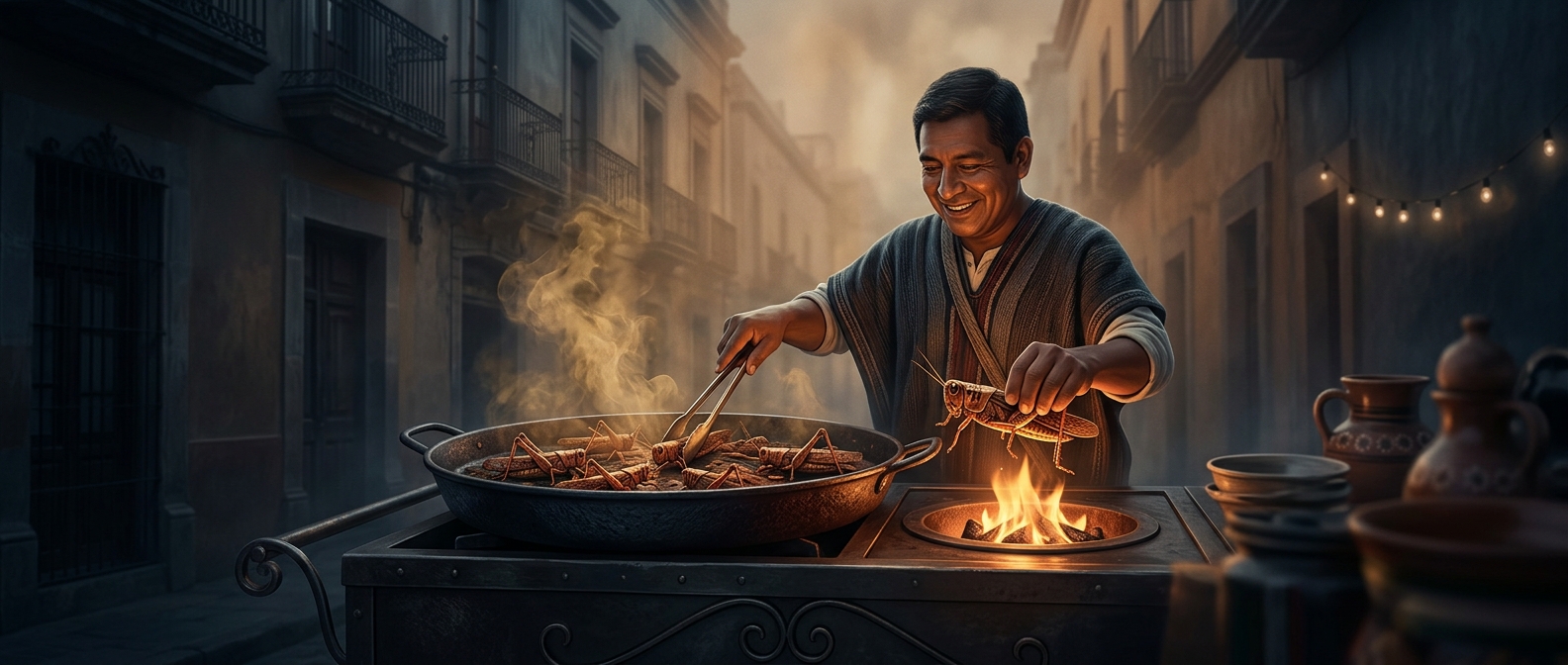
A grasshopper’s soft body contains water. Toasting or frying drives much of that moisture off, so the body becomes firmer and brittle rather than chewy. Heat also browns proteins and other compounds at the surface, creating roasted aromas and deeper savory flavors—the same broad changes that make toasted nuts and browned food taste different from their raw forms.
Seasoning Works With the Toast
Lime adds a sharp acidity that cuts through the roasted flavor; chile contributes heat, and salt makes the other flavors more vivid. Together, the seasonings give chapulines a balance of tangy, spicy, salty, and savory notes. Their small size means a brief toss or sprinkle can coat many pieces at once.
The texture depends on removing enough moisture: undercooked insects can remain pliable, while thorough toasting makes them snap. That crispness is part of the appeal, turning a tiny ingredient into a snack with a distinct roasted bite.
From Cooking Method to Street Food
Chapulines are grasshoppers prepared as food, and in parts of Mexico they are sold as a familiar snack rather than a novelty challenge. Toasting both develops flavor and dries the insects, helping produce the crisp texture customers expect. A handful can be eaten on its own or added to other foods, where the chile, lime, and salt bring a concentrated burst of seasoning.