How a Cinder Block Became the Balrog’s Roar
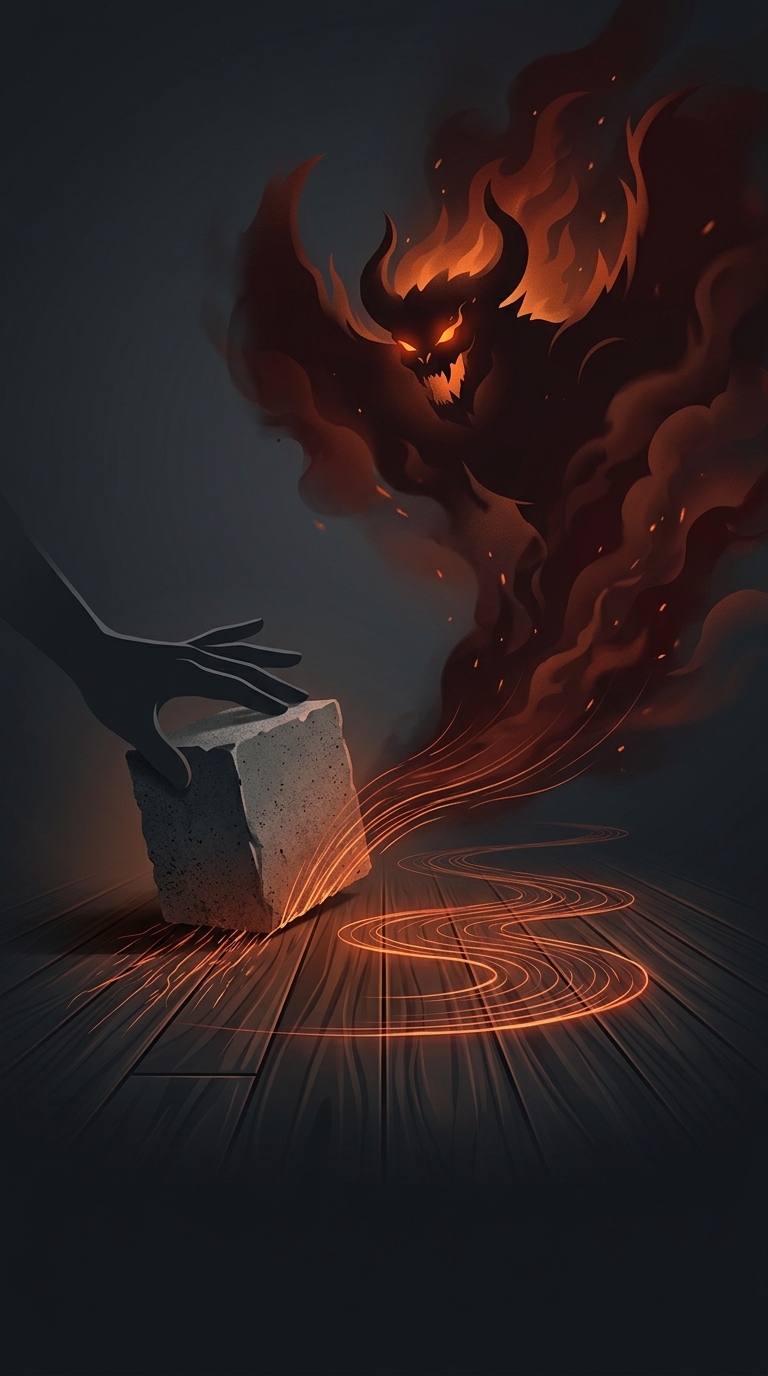
The sound began with a rough, physical gesture: a heavy cinder block dragged across a wooden studio floor. The scrape supplied the raw material—a shifting mixture of friction, knocks, and groans—rather than a conventional animal or monster vocalization.
The recording was then lowered in pitch. That made the sound feel deeper and heavier, helping an ordinary scrape suggest a huge creature. It also changed the character of the noise: small, sharp details became part of a slower, more ominous rumble.
Why the Floor Mattered
A block sliding over wood produces more than the sound of stone rubbing against stone. The floor vibrates and adds its own resonances, while the block’s uneven movement creates irregular changes in pressure and rhythm. Those imperfections help make the result feel physical instead of like a clean electronic effect.
The recording was made on expensive hardwood, an unusually direct way to capture the texture. Rather than constructing the roar entirely with instruments or synthetic tones, the designers used a real object and surface, then reshaped the recording. The Balrog’s menace came from transforming a familiar scrape into something that seemed far larger than its source.