Selling the sky one minute at a time
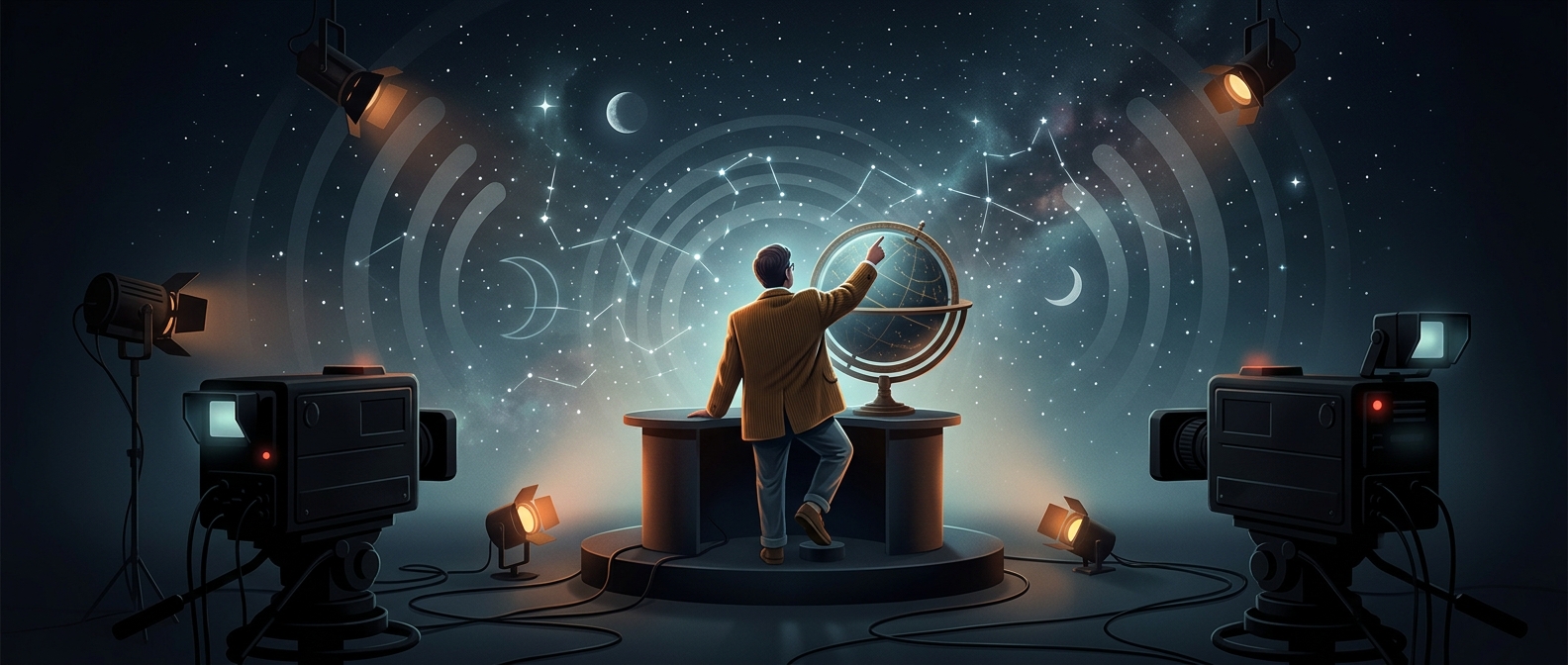
Jack Horkheimer treated astronomy less like a lecture and more like a pitch. On Star Hustler, he spoke directly to viewers, moving quickly from a striking sky event to what to look for and when. That showman’s delivery gave the information a clear path: first catch the eye, then explain the celestial mechanics before the viewer drifted away.
The low-budget effects were part of that approach. A green screen let Horkheimer place himself beside planets, stars, or imagined journeys through space without the expense or realism of a science documentary. The visuals could look delightfully artificial, but they made an abstract subject easier to picture—and the mismatch between cosmic scale and homespun production helped make the show memorable.
A format built around the next thing to see
Astronomy can feel remote when it is described only in terms of distances and physics. Horkheimer’s brisk, theatrical style anchored it in observation: the sky above a viewer, changing on a schedule. Catchphrases and repetition gave the program a recognizable rhythm, while the energetic delivery made short explanations feel like an event rather than homework.
His illness also shaped how the program was made. Because degenerative lung disease could limit his ability to record, episodes were taped in batches. That meant preparing several installments during periods when recording was possible, rather than relying on a fresh performance each week. The production workaround kept the show’s regular cadence even as its host’s capacity changed—a practical piece of television scheduling behind all that late-night cosmic showmanship.