A failed jump leaves a mark
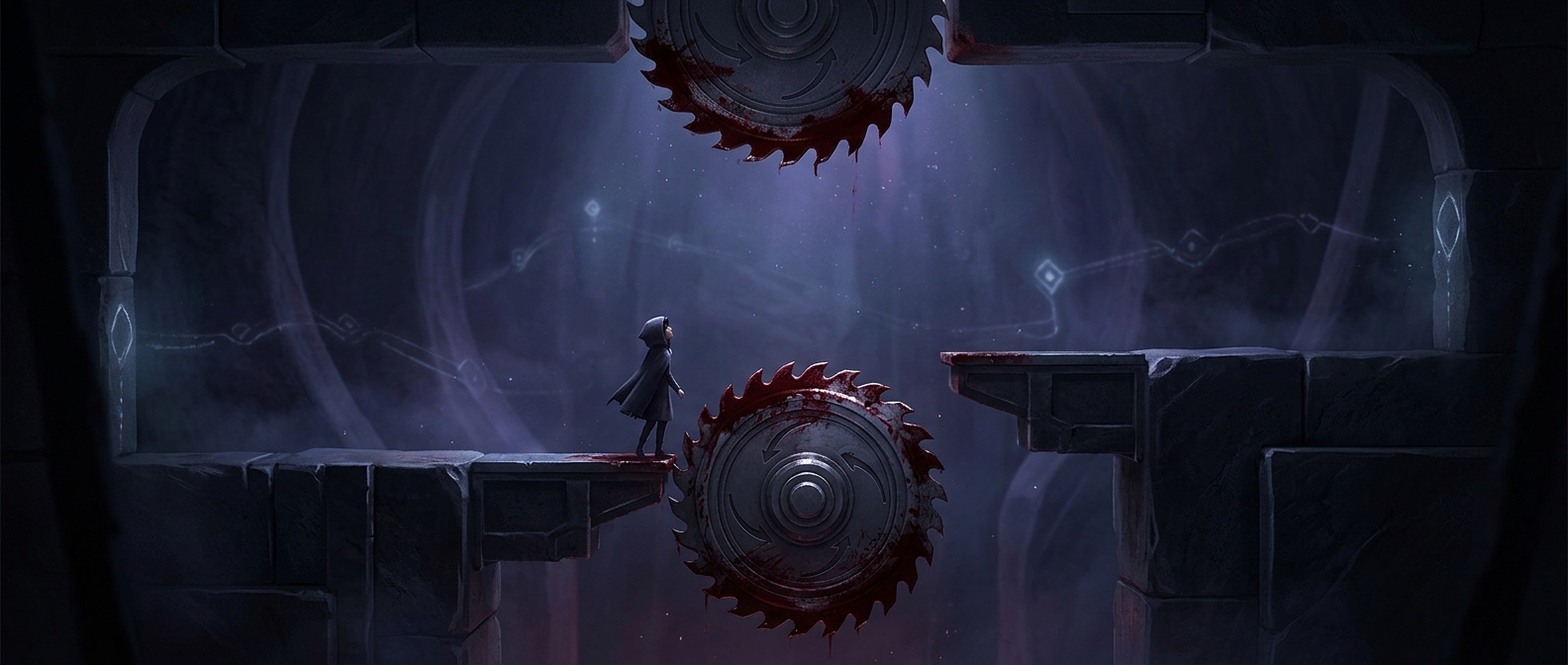
In Super Meat Boy, dying does not always wipe the scene clean. When the character respawns, blood from earlier attempts remains on the spinning saws. The hazard keeps moving, but its surface now carries a visible trace of the player’s mistakes.
That detail turns repeated failure into a kind of visual record. A smear can point to the blade that caught a jump, or show where a risky approach has gone wrong more than once. It does not explain the timing or offer a route through the level; the player still has to work that out. But the next attempt begins in a space that remembers the last one.
The level becomes a record of retries
That fits the game’s restart-heavy rhythm. A death is a brief interruption before another try, not the end of a long expedition. Persistent blood gives those quick attempts a small sense of accumulation: the player may be back at the start, while the obstacle visibly bears the history of getting there.
The effect makes a dangerous saw feel less like an abstract moving part and more like a familiar opponent. By the time a player finally clears it, the blade may already be marked by the attempts it took to learn its rhythm.