A strawberry turns the route into a small puzzle
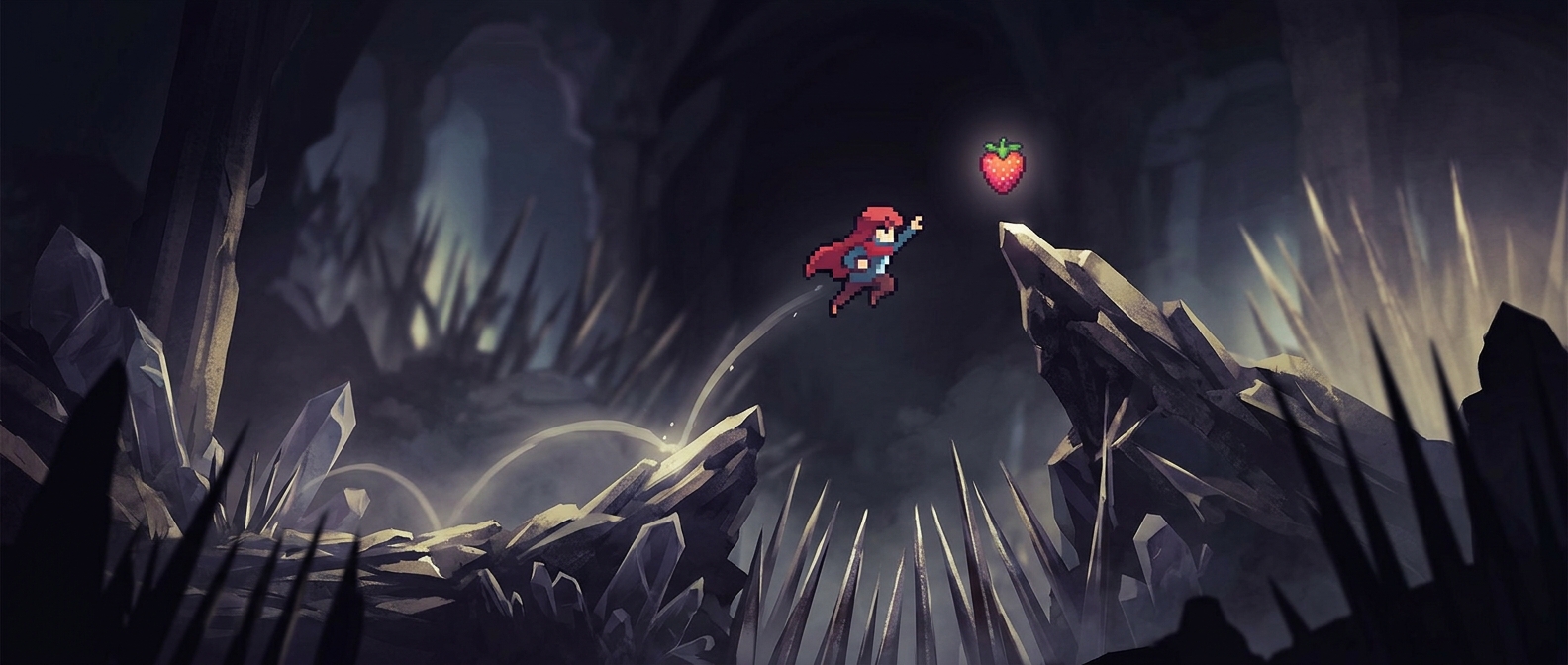
In Celeste, a strawberry is an optional collectible, not a key needed to finish a chapter. Its placement is the challenge: it may sit beyond a side path that asks the player to read the room, time a jump, and use Madeline’s movement abilities precisely. The main route tests whether you can keep going; the detour asks whether you can master a harder sequence for its own sake.
That distinction lets the game offer difficulty without blocking progress. A player can leave the berry behind and continue, or retry the detour until its timing clicks. The collectible becomes a compact lesson in the game’s movement, delivered through play rather than a tutorial.
The death counter makes the attempt part of the record
The game tracks deaths, so a failed jump is visible in the chapter’s tally. That does not mean every death carries a lasting penalty: Celeste is built around retries, letting players return to the obstacle and try a different timing or approach. The counter records the cost of the attempt, while the optional nature of the berry keeps that cost from becoming a gate to the ending.
Collecting one does not change the ending. Its payoff is instead personal and measurable: the player has taken a more demanding route and brought back proof of it. The strawberry matters because reaching it is the achievement—not because the story requires it.