A failed jump becomes a recoverable mistake
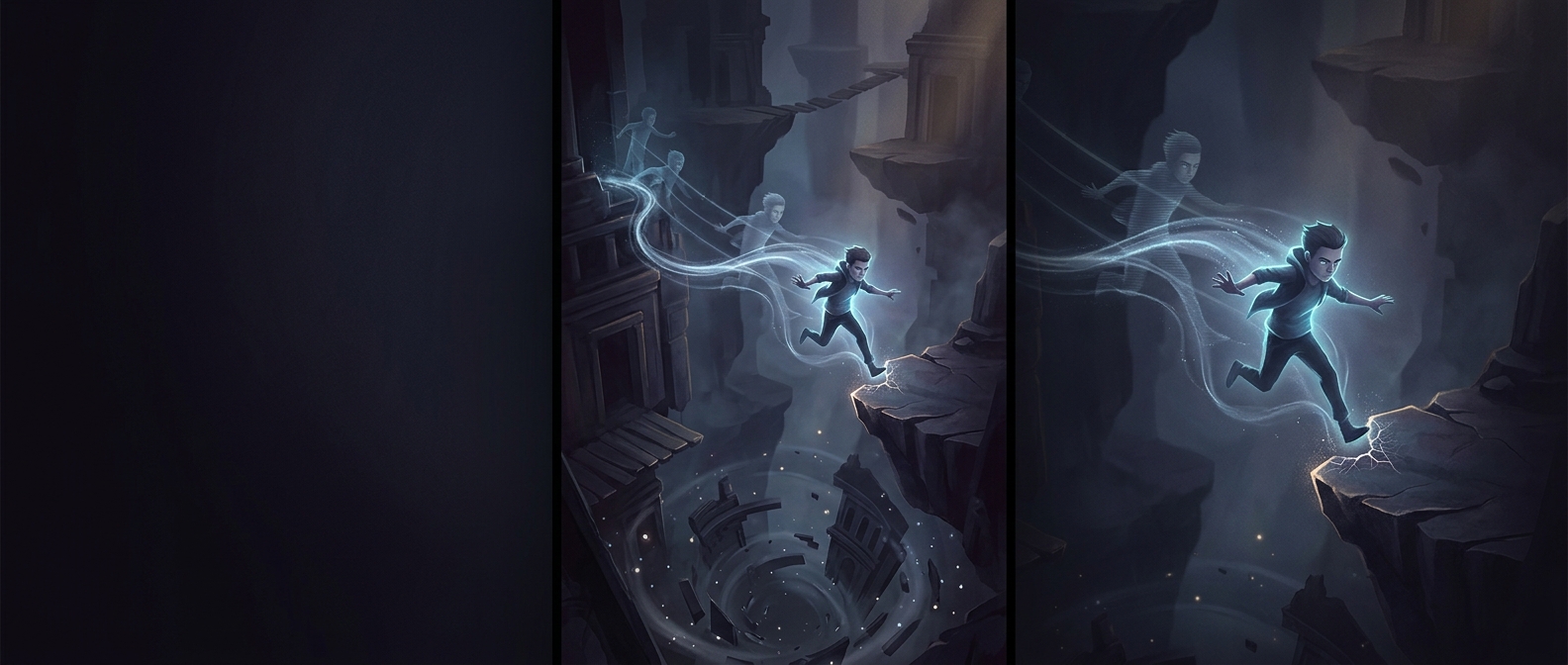
In Prince of Persia: The Sands of Time, a missed jump did not always mean restarting from a checkpoint. The Prince carried the Dagger of Time, which could reverse the action on screen: hold the rewind control, and the Prince and the moving world around him run backward. A fatal fall could be undone if the player reacted quickly enough and had time-rewinding power left.
That power was limited. The dagger stored sand, and rewinding consumed it, so players could not simply erase every error indefinitely. The brief rewind window—up to about five seconds—was long enough to rescue a mistimed leap, but short enough that players still had to pay attention to what went wrong.
Rewind changes how players approach danger
The mechanic matters because the game is built around platforming: judging distances, running along walls, and leaping between narrow ledges. Without rewind, a small timing error could cost a long stretch of progress. With it, players could make a risky attempt, see the result, then reverse course and try again—provided they had saved enough sand.
That turns failure into information. Instead of treating a fall as an immediate dead end, the player can recognize the mistake and correct the jump while the scene is still fresh. The dagger does not make the Prince invulnerable; it makes a few seconds of bad timing something the player can sometimes take back.