Why Crates Became Crash’s Little Puzzles
In Crash Bandicoot, a crate is more than something to hit. It marks a spot where the player should pause, aim, or take a small risk. Because the games often funnel Crash along a narrow route, boxes can turn a straightforward run through the jungle into a quick search: Is there one tucked behind a tree, suspended over a gap, or stacked where a jump must land just right?
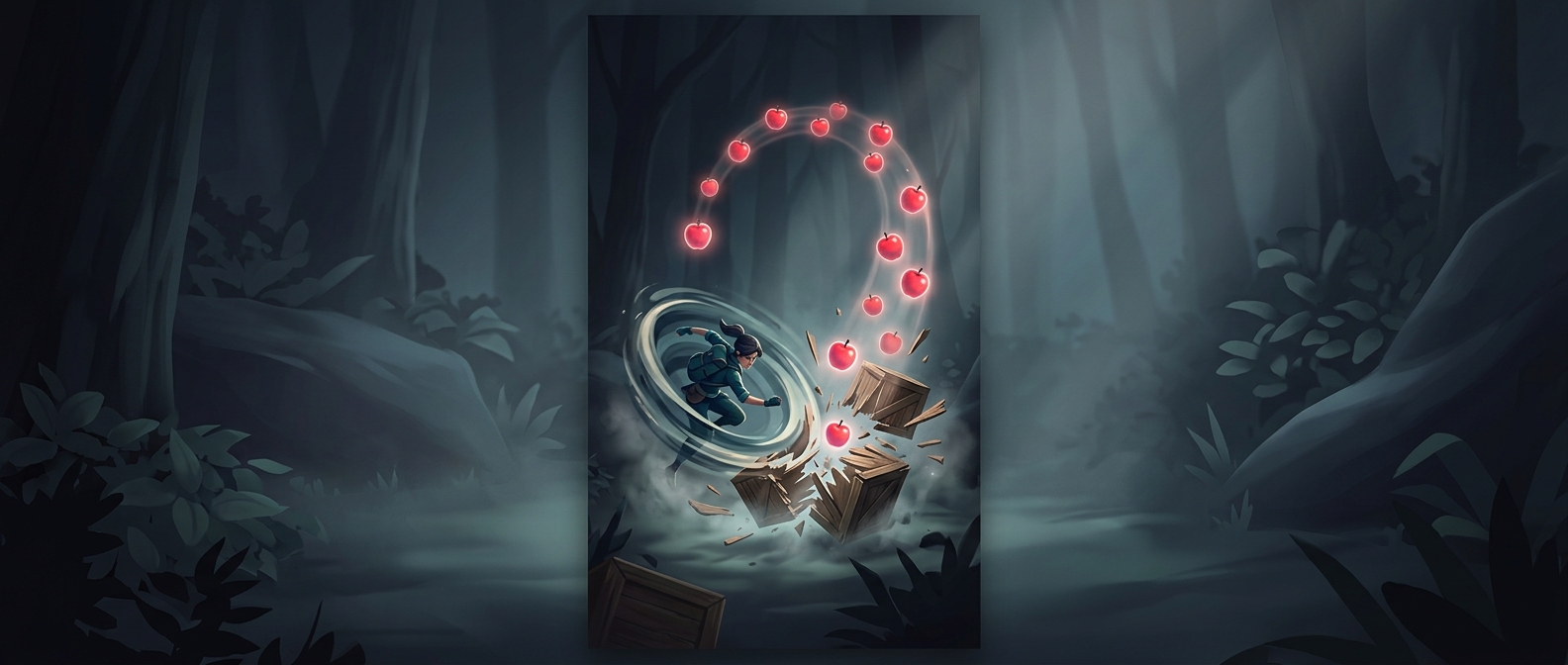
That design makes destruction part of navigation. Crash’s spin attack gives players a fast, recognizable way to break many boxes, while others reward jumping or careful timing. A row of crates can signal a safe path; a box balanced over a hazard asks the player to judge distance before acting. The repeated object teaches these possibilities without stopping the action for a tutorial.
A Breakable Box With a Payoff
The fruit inside gives each detour an immediate reward. Collecting Wumpa fruit adds to a running total, and gathering enough can earn an extra life in the original game. The fruit’s brief appearance after a box breaks also makes the result easy to read: the player sees both what was hidden and what the hit accomplished.
Crates therefore do several jobs at once. They add targets to Crash’s spin, place optional rewards along the route, and make level geometry feel interactive. Even an ordinary wooden box can prompt a decision—keep moving, or risk a jump to see what it contains. That small choice is why breaking boxes became as memorable as running and leaping.